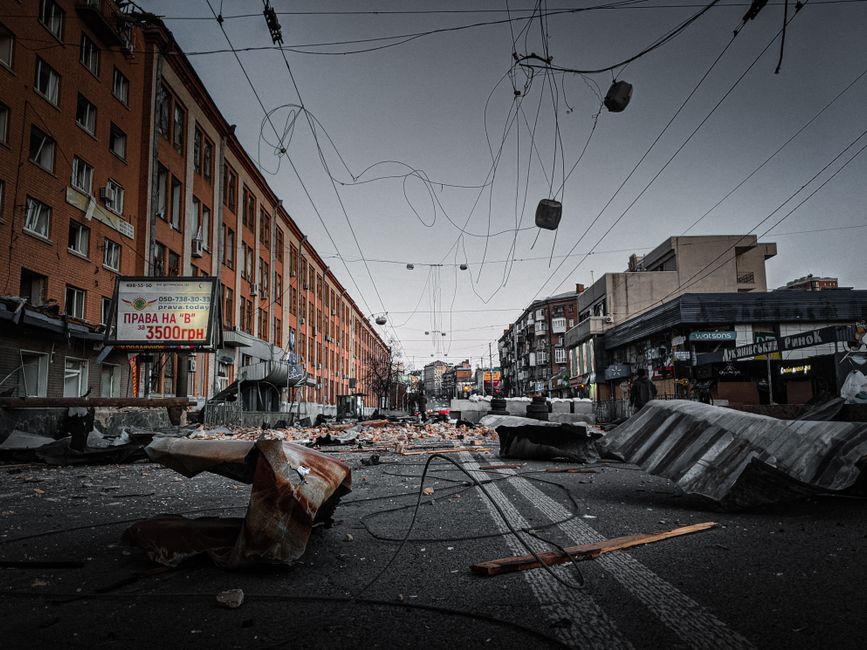
A Russian drone struck a school in the Ukrainian capital Kyiv on Thursday, city officials confirmed, as residents endured yet another punishing wave of aerial attacks that has left the city feeling increasingly like a city under siege. Children and staff were sheltering when the drone hit, and the warhead did not detonate — meaning no casualties were immediately reported.
Kyiv Mayor Vitalii Klitschko confirmed the strike, with images showing a large hole punched through the building's brick facade, blackened scorch marks, and shattered windows across the front of the structure. Emergency services were seen removing an unexploded warhead from the scene.
A City on Edge After Weeks of Bombardment
The school strike is the latest in a relentless series of attacks on Kyiv that have seen repeated air raid alerts, loud explosions and billowing black smoke become a fixture of daily life in the capital. Officials and analysts say the Russian onslaught is deliberately aimed at terrorising civilians and eroding public resolve, now more than four and a half years into Moscow's full-scale invasion of Ukraine.
The psychological toll on ordinary Kyiv residents is becoming increasingly visible. One 35-year-old woman, Maryna Lystopad, described the unbearable strain of living under constant threat.
"It's really horrible. I can't take it anymore. I think that soon we're all going to leave. I'm really not doing well," she said. "I'm constantly anxious. I can't relax. I keep thinking that if something happens, if something hits, one of my relatives could be killed."
She said even a simple trip across the city had become a source of intense fear. "I kept checking, like, whether anything was flying in, where it was going, where am I supposed to go? Where am I supposed to run?" she said, adding that the stress had caused her hair to start falling out.
Russia Escalates — Ukraine Scrambles to Respond
While the front lines on the ground have seen little significant movement since 2025, Russia has dramatically intensified its aerial campaign, deploying high-speed ballistic missiles and fast-moving jet-powered drones that are pushing Ukraine's air defences to their limits. In a notable development, Russia also used a new type of jet-powered drone for the first time earlier in the week, reflecting the rapid pace of military innovation on both sides.
Ukraine has been striking back with long-range drones targeting manufacturing plants deep inside Russian territory and attacking drone launch infrastructure. President Volodymyr Zelensky confirmed Ukrainian forces had struck a site in Russia's southwestern Oryol region used to store and launch attack drones.
However, Ukraine's ability to defend against ballistic missiles remains hampered by a shortage of US-made Patriot missile systems — a gap made worse by competing global demands since the outbreak of the Iran war. A proposal to manufacture Patriot interceptors inside Ukraine is expected to take years to become viable, leaving Kyiv racing to develop its own interceptors capable of taking down fast-moving drone threats in the interim. Ukraine is also pushing for tougher international sanctions on Russia to cut off the supply of high-tech components used in its weapons.
Thursday brought some relief on the energy front, with Ukrainian officials reporting no strikes on power infrastructure — a day after what authorities described as the largest Russian attack on the electricity grid since spring 2025. A Washington-based think tank characterised Wednesday's barrage as the opening of a Russian campaign aimed at degrading Ukraine's energy systems ahead of winter and pressuring Kyiv to capitulate. With temperatures in the capital sitting at a mild 19°C on Thursday, the immediate heating crisis remains at bay — but analysts warn the attacks are expected to intensify as colder weather sets in.
The Broader Pattern of Aerial Terror
The strike on a Kyiv school fits a broader and deeply troubling pattern. As we have previously reported, mass casualty attacks on the capital have become increasingly common, while new weapons systems are bringing fresh terror to Kyiv's streets. Moscow appears determined to press its aerial advantage while Ukraine works to find answers to the evolving threat — leaving millions of civilians caught in the crossfire.