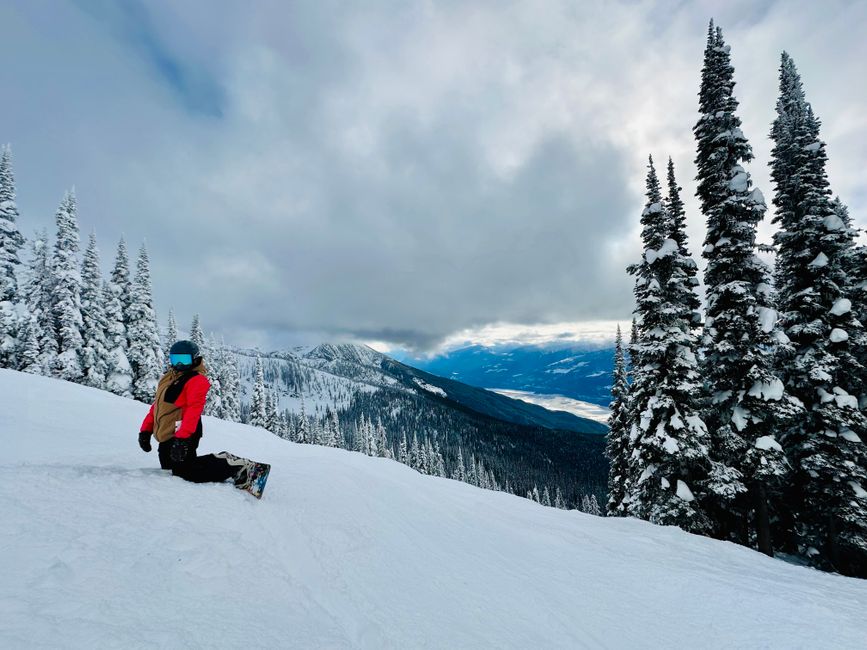
Tucked beneath the towering Selkirk and Monashee mountain ranges in British Columbia, Canada, Revelstoke is a ski town that has quietly earned a reputation as something more than a resort destination — it's a place with genuine character, a living community, and terrain that leaves experienced skiers genuinely speechless. Named in honour of Lord Revelstoke, who secured the financing to push a railway through the region in the late 1800s, the town has evolved into one of North America's most compelling winter destinations.
A Mountain Town That Lives and Breathes Outdoors
Revelstoke carries all the hallmarks of a true mountain town — youth, energy, and a high street packed with shops and services dedicated to outdoor life. Come summer, hikers, mountain bikers, and water sports enthusiasts flood in to make use of the surrounding lakes and the Columbia River, which runs directly alongside the township. In winter, the focus shifts to snow, with a dozen or so heli-skiing operations offering backcountry thrills, alongside the increasingly well-known Revelstoke Mountain Resort just up the road.
The resort's base area is still very much a work in progress — hotels and apartments are established and others remain under construction, while cafes, bars, and ski and snowboard retail outlets cater to visitors. But it is the mountain itself that commands attention. With 1,265 hectares of skiable terrain and a 1,713-metre vertical descent, the numbers alone are enough to draw skiers and snowboarders from around the world.
An Australian Skier Who Found Her Line — and Never Left
Among those drawn in and never quite able to leave is Nat Segal, a Melbourne-born filmmaker, elite skier, and summer hiking guide who now calls Revelstoke home. Segal grew up skiing at Mount Buller in Victoria before going on to compete on the Freeride World Tour — a discipline where competitors descend a designated area of mountain terrain, often beyond resort boundaries and ideally in fresh snow, as skillfully and spectacularly as possible. Think of it as the skiing equivalent of a surfing competition.
Her first visit to Revelstoke Mountain Resort came in 2013 during a Freeride World Tour event. "I just remember having my mind blown, like I'd never skied trees like that or found pillow lines like that in bounds," Segal recalls. Pillow lines — mounds of snow that form over logs or rocks — are a hallmark of the terrain here.
She returned multiple times, eventually using the mountain as a filming location for a feature-length documentary she co-created with her sister Anna, titled Finding the Line. By 2018, she had relocated permanently. "I had some connections through that and a few friends who had moved here," she says.
Navigating the Mountain: From Gondola Laps to Big-Mountain Bowls
For Segal, the gondola is the backbone of the resort experience — long, groomed intermediate runs that are ideal for warming up the legs. "When my parents come to visit me and I do it with them, we have to stop all the time and I'm just like 'oh come on you two, you haven't done your training'," she says.
For those chasing bigger terrain, the Stoke Chair — whose name has inspired no shortage of bumper stickers and local slogans — accesses North Bowl, Greely Bowl, and, for those willing to hike, the sub-peak area below Mackenzie Peak. Much of the terrain off the Stoke Chair is ungroomed and off-piste, offering a natural progression into more demanding skiing.
Lower on the mountain, the Ripper Chair offers a mix of groomed blue and green runs alongside accessible tree skiing — steep enough to be entertaining, gentle enough to build confidence. On a powder day, skiers self-select: some head straight to the Stoke Chair, others make a beeline for the Ripper.
For a resort still finding its feet in terms of infrastructure, Revelstoke already has something many purpose-built ski villages spend decades trying to manufacture — a soul that feels entirely its own.