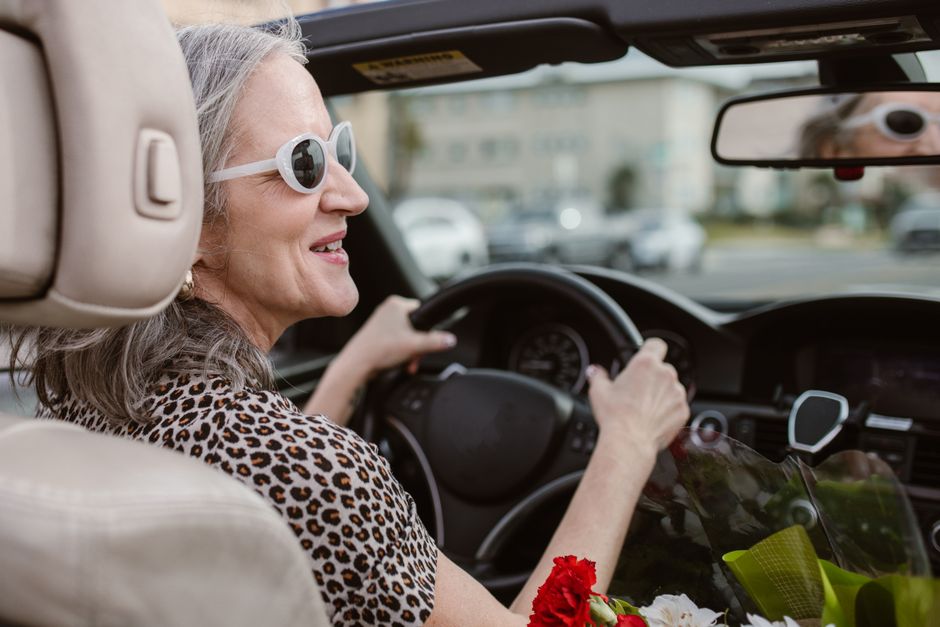
When 85-year-old Lyn Taylor switched to a restricted driver's licence in July, limiting her to travel within 15 kilometres of her inner Sydney home, the change was immediate — and isolating. Living alone in Alexandria, with most of her relatives and friends no longer alive, her ability to move through the world narrowed sharply almost overnight.
Taylor made the decision herself after noticing her reaction times were slowing and that the route across the Harbour Bridge to visit family kept changing in ways she found difficult to navigate. But self-awareness hasn't made the adjustment any easier.
"If you want to live a full life, it's hard without proper transport," she says.
Public transport gaps and unreliable alternatives
Despite living in a relatively central suburb, Taylor says public transport options often fall short. Visiting her son, for example, requires multiple changes, and she notes that services in her area have diminished in recent times. Taxis have proven unreliable, and while ride-share platforms such as Uber have introduced features aimed at older users — including discounted fares and larger on-screen text — she remains hesitant to use them.
Evening community events, such as meetings held by her local MP, are now largely out of reach. Without nearby parking and with no comfortable transport option after dark, she simply doesn't go.
"You can't involve yourself in anything without some form of safe transport," she says.
A widower and only child whose social circle has dwindled, Taylor has few people to call on for lifts. One bright spot has been Access Sydney, a community transport service she credits with introducing her to new people and helping maintain some connection to the outside world.
"I don't think they [society] look[s] after elderly people," she adds.
A fast-growing cohort on Australia's roads
Taylor's experience is far from unique. In 2025, 795,619 Australians aged over 80 held a driver's licence — roughly 4 per cent of all licence holders — up from 460,273 a decade ago. That figure is expected to keep rising as the population ages.
Ageing does not automatically make someone an unsafe driver, but the physical and cognitive changes that come with it can affect driving ability. Professor Kaarin Anstey, director of UNSW's Ageing Futures Institute, explains that several factors work in combination to enable safe driving — many of which experience normal age-related decline.
"There are many visual and cognitive factors working together to enable safe driving, and some of those have normal age-related declines," she says. These include motion perception, visual acuity, contrast sensitivity and reaction times. Adjusting a vehicle for safe driving can also become more challenging with age.
Beyond typical ageing, conditions such as dementia and mild cognitive impairment (MCI) present additional risks. Australians diagnosed with dementia cannot hold an unconditional licence, though they may apply for a conditional one — with full cessation of driving eventually required.
An analysis of a decade of motor insurance claims found drivers over 65 accounted for 26 per cent of claims. Over the same broad period, the fatality rate for drivers over 75 dropped by 22 per cent — though this group remains the most overrepresented in road fatalities, on a par with drivers aged 17 to 25. There is no age limit for driving in Australia, but licensing requirements for older adults differ across states and territories.
Calls for better support when older drivers must stop
New research from Flinders University highlights a significant gap in how the healthcare system supports older Australians through the process of giving up driving. A qualitative study involving 12 people aged 65 and over with dementia or mild cognitive impairment identified four key areas where support is lacking: early and ongoing conversations about driving; access to clear information and guidance; compassionate communication when cessation is recommended; and practical help adjusting to a life without a car.
Participants expressed a strong desire for support from healthcare professionals — not just family members — as they navigate this transition. PhD researcher Claire Spargo, who led the study, plans to use the findings to develop an evidence-based clinical pathway to better equip health professionals and their patients through the process.
For Lyn Taylor, those broader systemic conversations can't come soon enough. Her restricted licence has kept her safe — but it has also made the world considerably smaller.