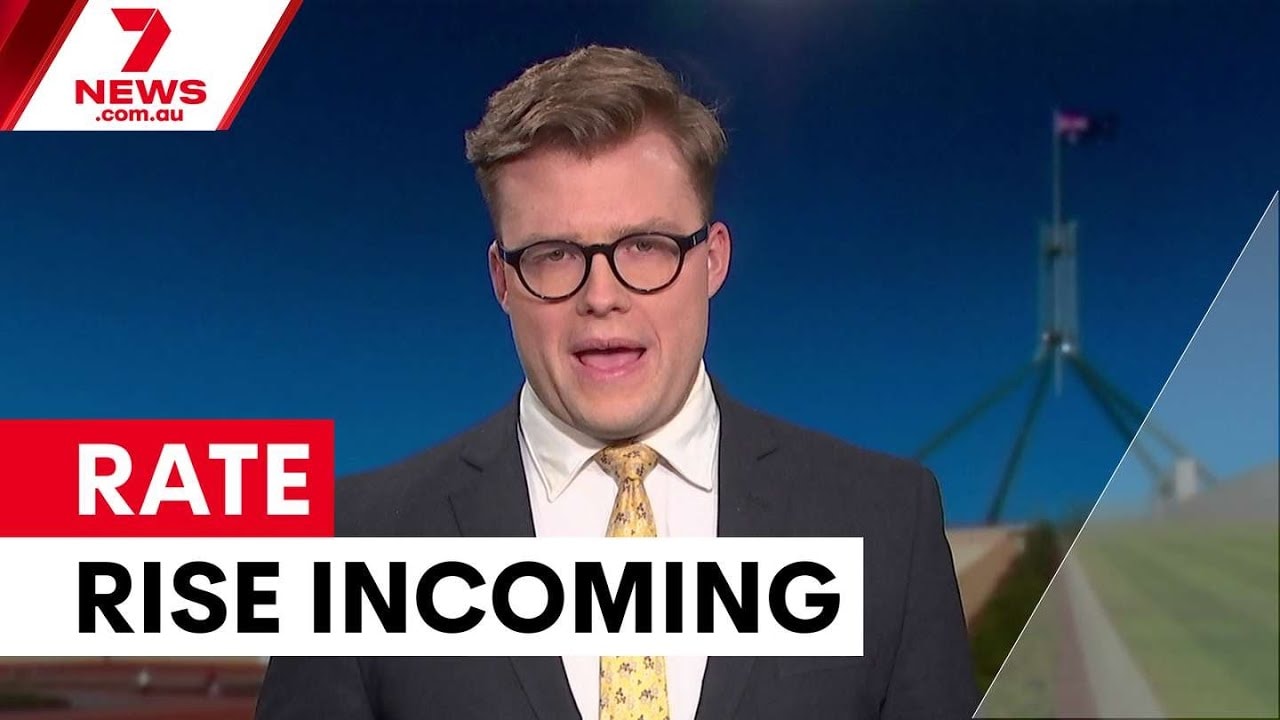
The Reserve Bank of Australia is set to announce its next cash rate decision at 2:30pm on Tuesday, with all four of Australia's major banks and financial markets overwhelmingly expecting a 0.25 percentage point increase — a move that would push the official cash rate from 4.35 per cent to 4.6 per cent, its highest level since 2011, and leave the average borrower hundreds of dollars worse off each year.
Why Another Rate Rise Looks All but Certain
Financial markets have priced in an 80 to 90 per cent probability of a hike, with Commonwealth Bank (CBA), Westpac, National Australia Bank (NAB), and ANZ all forecasting a 0.25 per cent rise — the first time in the current tightening cycle that all four major institutions have aligned on the same call.
Persistently high inflation is the central driver. The latest figures show headline inflation running at 3.5 per cent, while the trimmed mean — which strips out the largest price swings to give a clearer picture of underlying inflation — sits at 3.6 per cent, well above the RBA's target band of 2 to 3 per cent. Fuel costs, housing construction expenses, and dining out are among the chief contributors to those elevated readings, according to Australian Bureau of Statistics data.
The escalating conflict in the Middle East has pushed Brent crude oil prices to multi-month highs, adding to global inflationary pressures. Meanwhile, domestic demand, GDP growth, and employment have all proven more resilient than the RBA had previously anticipated, while productivity growth remains sluggish — a combination that gives the central bank little reason to hold fire.
One money expert described Australia as being largely "at the mercy of global inflationary pressures" but noted the RBA "has a mandate to keep inflation down" and that "their main tool for doing that is rate rises."
What the Big Four Banks Are Forecasting
ANZ economists have indicated the RBA no longer treats recent energy price spikes as a temporary phenomenon, viewing them instead as a sustained, long-term inflationary risk. ANZ has already tipped back-to-back rate rises, with a further hike predicted for November.
Both Westpac and CBA brought forward their own November hike predictions to this month, though both believe 4.6 per cent likely represents the peak for this cycle. CBA has flagged that if Tuesday's quarterly trimmed mean inflation figure comes in at 1 per cent or higher, a second November increase becomes likely. NAB agrees a single rise is the most probable outcome but has not ruled out a follow-up move, depending on how labour market data evolves.
How Much More Will Borrowers Pay?
If lenders pass on the full 0.25 per cent increase — as has been standard practice in this cycle — the impact on household budgets will be significant. Based on Australian Bureau of Statistics and Canstar data, the average home loan nationally sits at $731,000, ranging from $516,000 in Tasmania to $842,000 in New South Wales.
With the current average variable rate for owner-occupiers sitting between 6.24 and 6.62 per cent, the typical Australian is already spending between $4,500 and $4,680 per month on their mortgage. A 0.25 per cent rise would add roughly $120 per month — or $1,440 per year — to that figure.
- Average NSW borrower: an extra $138 per month, or $1,656 per year
- Average first home buyer (loan of $610,000): an extra $100 per month, or $1,200 per year
Beyond repayment costs, a rate rise also erodes buying power for new entrants to the property market. A 0.25 per cent increase reduces maximum borrowing capacity for prospective buyers by roughly 2 to 2.5 per cent.
For those already navigating tight household budgets, this latest potential rise adds to a growing list of financial pressures — a dynamic also explored in our coverage of how retirement village costs can leave residents financially exposed.
The RBA's full statement and rate decision is due at 2:30pm Tuesday, with updated inflation figures also expected to be released on the same day.