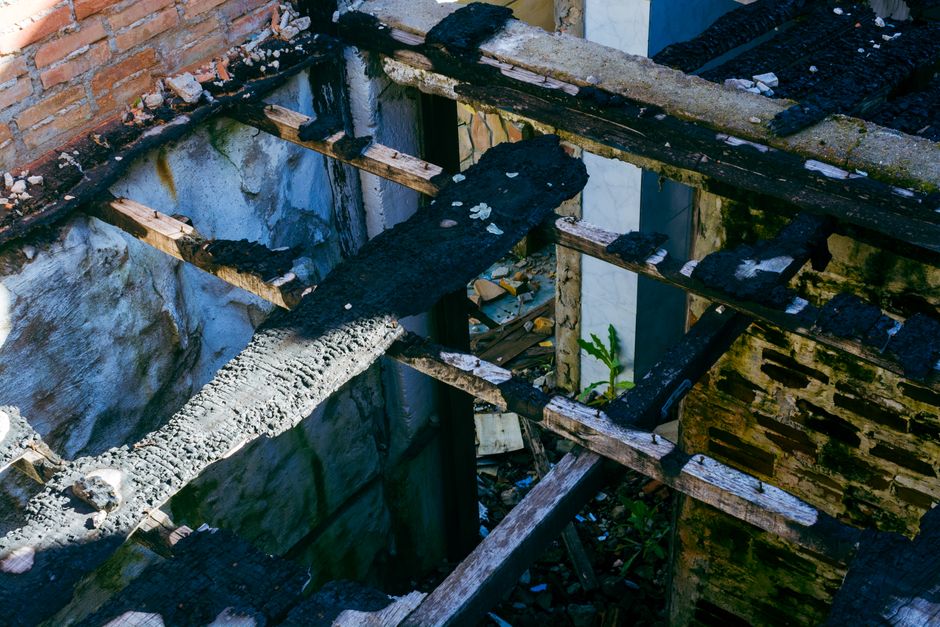
Queensland researchers have deliberately set timber ceiling compartments alight at temperatures reaching approximately 1,000 degrees Celsius, in a series of controlled experiments designed to improve fire safety standards for the growing number of mass timber buildings being constructed across Australia.
The tests were carried out at the Queensland Fire Department's training ground at the Port of Brisbane, with firefighters on hand to supervise each burn. Live-streaming cameras and an array of heat and pressure sensors monitored how fire spread through the specially constructed compartments in real time.
How the Timber Fire Tests Worked
The experiments were led by University of Queensland PhD candidate Josh Madden, whose project sits within the broader ARC Research Hub to Advance Timber for Australia's Future Built Environment. Each test involved large cross-laminated timber ceiling compartments measuring 12 metres in length and roughly 2.5 metres in width. Researchers ignited a fire at one end and observed how it travelled along the underside of the ceiling.
Between each burn, the team adjusted specific design parameters, including the compartment's ventilation arrangement and ceiling height, to understand how those variables influenced fire behaviour.
"We built these large 12-metre-long compartments which are about 2.5 metres wide," Madden said. "We essentially ignite the fire down one end and watch how fire spreads underneath the ceiling."
Temperature readings from sensors inside the compartments climbed as high as 1,000 degrees Celsius during the tests. Madden described the experience as striking, even for a researcher already familiar with the theory. "It was a pretty unreal experience," he said. "For me, being a researcher, I know all the theory behind it. It was pretty eye-opening."
Why Timber Poses Unique Fire Safety Challenges
Mass timber, which is made from engineered layers of wood that are compressed, glued, or nailed together into uniform panels and slabs, has become an increasingly popular construction material. It offers a faster alternative to steel and concrete and can be fabricated off-site, allowing for assembly on location in a manner Madden compared to stacking Lego bricks.
"In traditional concrete building, you need to wait a month for the concrete to cure," he said. "Whereas a timber building can just essentially be like Lego bricks. You can just go in, click it all together."
However, mass timber's growing use has outpaced the fire safety frameworks designed to govern it. Timber begins losing structural strength at around 60 degrees Celsius and loses all its strength from roughly 300 degrees Celsius onwards. Current fire safety guidance, Madden noted, was largely built on the assumption that structural materials do not burn.
"But the issue with timber is that timber actually burns," he said.
Firefighters Gaining Critical Knowledge Before a Real Emergency
The University of Queensland and the Queensland Fire Department have maintained a formal information-sharing relationship since 2014, and the collaboration was central to making these experiments possible.
QFD fire engineer Mick Conway said the controlled burns were giving firefighters hands-on knowledge they might otherwise only encounter during an actual emergency. "By burning materials under experimental conditions, our firefighters are learning things that they otherwise might have had to experience for the first time in a live scenario," he said.
Conway emphasised that understanding new materials and innovative design approaches was essential to building safer timber structures as the construction industry continues to evolve.
What Comes Next for Timber Building Safety
The results from the experiments are currently being analysed and will form the basis of Madden's final thesis. The ultimate goal is to produce a practical design methodology that fire safety engineers can use with confidence when specifying and approving mass timber buildings.
"What we're trying to develop is this sort of design methodology or framework for fire safety engineers to go out and have the confidence to be able to build these buildings," Madden said. "If we have the knowledge and expertise to be able to design these safely, hopefully the idea will be that we'll see lots more of these beautiful massive buildings."
As construction methods evolve and the use of combustible structural materials becomes more widespread, research of this kind is increasingly relevant to fire risk and safety standards across Australia's built environment.

