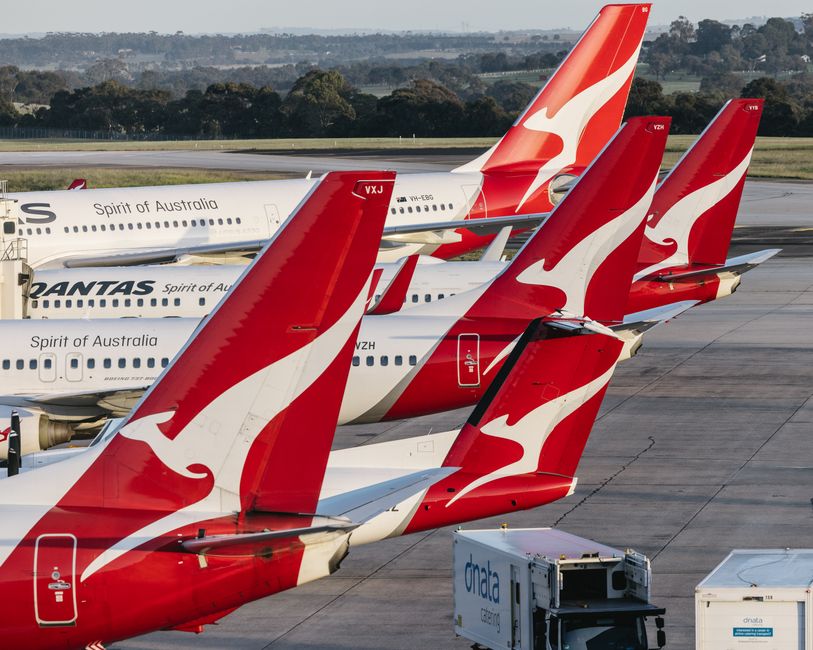
Hundreds of Qantas ground workers have walked off the job in a coordinated 24-hour strike spanning five major Australian cities, with the Transport Workers' Union directing its anger at the legacy of former chief executive Alan Joyce and calling for urgent improvements to pay, job security and workplace safety.
The industrial action has taken place simultaneously at airports in Sydney, Melbourne, Adelaide, Brisbane and Perth, involving workers employed across three Qantas subsidiaries: QGS, AAE and QantasLink.
What the Strike Covers and What It Does Not
The workers involved predominantly support Qantas freight operations, with a smaller contingent providing services to QantasLink at Sydney Airport. Critically, the striking employees do not service Qantas domestic or international passenger flights, nor QantasLink services outside Sydney.
Qantas said it had contingency plans in place and did not expect any disruption to passenger services. "We are aware of planned industrial action by some of our freight and regional workgroups in Sydney, and we have contingency plans in place," a Qantas spokesperson said. "Importantly, there will be no disruption to our customers."
Sydney Airport confirmed it anticipated minimal impact to operations, with no effect expected for passengers. Airports in Perth, Adelaide and Melbourne's Tullamarine also confirmed operations were proceeding normally.
Union Targets Alan Joyce's Restructuring Legacy
The Transport Workers' Union has squarely blamed the corporate restructuring carried out under Joyce for the conditions driving workers to strike. The union argues that splitting workers across multiple subsidiary companies was a deliberate strategy to reduce wages and erode full-time employment.
"Alan Joyce gutted the Flying Kangaroo, and workers and the travelling public are still paying the price," TWU national secretary Michael Kaine said. "Under Joyce, Qantas mastered the art of creating new companies just to pay people less and take away full-time roles, not to mention the largest illegal sackings in our nation's history."
Kaine said workers felt compelled to strike because the alternative was accepting an industry operating to dangerously low safety and employment standards. "Qantas' disdain for its workforce has turned careers that people were proud of," he said.
The union's core demands include fair pay increases, greater access to secure full-time positions and an end to the fragmentation of critical aviation work across subsidiary entities.
Qantas, for its part, said it remained committed to reaching enterprise agreements that delivered substantial pay increases and reflected the priorities workers had raised during negotiations.
A Fatal Workplace Incident Casts a Shadow
The industrial dispute is unfolding against the backdrop of a fatal workplace accident at Sydney Airport in September 2025. A freight worker in his 40s, employed by labour-hire company Wymap People, was struck by a towing vehicle at the Qantas international freight terminal and suffered fatal head and chest injuries.
Following the death, the TWU called for an urgent review of safety and training standards across Qantas' supply chain, raising specific concerns about training for heavy machinery operation, staffing levels and the broader use of labour-hire workers in safety-critical roles.
In its 2026 annual report, Qantas said it had conducted an internal investigation into the fatality and made changes to its systems, controls and safety culture. The airline also confirmed that SafeWork NSW was carrying out a separate independent investigation into the incident.
The safety concerns echo broader debates around workplace protections in transport and logistics industries. Workers in other sectors have also been pushing back against employment conditions they say fail to reflect the realities of physically demanding roles.
With negotiations ongoing and both sides holding firm on key positions, the TWU has indicated the pressure on Qantas management will continue until workers receive agreements that reflect safe, fairly compensated and properly secured employment across the airline's ground operations network.

