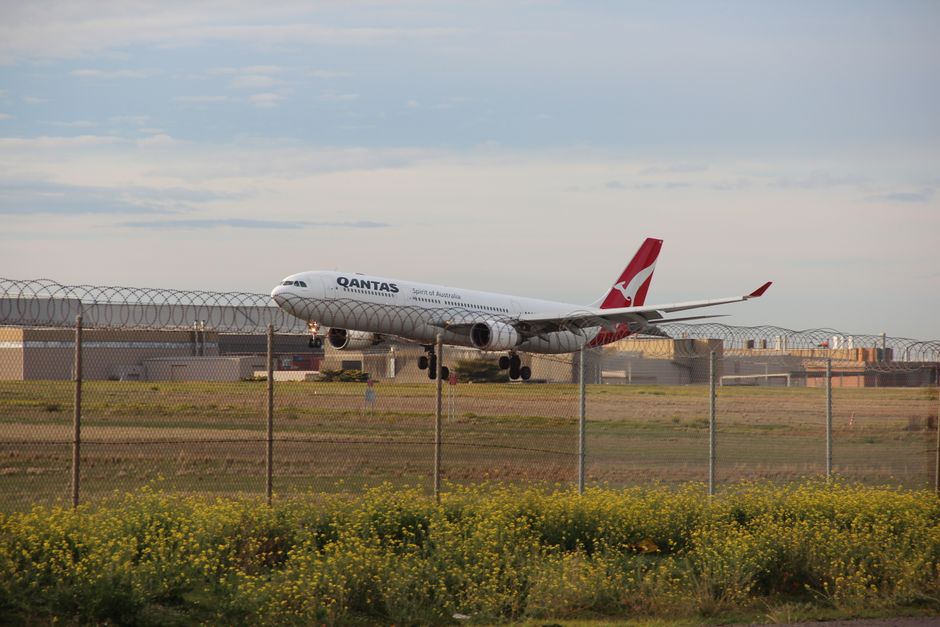
A Qantas flight from Melbourne to Sydney was forced to abort its landing at the last possible moment on Wednesday morning after crew spotted an Air New Zealand aircraft blocking the runway at Sydney Airport, coming within seconds of a potential collision.
Flight QF426 had descended to just 90 metres above the ground, approximately five to six seconds from touchdown, when the pilot made a split-second decision to pull up and perform what aviation crews call a go-around. The aircraft had not yet received approval to land from the Air Traffic Control Tower when the crew identified an Air New Zealand A321 crossing their runway.
The Qantas aircraft climbed away and completed a loop over Sydney Harbour before returning to land safely a short time later.
Passenger Informed Mid-Flight of the Close Call
A passenger aboard QF426 said the pilot addressed the cabin following the incident, explaining that another aircraft had been blocking the path to a safe landing. The go-around manoeuvre, while alarming for those on board, is a standard emergency procedure designed precisely for situations where a landing cannot be safely completed.
Second Sydney Airport Near-Miss Incident Under Investigation
The incident is the latest in a series of serious close calls at Sydney Airport. Just months earlier, in August, two Qantas aircraft narrowly avoided a collision on adjacent runways at the same airport. That earlier incident remains under active investigation by the Air Transport Safety Bureau (ATSB).
The safety bureau has now added this latest near-miss involving QF426 and the Air New Zealand aircraft to its list of ongoing investigations, raising fresh questions about runway management and air traffic control procedures at one of Australia's busiest airports.
Wednesday's incident highlights the critical importance of communication between air traffic controllers and flight crews, particularly during the final, most time-sensitive phase of a landing approach. At 90 metres and with only seconds to spare, the Qantas crew had virtually no margin for error before the pilot intervened.
The ATSB is yet to release findings on either the August collision risk or this most recent event. Authorities have not indicated a timeline for the completion of either investigation.