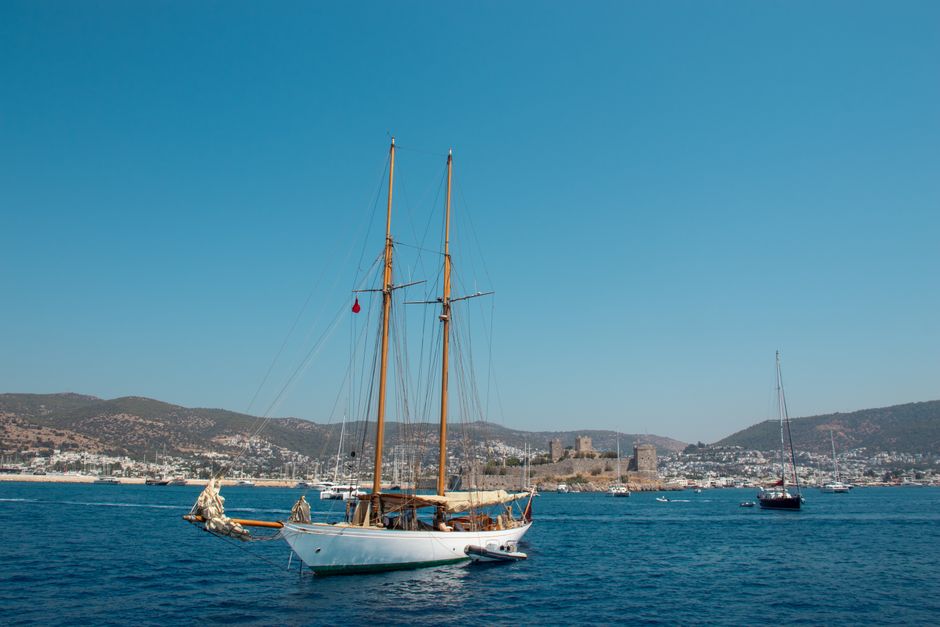
Bodrum, Turkey's glamorous resort town on a sweeping Aegean bay, has firmly established itself as one of the eastern Mediterranean's most appealing cruise destinations — a magnet for wealthy Istanbul residents, international jetsetters and, increasingly, passengers aboard premium and luxury cruise lines seeking something beyond the standard Greek island circuit.
While major mass-market operators do make occasional calls here, Bodrum is primarily the domain of smaller, upmarket ships from lines including Azamara, Emerald, Explora Journeys, Oceania, Seabourn, Scenic, Silversea and Windstar — most sailing eastern Mediterranean or Greek island itineraries.
Arriving in Bodrum: The Approach and the Port
The sail into Bodrum is widely regarded as one of the Mediterranean's finest harbour arrivals. Ships glide into a ring of blue hills, with a cascade of white cubist houses and a medieval crusader castle forming the centrepiece of the view. The harbour itself buzzes with ferries bound for the Greek islands and day-tripper boats heading out as cruise vessels come in.
The cruise terminal is modest — a small cafe, a handful of shops and a tourist information desk — and passengers needn't linger. The town centre is roughly two kilometres away, an easy and rewarding walk along a promenade that hugs the bay and offers continuous views of the castle and waterfront, with cafes and bars along the way. Some cruise lines offer a shuttle service, though given Bodrum's congested traffic and one-way street system, it can take just as long as walking.
What to See and Do in Bodrum
The undisputed highlight is Bodrum Castle, a World Heritage-listed fortress built by the crusading Knights of St John. Set in flowering gardens with resident peacocks and panoramic views over the bay, the castle houses one of the world's largest collections of underwater archaeology — ancient shipwreck treasures and artefacts spanning several millennia.
Beyond the castle, the town rewards unhurried exploration. Its labyrinthine back streets are lined with shops, while the busy waterfront promenade stretches from the cruise terminal through town and well beyond — easily filling half a day, particularly if you stop for a swim. The ruins of the Mausoleum of Halicarnassus, once counted among the Seven Wonders of the Ancient World, remain on-site but amount to little more than scattered stonework today and can reasonably be skipped.
Active visitors can sail, windsurf, kayak or jet ski in the bay, while the surrounding peninsula offers horse riding and mountain biking. A three-hour return walk into the hills leads to modest ancient ruins but delivers impressive views. Those with access to a taxi or public transport can explore the peninsula further — the upmarket Yalikavak marina is a favourite for watching superyachts.
Eating and Drinking
Bodrum has a distinct local food identity. The town is celebrated for its mandarins — available fresh at the market or in the form of mandarin-flavoured Turkish delight. Signature dishes include a local variation of small ravioli-style dumplings served with yoghurt, and a regional kebab variant accompanied by fried potatoes, tomato sauce and yoghurt. Seafood is abundant along the waterfront. Bodrum also boasts three Michelin-starred restaurants showcasing contemporary Turkish cuisine, though all sit outside the town centre — impractical for day visitors unless they are touring the peninsula regardless.
Shore Excursions and Further Afield
Organised excursions around Bodrum are relatively limited in scope, and simply exploring the town on foot offers strong value. Available options include winery visits on the Bodrum Peninsula, four-wheel-drive tours into the rugged hinterland, a trip to Lake Bafa and the ancient ruins of Heraklia, or a bay cruise aboard a traditional wooden gulet.
Some cruise lines offer excursions to the celebrated Greco-Roman ruins of Ephesus, but passengers should be aware this involves a 2.5-hour drive each way — a significant commitment for a port day. Ephesus is more efficiently visited from Kusadasi, the port further up the coast that typically serves as the standard embarkation point for that site.