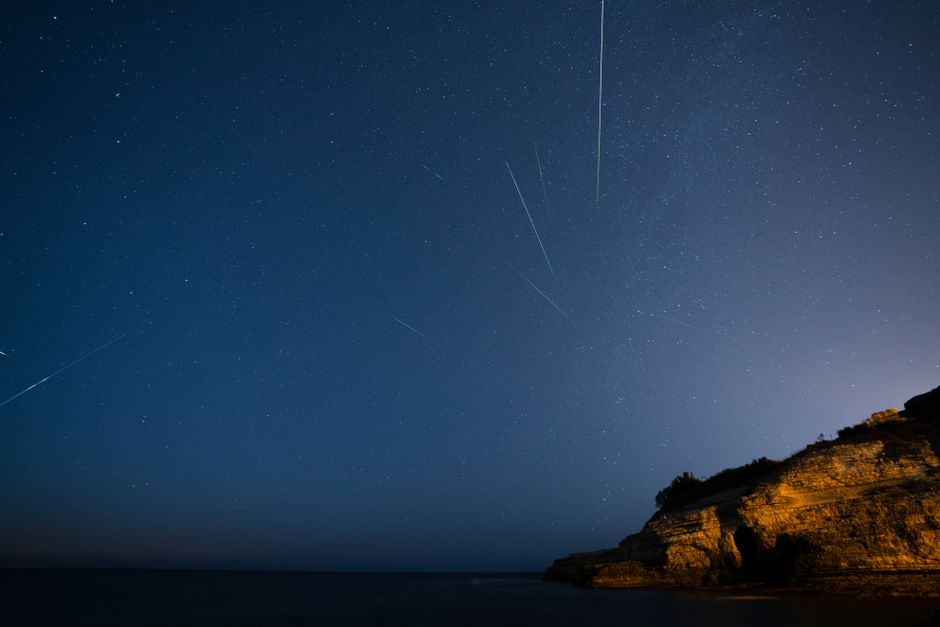
The Orionid meteor shower is peaking this week, with the best viewing window for Australians expected in the early hours of Thursday morning. However, a bright waxing gibbous moon is forecast to wash out many of the fainter meteors, and astronomers are urging sky watchers to set their alarms for the pre-dawn hours and manage their expectations accordingly.
What Is the Orionid Meteor Shower?
The Orionids are an annual meteor shower that occurs every October as Earth passes through a trail of debris left behind by Halley's Comet, one of the most famous comets in history. Made up of ice and dust, Halley's Comet orbits the sun roughly every 75 to 76 years and is not due to be visible from Earth again until mid-2061.
The shower has a remarkably long history. According to University of Southern Queensland astronomer Jonti Horner, the Orionids have been observed for at least 2,500 years, with some historical records believed to date back to around 800 BC.
Under ideal conditions, the Orionids typically produce around 20 to 30 meteors per hour. Those figures, however, depend on dark skies, clear weather and minimal interference from moonlight.
Why This Year's Orionid Shower May Disappoint
"This year will probably be a quiet one," Horner said, pointing to the bright moon as the primary obstacle for observers.
The waxing gibbous moon is not expected to set until 2am or 3am, meaning its light will effectively drown out all but the brightest meteors for much of the night. Horner said moonlight could cut the number of visible meteors by as much as half.
"While the moon's high in the sky, there's a lot more light pollution, which hides all but the brightest meteors," he said. "What that means is that I would not be suggesting to anybody that they go out until the moon has set."
The Orionids are also effectively invisible before midnight, because the radiant, the point in the sky from which the meteors appear to emerge, has not yet risen high enough above the horizon to produce a good display.
When and Where to Watch
The best viewing window on Thursday morning is expected to fall between 3am and 4am AEDT, after the moon has dropped below the horizon and before the sky begins to lighten ahead of sunrise.
Horner noted there is some flexibility in timing. "Wednesday night is formally forecast to be the best night, but there's a little bit of uncertainty in that because the numbers wiggle around up and down," he said. He added that reasonable viewing conditions could extend through Friday and Saturday, though the moon will become increasingly problematic as the week progresses.
City dwellers are not entirely out of luck. Horner said the brightest meteors should be visible from urban areas, provided viewers move away from direct streetlights. Those in rural or regional areas will have the advantage of darker skies and a better chance of catching fainter streaks.
Taurids Also Active This Week
Adding a small bonus to the display, this year's Orionid peak coincides with both the Northern and Southern Taurid meteor showers, which contribute a handful of additional meteors to the night sky. The two types of shower can be told apart by their speed: Orionids move quickly across the sky, while Taurids travel at a noticeably slower pace.
"If you are up in the early hours of the morning before sunrise and you see a meteor and it's quite slow, that was probably a Taurid," Horner said. "If you see one that was really fast, that was probably an Orionid."
Despite the challenging conditions, Horner encouraged patient observers to give it a try, while stressing there are no guarantees of a sighting. Anyone planning to watch should rug up, find a dark spot away from direct artificial lighting, and allow their eyes time to adjust to the darkness before the prime viewing window opens.

