Two independent teams of scientists have built the world's first working nuclear clocks — experimental timekeeping devices so precise they would lose only one second every 30 million years — in a breakthrough that researchers say could eventually surpass every other clock ever built by humanity.
Both teams have published their findings in the prestigious journal Nature, marking the culmination of more than two decades of theoretical work on a concept that, until recently, remained out of reach due to technological and scientific limitations.
How Nuclear Clocks Work
To understand what makes nuclear clocks remarkable, it helps to know how conventional timekeeping works at the atomic level. Atomic clocks — currently the gold standard in precision timekeeping worldwide — function by tracking subtle changes in the electrons orbiting the nucleus of a caesium atom. They are extraordinarily accurate, but scientists say they are now approaching a physical ceiling beyond which further improvement is essentially impossible.
Nuclear clocks use a similar underlying principle, but instead of monitoring electrons, they track even tinier changes occurring inside the atom's nucleus itself — the dense core of protons and neutrons at the heart of every atom. Because a nucleus is thousands of times smaller than the full atom, it can detect far more minute variations, making it a potentially far more sensitive measure of time.
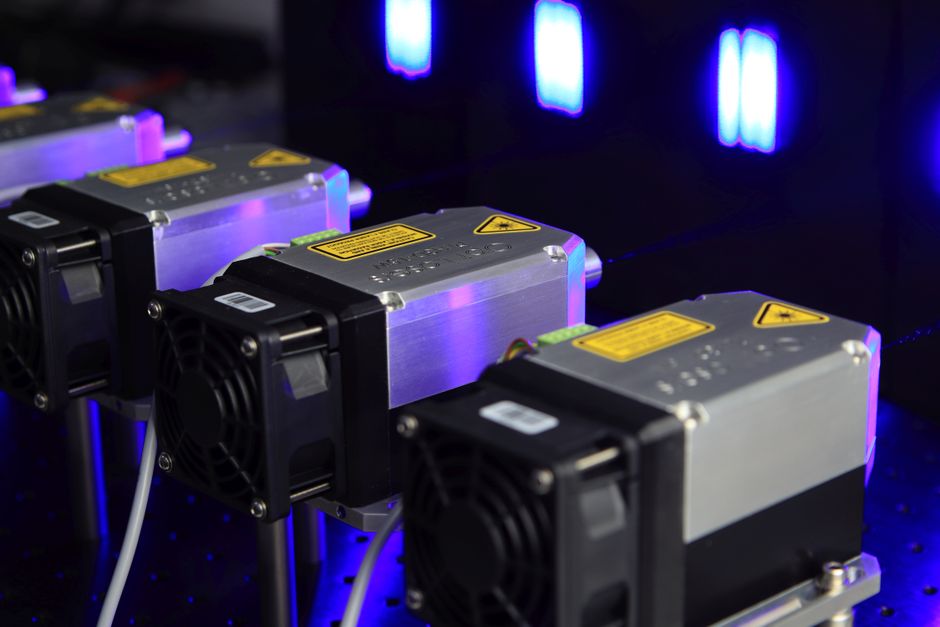
Both research teams grew crystals containing a specific isotope, thorium-229, which has the particular nuclear properties needed to function as a reliable timekeeper. Ultra-precise lasers were then fired at those crystals, prompting tiny, controlled changes in the thorium nuclei that serve as the "ticks" of the clock.
The Breakthroughs That Made It Possible
One team, based at Vienna University of Technology, identified a key turning point in early 2024 when they successfully used a laser to produce the specific change in an atomic nucleus that underpins nuclear timekeeping. A physicist involved in that research described progress since that milestone as having been "very rapid."
The second team, based at Tsinghua University, faced a different set of engineering challenges on their path to a functioning device. A physicist involved in that work explained that there was no single eureka moment — instead, multiple problems had to be solved in parallel, including developing a suitable crystal material and engineering lasers precise enough to produce consistent, repeatable nuclear changes. "There was no single step that suddenly made the clock possible," the researcher said.
While neither clock yet surpasses the best atomic clocks currently in operation, both teams are confident the technology will improve rapidly in the years ahead.
The Potential to Redefine Precision
University of New South Wales physicist Victor Flambaum, who was not involved in either study but commented on the findings, described nuclear clocks as having the potential to become the "most accurate instrument humans have ever built." He said the pair of published studies represented a genuinely exciting step forward for the field.
Professor Flambaum noted that the nucleus's extraordinarily small size — thousands of times smaller than the surrounding electron cloud — is precisely what gives it such promise as a timekeeping mechanism. Even the most minute fluctuations in physical conditions can, in principle, be detected and measured.
Real-World Applications and Physics Implications
The implications of ultra-precise nuclear clocks extend well beyond laboratory curiosity. Researchers say the technology could drive significant improvements across a range of practical fields, including:
- Navigation systems such as GPS, which depend on highly accurate timing signals
- Mining surveys, where precision measurement of gravitational variation can help locate underground resources
- Earthquake prediction, through more sensitive detection of geological changes
Beyond these applied uses, scientists believe nuclear clocks could open entirely new windows in fundamental physics. Because the nucleus interacts differently with the fundamental forces of nature compared to electrons, a nuclear clock sensitive enough to detect the faintest variations could reveal inconsistencies or new phenomena that existing instruments simply cannot see. In this sense, the clocks are not just tools for telling time — they may become instruments for probing the deepest laws of the universe.
Professor Flambaum emphasised that while both clocks remain in their experimental stages, the pace of development has been striking. The field moved from theoretical concept to working prototype within a relatively short window once key enabling technologies fell into place, and he expects that momentum to continue.
For now, the two devices sit in their respective university laboratories, their thorium crystals quietly ticking away under precisely tuned laser light — imperfect by current standards, but widely regarded as the beginning of a new era in timekeeping science.