The founder of a Himalayan trekking company has revealed he was in contact with a group of 15 Australians — including children as young as 11 — just minutes before a catastrophic flash flood obliterated the remote border settlement where they were staying, leaving them among at least 38 Australians still missing in the Nepal-Tibet disaster.
Sagar Pandey, founder and CEO of the Himalayan Glacier Adventure and Travel Company, said the group of 47 tourists — 15 of them Australian — were preparing for breakfast at 8.30am local time on Wednesday when the torrent struck. He had spoken with them by 8am. After that, silence.
"Everyone is missing since then," Pandey said.
The Final Minutes Before the Nepal-Tibet Floods Hit
The Australian members of the tour group were part of two Sydney families who had travelled specifically to take part in a 14-day pilgrimage to Mount Kailash in Tibet, a sacred site for practising Hindus. Completing the journey held deep spiritual significance for the families, and Pandey described the group's mood in their final contact as upbeat and enthusiastic.
"They were excited," he said. "They were happy, even with the kids."
The group had been staying in a five-storey building in a settlement straddling the Nepal-China border. Within minutes of their last known contact with Pandey, a wall of water, ice and mud tore through the area, destroying everything in its path.
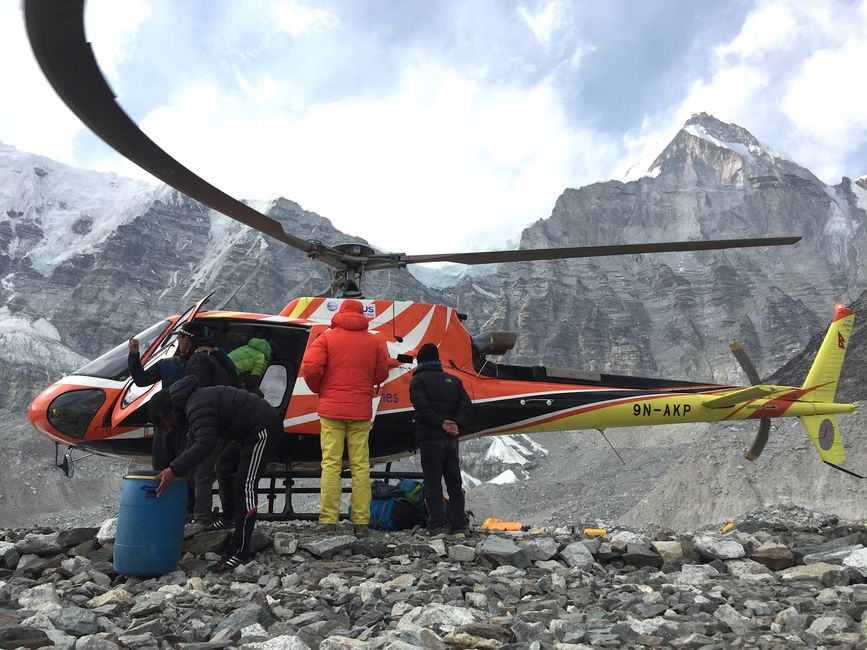
Pandey personally joined a rescue team and travelled to the site by helicopter the following afternoon. What he found was total devastation.
"I have seen that nothing's left over there," he said. "All the buildings, all the hotels, all the civilisations, both on the Chinese and Nepal sides, have been swept away."
Despite having made the journey many times, Pandey said the familiar landscape was now unrecognisable — including the building where his clients had spent their final night.
Scale of the Disaster and the Search for Survivors
The floods, triggered by an ice avalanche, have proven to be Nepal's worst natural disaster in more than a decade. At least 538 people have died, according to Nepalese authorities, while close to 1,000 remain unaccounted for. Chinese authorities have broadly confirmed 558 people missing from the Tibet side of the border, including 260 foreign nationals, though no breakdown by nationality has been provided.
Rescue operations are ongoing and increasingly complex, with heavy rainfall continuing to hamper access to affected areas. Further flooding, landslides and debris flows are forecast, and a lake formed by the landslide has begun to overflow, raising fears of additional inundation. Dozens of survivors have already been pulled to safety, with footage emerging of Nepali army personnel winching people from floodwaters using helicopters and construction equipment.
For the latest figures on Australians caught up in the crisis, see our ongoing coverage: Nepal-Tibet flash flood: more than 500 dead, 38 Australians among 1,000 still missing and the number of Australians missing in the Nepal floods as the death toll mounts.
Australian Government Scrambles to Locate Missing Citizens
Foreign Affairs Minister Penny Wong acknowledged the enormity of the situation on Thursday, confirming the government was working urgently to establish the whereabouts of the missing Australians.
"The government's priority is to confirm the whereabouts and welfare of these Australians," Wong said, adding that access to the affected region and the flow of reliable information remained severely limited.
"We will do our best to ascertain whatever information we can," she said, while conceding the "situation is a difficult one."
The Department of Foreign Affairs and Trade is also working to reach at least one Australian woman who made contact with family after surviving the initial flood event. She is understood to be in a remote area several days' hike from Kathmandu. Her husband, who travelled from Sydney to Nepal after losing contact with her, has been searching for her using her iPhone's last known location.
China's Information Blackout Complicates the Picture
While Nepal's authorities have provided detailed, rolling updates — including breakdowns of missing tourists by nationality and tour operator — the picture from the Chinese-controlled Tibetan side of the border has been far murkier.
Harrowing security camera footage showing the border crossing being obliterated by a wave of ice, mud and debris briefly circulated online before being removed inside China. Beijing's censorship apparatus moved quickly, with algorithms and human moderators flagging and deleting the content.
Chinese state media's prime-time coverage on Thursday led instead with a story about a new book published by President Xi Jinping. Coverage of the disaster was largely limited to updates on the scale of the rescue effort and the reopening of stretches of road.
Foreign journalists have faced consistent refusals when seeking permits to travel independently to Tibet — a restriction that has been in place since 2007, according to Human Rights Watch. Formal requests made since the disaster struck have been declined, with Chinese authorities citing access difficulties.
The contrast in transparency between the two nations has left families of the missing — including those of the 15 Australians on the Kailash pilgrimage — with precious little information as rescue teams continue to scour the devastated landscape.