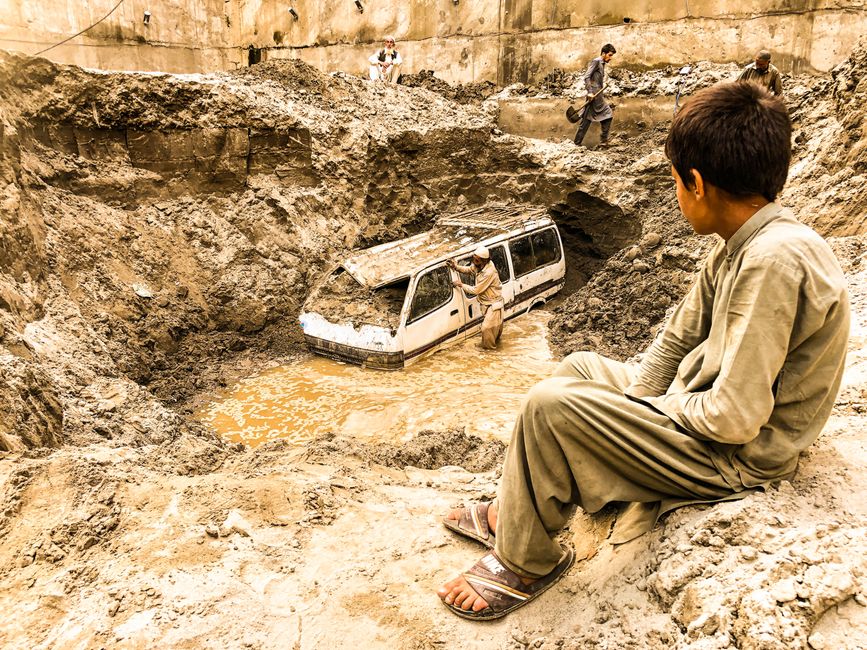
More than a week after a glacier collapse near Nepal's border with Tibet unleashed a catastrophic wall of water and mud, rescuers are still battling one of the most treacherous conditions imaginable — thick, deep sludge that can swallow a person to the waist in an instant. The death toll in Nepal has climbed to nearly 1,300, with close to 4,800 people still unaccounted for, including more than 600 foreign nationals. On the Tibetan side of the border, at least 31 people have been confirmed dead and more than 530 remain missing.
The disaster was triggered on 26 August when a glacial collapse high in the Himalayas sent an enormous surge of water and debris tearing down through valleys below, giving residents little to no warning. Entire villages were buried under metres of thick grey mud, roads were obliterated, and the bridges that connected communities to the outside world were swept away.
Mud That Moves Like a Trap
For those who have walked through the affected villages, the scale of destruction is almost impossible to process. In some areas the mud is deceptively firm on the surface — one wrong step and a foot disappears past the ankle. Pulling free requires significant force, and locals have warned that certain patches can drag a person down to their knees or even their waist without warning.
That same mud has become one of the greatest obstacles facing search and rescue teams. What might look from a distance like a straightforward operation — machinery digging, teams moving building to building — is far more complicated on the ground. In some of the worst-affected areas, the scene is almost eerily quiet, with only isolated individuals shovelling mud from doorways or picking through what little remains of their homes.
Days after the flood struck, some residents were still unable to physically reach nearby homes to determine whether the people inside had escaped. Rescue workers attempting to cross mud-covered terrain have resorted to laying down timber planks and salvaged debris to create makeshift pathways — a painstaking process that slows every step of the operation.
In the town of Betrawati, military helicopters have been deployed to survey the area and assist with planning a temporary bridge. While that may seem a low priority when people are still missing, the absence of crossings has meant that rescuers, food, and supplies can only reach many communities by air.
Australia Deploys Drone Teams and Victim Identification Specialists
Australia has significantly scaled up its response to the disaster, with a 15-person specialist team arriving in Kathmandu on Friday. The Disaster Assistance Response Team, drawn from the Queensland Fire Department and Fire and Rescue NSW, includes six remotely piloted drone operators and four incident management specialists, with victim identification experts also being deployed following a formal request for assistance from Nepali authorities.
Fire and Rescue NSW Commissioner Jeremy Fewtrell said the drone capability would give search teams critical information about locations that are too dangerous or physically impossible to reach on foot.
"Their drones will give search and rescue teams critical information about areas that may be inaccessible or too dangerous to reach from the ground," he said. "They have an important job ahead of them."
The drone technology being used carries AI-assisted detection capabilities and thermal imaging, allowing operators to identify victims who may be trapped or concealed beneath rubble and mud. That technology proved its value even before the specialist team arrived — journalists on the ground used drone footage to help a local man search the interior of a buried home for any sign that his loved ones had escaped, days after the flood had passed.
At least 36 Australians remain missing, and the federal government has expressed grave concerns for their welfare. Foreign Minister Penny Wong confirmed that Nepali authorities are conducting targeted searches in locations where missing Australians were last believed to be, including the Kailash Hotel and the Royal Himalaya Hotel. Telecommunication data is also being shared with local authorities to help narrow down the last known positions of missing individuals. You can read more about the latest updates on missing Australians and rescue efforts here.
Treasurer Jim Chalmers confirmed on Friday that two more Australians had been found safe, bringing the total number of citizens confirmed safe since the disaster began to seven — five were confirmed safe earlier in the week.
Aid Begins to Flow, but the Scale of Need Is Enormous
A Royal Australian Air Force aircraft carrying emergency aid landed in Kathmandu on Wednesday, delivering more than 1,400 hygiene kits, 2,200 solar lights and phone chargers — supplies critical in areas where infrastructure has been completely destroyed.
The challenge ahead remains immense. With bridges out, roads impassable and the mud still shifting underfoot, moving people and resources into the most isolated communities continues to depend heavily on air support. For the families of those still missing, every hour counts — and the mud that buried their homes shows no sign of giving up its secrets easily.
For background on the scale of the disaster and how the missing toll has grown, see our earlier coverage on the Nepal-Tibet flash floods and the Australians among those still missing.