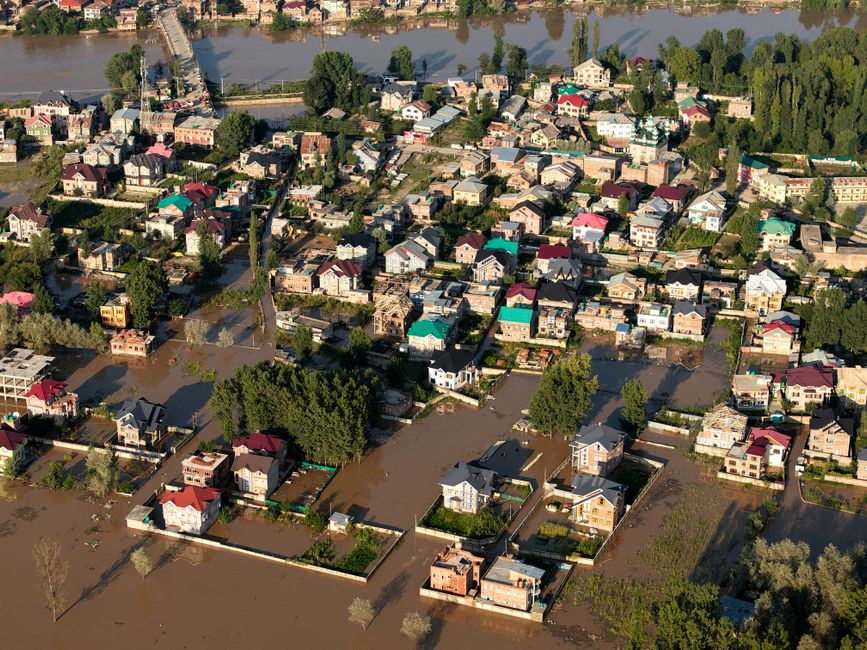
More than 500 people have been confirmed dead and close to 1,000 remain missing — including at least 38 Australians — after a catastrophic ice avalanche unleashed a wall of water, rock and debris across the Nepal-Tibet border on Wednesday, devastating villages and cutting off communities along some of the Himalaya's most remote river valleys.
Rescue teams are battling blocked roads, ongoing rainfall and the threat of further flooding as they work to reach survivors and recover victims buried beneath metres of mud and debris. The Australian government has committed $5 million in humanitarian assistance and is sending additional personnel to Nepal to support the response.
How the Nepal-Tibet Flash Flood Unfolded
Witnesses described a terrifying sequence of events beginning with a glacier high in the Himalaya breaking loose, sending a torrent of ice, rock and water roaring down the mountain. The initial movement was so violent it registered on instruments as a seismic event. The debris became congested in narrow waterways before bursting through steep-sided valleys with devastating force.
"It came in suddenly and exploded like a bomb," said survivor Janak Bahadur. "The river looked small from a distance but it suddenly started overflowing and swept through this place."
Within just 30 minutes, floodwaters in some areas reached heights of more than nine metres. Homes, bridges and infrastructure were obliterated. Another survivor described the logistical nightmare confronting rescuers: "The biggest challenge is blocked roads… as of now, we are not able to tell how many people are still stuck or buried under debris as there is no way to reach the spot."
University of Auckland Associate Professor in River Science Jon Tunnicliffe described the event as a classic "hazard cascade" — where instability high on a glaciated slope generates an ice-rock avalanche that can block a river, absorb water and sediment, and then transform into a fast-moving debris flood capable of travelling tens of kilometres downstream. Sediment, he explained, is a key factor in why such floods are so destructive: rocks, gravel and boulders engulfed in the torrent give it the power to demolish buildings and major infrastructure.
Australians Missing — Including a Sydney Woman on Pilgrimage
Among the missing is Sydney woman Sumi Adhikari, who was on a spiritual pilgrimage near the China-Nepal border organised by the Isha Foundation. She had flown from Sydney to Kathmandu on 14 August and trekked toward a sacred site near Tibet's Mount Kailash. Her husband, Kailash Mansowar, has since travelled to Nepal from Sydney, guided by the last known location recorded on her iPhone.
"Even the smallest piece of information could help bring her home," read a widely circulated social media post announcing her disappearance. Mansowar said he was working with local authorities to locate her.
A separate group of 15 Australians — including two boys aged 11 and 14 — were travelling with a US-based adventure tourism company when the disaster struck. The group included a well-regarded Sydney couple whose two sons, both studying medicine in New South Wales, were also part of the tour. Foreign Minister Penny Wong confirmed at least four Australians were travelling independently of any tour group.
The Department of Foreign Affairs and Trade said it was urgently working with local authorities to reach one Australian woman who had made contact with family after the flood, and was last reported in a remote area several days' hike from Kathmandu. For the latest on the rising number of Australians missing in the Nepal floods, the situation has been fast-moving, with the figure climbing steadily since the disaster struck.
Sydney doctor Manoj Dharmaratnam said he had prescribed altitude medication and conducted pre-departure injury assessments for several friends who were on the pilgrimage. He recalled advising one woman she may not have been fit to make the trek. "She actually called up and cancelled her trip… but then she said I've bought the ticket, so I might as well go," he said.
Climate Change in Focus as Experts Warn of Ongoing Risk
Scientists are urging caution around immediate attribution but say the broader climate context cannot be ignored. "We do not yet know why this particular glacier failed," said Professor Tunnicliffe. "What we do know is that conditions across the Hindu Kush Himalaya are changing rapidly. Glaciers are retreating, permafrost is degrading, new lakes are forming, and steep slopes are being exposed and destabilised."
He added that climate change can amplify existing hazards by shifting the thresholds at which one physical process triggers another — a warning echoed by other geoscientists surveying the damage. The disaster comes amid growing concern globally about the accelerating pace of glacial retreat across high-altitude mountain systems, echoing warnings from climate scientists about extreme weather events becoming more frequent and severe.
Second Flood Threat Looms as Lake Forms Upstream
Authorities are now warning that the danger is far from over. A lake has begun to form above the Rasuwagadhi border crossing after the Lhendi River was blocked by debris approximately 18 kilometres upstream. Nepal's national disaster management authority warned the obstruction poses a serious risk to communities downstream, and evacuation orders have been issued at Jilong Port on the Nepal-China border.
Geoscientist Jakob Steiner cautioned that rocks, boulders and debris lodged in the valley could continue to cause flooding. "Unfortunately it's not over," he said. "This material is only going to lie there."
Heavy rain is forecast to continue across affected areas of both Nepal and Tibet, further hampering rescue operations and raising the prospect of additional landslides and debris flows. With the official death toll at 538 and nearly 1,000 people still unaccounted for, authorities warn the final toll will almost certainly be significantly higher.