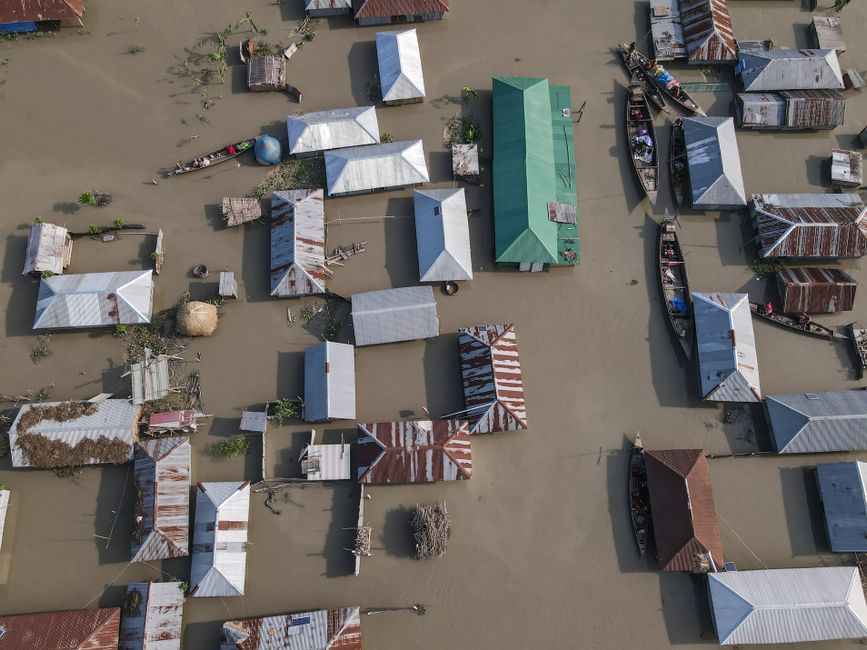
Nepal's catastrophic glacier disaster has claimed more than 1000 lives, with rescuers deploying helicopters, heavy machinery and excavators nearly a week after a glacial collapse sent a torrent of ice, rock and mud surging through remote communities along the country's border with China. The death toll has risen to 1050, while approximately 4000 people remain missing — including 583 foreign nationals, among them 42 Australians.
The disaster was triggered on August 26 when a glacier collapsed, unleashing a deluge through the impoverished Himalayan nation's northern border region. More than 11,000 people have since been rescued, Prime Minister Balendra Shah confirmed in a social media post, adding that power and communication lines have been restored in some affected areas.
Rescue Effort Targets Trapped Hydropower Workers
The focus of rescue operations has shifted heavily to Nepal's devastated hydropower stations, where the largest concentrations of trapped people are believed to be. At least 639 people remain stranded at hydropower sites, according to Nepal's disaster management authority, with rescuers battling collapsed tunnels and persistent floodwaters to reach them.
Specialised joint teams from Nepal, India and China have been working around the clock, constructing temporary bridges to access remote communities and using excavators to dig through the ruins of damaged hydropower infrastructure. So far, 279 workers have been rescued from those facilities, the Prime Minister said. Nearly 300 more workers are believed to still be trapped inside tunnels, with rescue teams working to reach them.
As rescuers earlier raced to find those trapped in tunnels as the flood death toll climbed, the scale of the challenge has only grown in the days since.
In China, teams worked through the night to restore access to the Nepali border, a steep mountain gorge flanked by unstable cliffs and fast-moving river channels. China's foreign ministry announced it would send DNA testing experts to disaster-affected areas alongside a second shipment of relief supplies, including drones and water purification equipment. South Korea, nine of whose citizens are among the missing after working at a hydropower project in the Rasuwa district, said it would deploy a 44-member emergency relief team to support search-and-rescue operations.
Staggering Scale of Destruction
A preliminary assessment by the United Nations Development Program has estimated the disaster left behind at least 2.2 million tonnes of debris — encompassing building materials, rock and sediment across towns and valleys.
"The amount of debris shows the scale of the destruction and the challenge communities face as they clear homes, roads and public spaces and begin to rebuild," the UNDP said.
Survivors from the hard-hit Rasuwa district described fleeing with nothing but the clothes on their backs. One survivor who had walked to the neighbouring Nuwakot district with scores of others described the desperate conditions: "We did not have the time to grab anything before fleeing. What we were wearing is the only pair of clothes we have. And even they are wet from rain."
International Aid Flowing In
Nepal initially declined offers of general foreign search-and-rescue assistance, specifying instead that it required specialised services — including life-detecting equipment, large refrigerators and pre-fabricated bridges. International support has nonetheless grown rapidly, with more than $US42 million ($A59 million) in aid flowing into the country, Prime Minister Shah said, with further contributions expected.
The number of Australians caught up in the disaster has been a point of particular concern, with the number of Australians missing in the Nepal floods having climbed steadily as the death toll mounted in earlier days of the crisis. Of the 583 foreign nationals still unaccounted for, 42 are Australian.
Authorities have begun the grim task of managing unidentified remains, with army and police officers placing bodies into a mass grave site at Dakshin Dhoka, Gokarneshwor, as recovery efforts continue across the region.