Nepal's army is racing to rescue more than 100 people still trapped inside a flooded hydropower tunnel as the death toll from the country's catastrophic flash floods and landslides climbs to 538, with the number of missing Australians now confirmed at 41.
The disaster, which struck two days ago along Nepal's northern border region, has left a trail of destruction described by survivors as almost incomprehensible — roads, bridges and dams obliterated, entire communities buried under a torrent of icy mud and debris.
Tunnel rescue at Trishuli 3A hydropower project
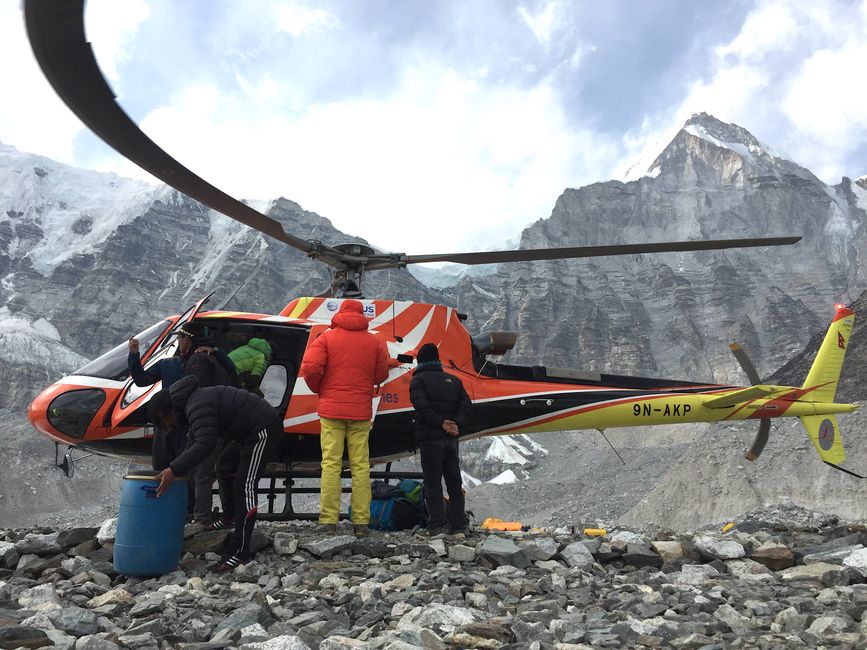
Rescue operations on Friday centred on the Trishuli 3A hydropower project, where a large number of workers and local residents became trapped after floodwaters inundated the facility. Nepal army spokesperson Raja Ram Basnet said two helicopters had been deployed to reach those inside, though the operation was complicated by the terrain and the ongoing threat of floodwaters.
"Our focus is in search and rescue of people … some people are trapped in the tunnel of Trishuli 3A hydropower project," Basnet said. "Two helicopters have been dispatched but it is challenging because it is tough to even locate the entry points of the tunnel."
In a significant development, the prime minister's office confirmed that the army had already pulled 350 workers and locals to safety from the same tunnel, describing the conditions faced by rescue teams as "extremely risky and challenging amid adverse weather and rapid floodwaters." More than 100 people, however, remain inside, and the army confirmed it was still working to evacuate them. No details were provided about the nationalities of those rescued or still trapped.
The scale of the operation adds to what is already shaping up to be one of the most deadly natural disaster events in the region in recent memory. For context on how events like this compare historically, see the List of accidents and disasters by death toll.
Australians among the missing as Canberra mobilises response
The number of Australians unaccounted for has risen to 41, up from 38 in the immediate aftermath of the disaster. Australia's Department of Foreign Affairs and Trade has fielded more than 450 consular calls related to the floods, and a four-person crisis response team was expected to arrive in Kathmandu on Friday to bolster consular efforts already under way.
Foreign Minister Penny Wong confirmed the government is working urgently to establish the welfare of every missing Australian. "The extraordinary scale of this disaster and the remoteness of the affected region mean immense challenges lie ahead for the response and recovery," she said in a statement. Wong also spoke directly with Nepal's Foreign Affairs Minister Shisir Khanal, conveying Australia's condolences and affirming the country's readiness to provide further humanitarian assistance.
Among those missing is Reshma Patel, a NSW mother of two who was travelling with a tour group on a pilgrimage when the floods struck. Her last known location was an immigration office at the Nepal-Tibet border — a building captured in widely circulated footage being engulfed by floodwaters. Her husband flew to Kathmandu on Friday in a bid to assist the search. "She was inside the big building, which you can see in all the videos that had been hit hard by the floods at the border," a family friend said.
One missing Australian — a young woman stranded at Kyanjin Gompa while hiking the Langtang trek — made contact with her family, reducing the confirmed missing figure from 39 to 38 at one point before the tally climbed again to 41.
This latest update follows earlier reporting as the number of Australians missing in the Nepal floods continued to mount in the days after the disaster first struck.
Glacial collapse blamed as experts warn of further flood risk
The US Geological Survey has attributed the disaster to a glacial collapse that unleashed a massive flow of icy debris downstream. The resulting wall of freezing water and mud — described by witnesses as tsunami-like — swept through towns, smashing bridges and dams, and carrying vehicles in its path. Scientists have warned that climate change is accelerating glacial melt worldwide, increasing the frequency and severity of such events.
Experts also cautioned that the risk of further flooding remains elevated, with some search and rescue efforts temporarily suspended as a precautionary measure. On the ground, Nepali soldiers are using sniffer dogs to search for bodies buried beneath the debris, while emergency helicopter teams continue to pluck survivors from isolated zones.
"It is a giant graveyard," said Omkar Joshi, a 35-year-old Nepali customs agent who was rescued from a hilltop in the border town of Timure. "All that is left are sand and pebbles, soaked red by human blood."
Nepal opens door to foreign assistance
Nepal's government, which had previously rejected offers of rescue assistance from foreign countries including Australia, India, China and South Korea, is reported to have reversed that position following intense international pressure. The shift could allow specialists in tunnel rescue, DNA identification and forensic examination to enter the country — a development that may prove critical given the large number of foreign nationals, including tourists and Hindu pilgrims travelling to Tibet's Mount Kailash, who remain among the more than 1,000 people listed as missing.
An unnamed Nepali official indicated the government had faced "massive" pressure from the international community to permit at least search-and-rescue teams entry, given that citizens of multiple nations are unaccounted for. Australian authorities confirmed they were prepared to deploy such specialists if given the green light.
Survivors, meanwhile, continue to describe scenes of total devastation across the northern border region, where roads and infrastructure have been completely wiped out, cutting off communities and severely hampering the relief effort.