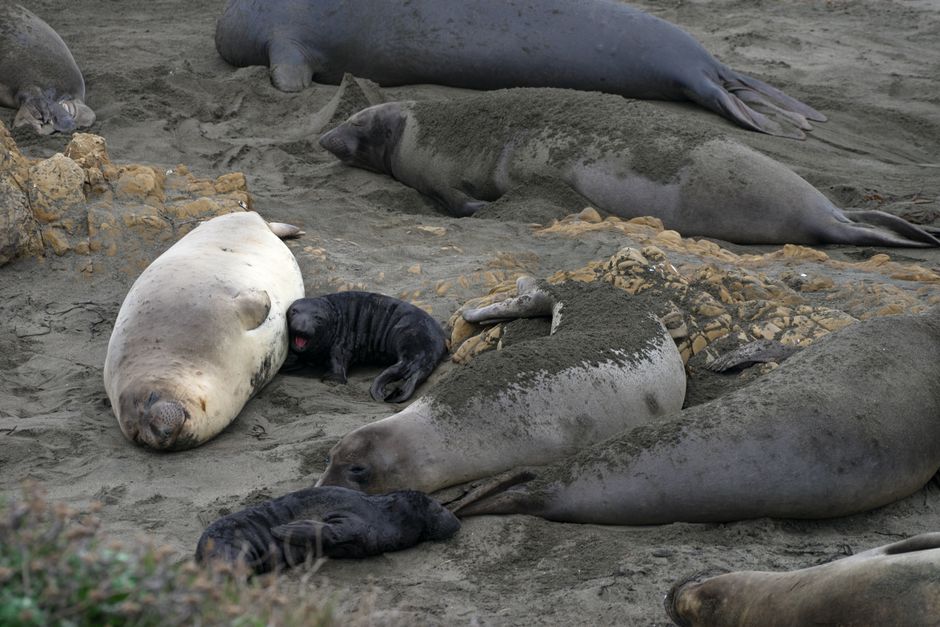
Australia's most famous seal is at it again. Neil the elephant seal has been filmed hurling his 1000kg body onto a parked ute at a Tasmanian petrol station, rattling the vehicle and sending startled tourists scrambling, just days after the five-and-a-half-year-old southern elephant seal made his return to the island state following nearly six months at sea.
What Happened at the Petrol Station
Victorian tourist Jess Caron was filling up when a friend spotted the massive animal lumbering toward the forecourt. Having never seen Neil before, she was immediately struck by his sheer scale.
"He was massive — and so loud!" Caron said. "He was on a big car … on a ute, but if he was on my car, he probably would have been on the bonnet. So I moved my car, I didn't want it to get hurt."
Caron watched on for a full hour as Neil made himself at home. Petrol station workers attempted to move him on using a wooden board and a rope, but the seal was having none of it — rocking the ute back and forth before settling in the middle of the road.
"He sat on the road and then he got back up on the car and he was rocking the car back and forth … he was not happy," she said. It wasn't until staff switched off the station's lights — simulating nightfall — that Neil finally relented, lying down in the road and apparently giving up the fight.
Why Neil Behaves This Way
Wildlife officials say Neil's increasingly bold interactions with vehicles, fences and infrastructure are entirely consistent with normal elephant seal development — just in an unusual setting. Kris Carlyon from the Department of Natural Resources and Environment Tasmania explained that young male elephant seals typically spend their early years play-fighting, jousting and testing their strength against other seals in preparation for competing over territory and mates.
"He's got no other seals to play with, to joust with, to test his own strength with like he would be doing normally," Carlyon said. "So he chooses things to interact with."
Born on the Tasman Peninsula in 2020, Neil is still a juvenile. When fully grown, he is expected to reach up to five metres in length and tip the scales at between 3000kg and 3500kg — meaning the damage he currently causes will only increase as he matures.
Officials Warn the Public to Stay Away
Wildlife authorities have kept Neil's precise location under wraps since his return, citing safety concerns for both the public and the animal himself. His Instagram fame has drawn growing crowds wherever he surfaces, and Carlyon says that level of attention carries real risks.
"Right now the attention Neil gets helps with the awareness of our threatened species, helps with his protection in some ways," he said. "But it also encourages perhaps risky human behaviour. If unmanaged, that attention can result in injury to both Neil or to the public. It can push him into unnatural habitats, and ultimately threaten his survival as a wild animal."
Officials are urging Australians to use common sense if they encounter Neil — observe from a safe distance, do not attempt to interact with him, and never place themselves or their vehicles in his path. A 1000kg animal in play-fighting mode is capable of causing serious injury, and that risk will only grow as he continues to put on weight.
What's Next for Neil
For now, Neil appears settled back in Tasmania after his months-long oceanic absence, continuing his habit of crushing fences, blocking roads and, apparently, intimidating petrol station staff. His movements are being monitored closely by wildlife officials, who are balancing the public's evident enthusiasm for the beloved visitor against the very real need to keep both Neil and curious onlookers safe.
As one of Australia's most-watched wild animals, Neil's story has become a snapshot of the complicated relationship between wildlife and human environments — a dynamic that has grown increasingly common across the country in recent years.