When Melbourne was handed the right to host the 1956 Olympic Games, the world's scepticism was not entirely misplaced. The question was never really whether Australia's athletes could compete on the world stage. The doubt, shared by many at home and abroad, was whether Australia itself was ready to host the planet's most ambitious sporting event.
What followed was a story of improvisation, institutional naivety and last-minute solutions that somehow produced one of the most fondly remembered Games in Olympic history.
Women's groups, housewives brigades and a committee with no women
In July 1954, two years before the Games were due to open, Melbourne's lord mayor Robert Solly summoned representatives from the city's leading women's organisations to a meeting at the Town Hall. Groups including the Country Women's Association, the Girl Guides Association, the Young Women's Christian Association and the Housewives Association all gathered to discuss how the city might receive its international guests.
Then-premier John Cain snr addressed the meeting, urging the women to understand their role would be making visitors feel welcome. The meeting resolved to form the Olympics Civics Committee to coordinate women's groups across Melbourne during the Games. No women were appointed to it.
A separate volunteer Housewives Brigade was established to help make approximately 6,000 beds and tidy rooms in the athletes' village in Heidelberg. The city was also quietly working through a more awkward problem: whether its homes were fit to receive foreign tourists at all. At the time, a quarter of Melbourne households had no refrigerator, two-thirds had no hot running water in the bathroom, and most relied on outside toilets. As it turned out, the cost and distance of international travel meant very few tourists actually arrived. Only athletes and their teams made the journey in any significant numbers.
No cooks, a poor track and a stadium that nearly wasn't
With the White Australia Policy still a decade away from being dismantled, and postwar European migration only beginning to reshape what appeared on suburban dinner tables, Melbourne's food culture in 1956 was not exactly cosmopolitan. Roast lamb was about as adventurous as it got. By August, barely two months before athletes were due to arrive, the Olympic Organising Committee had still not arranged for cooks capable of preparing food suited to international palates.
At the eleventh hour, ten cooks arrived courtesy of a shipping line. It was, as observers noted at the time, emblematic of a Games being hastily cobbled together rather than carefully planned.
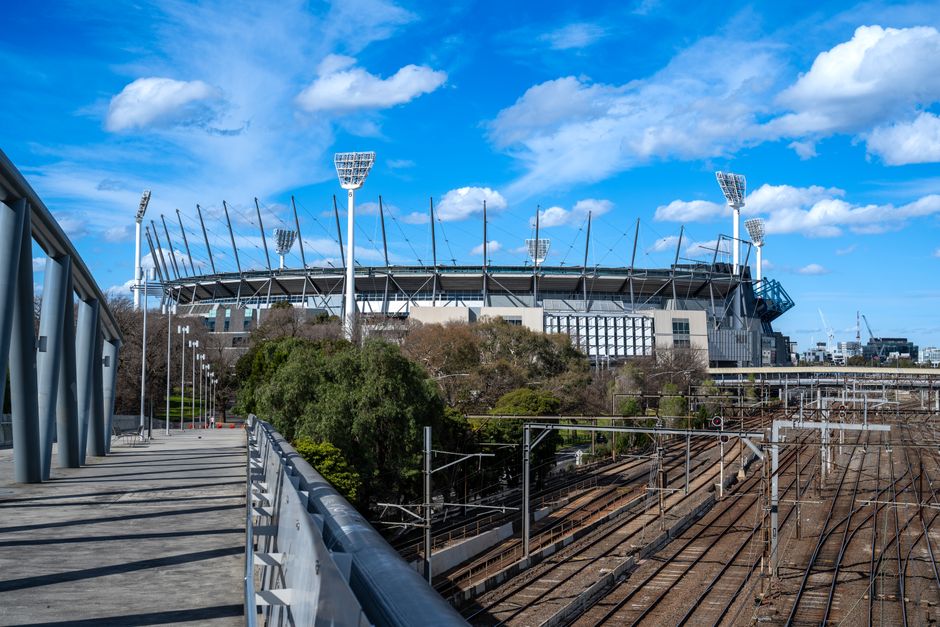
The question of where to hold the main events was itself unsettled for far longer than it should have been. Options floated included the Showground, a site at St Kilda, and even a proposed 150,000-seat venue in Princes Park. Prime minister Robert Menzies, no less, recognised the financial absurdity of that last proposal and sided with Cain snr: it would be the MCG, or nothing.
Even that decision brought friction. The Victorian Cricketers Association and the Melbourne Cricket Club were deeply uncomfortable with the prospect of tearing up the pitch on which Donald Bradman had played. When the surface was eventually ripped up and a cinder athletics track laid in its place, visiting athletes were unimpressed. The track was widely considered poor.
Somehow, it all came together
And yet, Melbourne pulled it off. The track was built. The cooks arrived. The Olympic torch made it to the city. Solutions, however improvised, were found at every turn.
The 1956 Games are remembered today not as a cautionary tale of unpreparedness, but as a genuinely warm and successful event, one that introduced Australia to the world and, perhaps more importantly, introduced Australia to itself. The chaos behind the scenes only deepens the achievement.
For a city that continues to reinvent itself, as anyone who has explored Melbourne's evolving inner-city landscape can attest, the spirit of making things work against the odds appears to be something of a local tradition.

