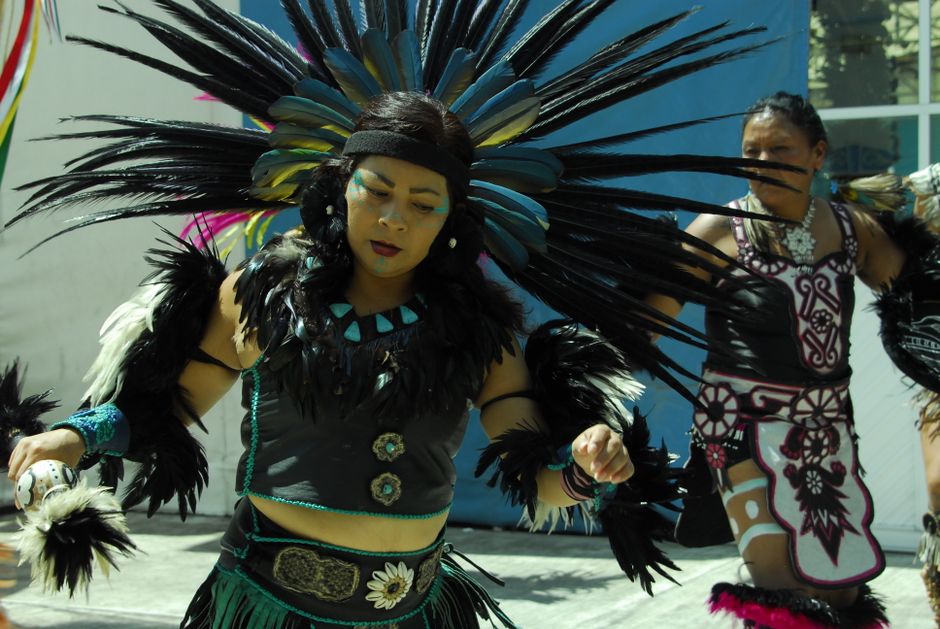
NAISDA Dance College, widely regarded as the birthplace of contemporary Australian Indigenous dance, marked its 50th anniversary this week with a joyous, large-scale student production that played at Carriageworks in Sydney on 27 and 28 November. The two-act spectacle, titled Goeyga Buya. Banal. Djarrawawuy (Sun Cycle), featured 32 student dancers alongside tutors and guest performers, and drew a rare depth of living cultural heritage onto a mainstream Sydney stage.
A landmark institution with an extraordinary legacy
Founded in 1976 by African-American dancer Carole Johnson, the National Aboriginal and Islander Skills Development Association, known as NAISDA Dance College, is based just 15 minutes from Gosford and has shaped Australian artistic culture in ways that far outstrip its modest regional profile. Its influence is comparable, in its own field, to what institutions such as Juilliard have meant to American music or NIDA to Australian acting, but with the added dimension of a living cultural inheritance stretching back millennia.
It was within NAISDA's creative environment that the internationally acclaimed Bangarra Dance Theatre was formed. The college's alumni include celebrated artists such as Christine Anu, Stephen Page, Frances Rings and Vicki Van Hout, all of whom have gone on to shape the direction of Australian performing arts. That First Nations artists continue to reshape Australia's performing arts traditions is a testament to the depth of creative foundation NAISDA helped establish.
Karul Projects at the helm for the anniversary production
To mark the milestone, NAISDA commissioned Thomas E.S. Kelly and Taree Sansbury, the acclaimed choreographic partnership behind Karul Projects and both NAISDA alumni themselves, to direct the anniversary work. The result is a production that channels Kelly's distinctive movement language: playful rhythms, sharp gestural accents and sudden dynamic shifts that give the ensemble sequences a percussive, grounded kinetic energy.
The 32 student dancers rose enthusiastically to Kelly's considerable athletic demands. The most striking performances in the production illustrated how physical stamina and attack can sharpen choreographic expression and artistic focus. As observed of the best young dancers, many approach their craft with the conditioning of elite athletes.
Cultural leadership was provided by tutors and guest performers who brought live song and dance from north-east Arnhem Land and the Torres Strait, lending the production an authenticity that sits outside the reach of purely theatrical invention.
Highlights of a cinematic evening
The choreography reached its peak in the travelling ensemble sequences, where students moved in unison and in clusters, caught up in what can only be described as irrepressible celebratory momentum. These high-energy passages contrasted with quieter, more tender moments in the second act, particularly a section evoking water and a passage called "Twilight Dreaming", which offered a gentle acknowledgement of departed loved ones.
The finale, the Sun Cycle sequence, achieved something close to cinematic scale. A platform carrying a singing storyteller glided towards the audience, flanked by pillars of light, each representing a decade of NAISDA's five-decade history. The rippling ensemble surrounded the moving structure, creating an image of communal revelation.
What Sydney audiences more familiar with Bangarra's lyrical aesthetic will discover in this production is a distinctly different voice in Indigenous contemporary dance, one rooted in rhythmic vitality and collective physical joy. As First Nations wisdom continues to remind us, Australia's cultural life has always carried multiple, layered traditions, and NAISDA remains one of the most vital institutions keeping that plurality alive.
The last impression left by Sun Cycle is not spectacle or ceremony, but something simpler and perhaps more lasting: joyfulness.