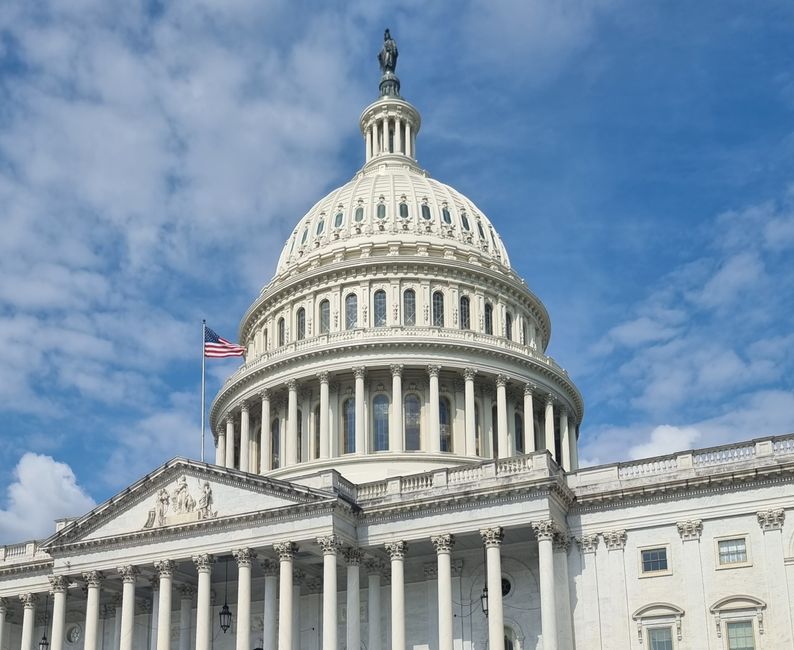
Democrats have swept the 2026 midterm elections, winning control of both the House of Representatives and the Senate in what experts are calling a historic rebuke of President Donald Trump, but the 80-year-old is wasting no time signalling exactly how he intends to fight back: the presidential veto.
Seven Senate seats and roughly two dozen House seats flipped toward the Democrats, handing the opposition party slim majorities in both chambers. The result erased the Republicans' hold on Congress and was described by one academic as a "rebuke from the American public on the agenda of the Trump White House and the lack of delivery on core promises."
Voter anger over the cost of living, tariffs and the ongoing war with Iran, which has sent fuel prices soaring, is understood to have driven much of the swing against the president's party.
Trump declares himself 'Mr Veto'
Even as Democrats celebrated, Trump moved quickly to frame the limits of their victory. In a television interview, he was blunt about his intentions.
"I guess I'll become Mr Veto," he said.
In a separate interview on Tuesday evening local time, Trump offered a more conciliatory tone, saying he was "willing to accept those results" and that his administration would "work with the Democrats." But within minutes of that interview, he posted on social media a photograph of a red baseball cap bearing the single word: "VETO."
Earlier the same day, Trump told a television interviewer that he held an "ultimate power" in Congress. "It's called 'veto'," he said, echoing a statement he had made days earlier: "If we didn't win, I veto everything."
Speaking on another program, Trump insisted that despite their congressional majority, Democrats were "not really in control." He described the scenario in vivid terms: "They can send over 50 different great bills that they are all excited about, and I send them back with a nice stamp."
How the veto works, and why it matters
Under the United States Constitution, the president has the authority to veto any legislation passed by Congress, making it one of the most powerful tools available to block an opposing majority.
There are two forms the veto can take. The first is the standard veto, in which the president returns unsigned legislation to Congress, usually with a written message, within ten days. Congress can override this only by securing a two-thirds supermajority in both chambers, a threshold that is extremely difficult to reach in a divided political environment.
The second is the pocket veto, an absolute form of veto that occurs when Congress has adjourned before the ten-day window expires and the president simply does not act on the legislation. Because Congress cannot override what was never formally returned, the bill dies without recourse.
The scale of veto use has varied widely across presidential history. Former president Franklin D. Roosevelt vetoed 635 pieces of legislation during his tenure. During his first term, Trump vetoed ten bills and succeeded in blocking nine of them, a 90 per cent success rate according to research from a university presidential project.
Beyond the veto, Democrats also face a structural hurdle in the Senate: passing most legislation requires 60 votes to bring a bill to the floor, a threshold the party is almost certain to fall short of even with its new majority. The exception is budget reconciliation measures, which cover government spending and taxation adjustments.
Democrats preparing a legislative and investigative offensive
Despite those constraints, Democrats are moving forward with an ambitious agenda. The party has outlined plans for its first 100 hours of House control, described as a rapid-fire legislative sprint that includes bills targeting tariff relief, an end to the Iran war and cuts to health insurance costs.
House Democratic leader Hakeem Jeffries has promised to hold the administration accountable from day one. "If you have been stealing from the American people, screwing over the American people or short-changing the American people, beginning on day one of the new Congress, we are going to hold the crooks accountable," he told a recent rally.
A House majority also grants Democrats significant investigative powers, including the authority to subpoena documents and witnesses. The party has indicated it intends to open congressional probes into Trump's conduct, potential conflicts between his family's business interests and his presidential powers, and the activities of government agencies led by Trump allies, including the Department of Justice and the FBI.
Progressive congresswoman Alexandria Ocasio-Cortez has called for immediate action. "Day one, we need to be opening investigations into the heads of every single one of these agencies," she said at a town hall session last month.
Defense Secretary Pete Hegseth is also emerging as a target. A resolution to impeach Hegseth has already been introduced by an outgoing Republican congressman, citing US military actions in Iran, Venezuela, Yemen and elsewhere. Jeffries has said publicly that his party plans to "run Pete Hegseth out of town," though he has stopped short of explicitly endorsing impeachment proceedings against either Hegseth or Trump himself.
Some Democrats are pushing for Trump to face a third impeachment, but the party remains divided on the question. Prominent figures including Kamala Harris and Hillary Clinton have argued against pursuing impeachment, saying the party's energy is better directed elsewhere. Even if the House voted to impeach, conviction and removal would require two-thirds of the Senate.
What comes next
The incoming Democratic-controlled Congress will not be sworn in until January 3. Members of the current Congress are set to return on November 9 with a significant legislative workload still to complete before the transition.
For now, the picture is of a deeply divided Washington: a Democratic Congress with the power to investigate, block nominees and introduce legislation, facing a president who has made clear he sees the veto stamp as his primary instrument of governance for the years ahead.

