The number of Australians unaccounted for in the devastating Nepal flood disaster has risen to 43, with the federal government working around the clock to confirm their welfare as the overall death toll climbs to nearly 800 and more than 3,000 people remain missing on both sides of the Nepal-China border. The catastrophe, triggered on Wednesday when a torrent of ice, rock, mud and debris tore through mountain valleys and rivers, has left a trail of destruction across the region.
Australia's total humanitarian commitment to the disaster has now reached $8 million, after the federal government announced a further $3 million in support, including supplies being transported by the Australian Defence Force. A joint fundraising appeal led by the Emergency Action Alliance — a coalition of 15 prominent charities — has raised more than $3.5 million, including $2 million contributed directly by the federal government, to fund emergency shelter, food, safe drinking water, healthcare and sanitation for survivors.
Families torn apart, survivors in desperate conditions
On the ground in Nepal, conditions for survivors remain dire. Aid workers visiting the affected Nuwakot district described scenes of mud, confusion and chaos, with personal belongings scattered across the devastation and little remaining of what were once thriving communities.
"It's just mud everywhere, there's also a lot of confusion and chaos," one aid worker said after visiting the region. "It's very much still a rescue operation but of course, today is day five, and I think the chance of finding people alive is slowly dimming."
Save the Children has managed to reunite 69 children with their families since Friday, with separated and unaccompanied children identified as one of the most urgent concerns on the ground. The Red Cross estimates more than 90,000 people have been affected by the disaster overall.
One survivor, Rabindra Hamal, recounted how he and colleagues at a dam construction site were warned to flee just minutes before the floodwaters reached them. The group escaped by car, but as they attempted to reach higher ground on foot, two of their number were swept away.
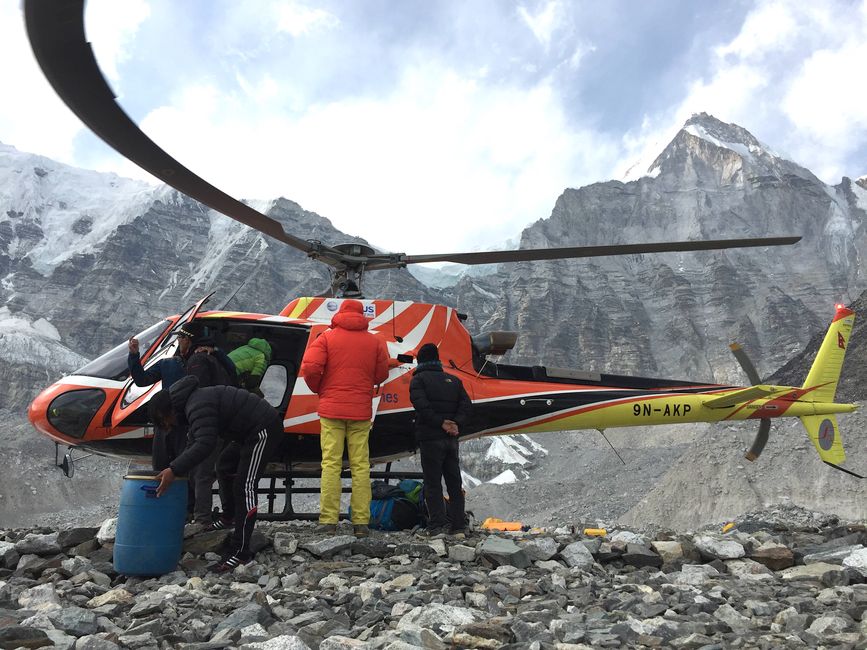
"It was completely terrifying," Hamal said. "We couldn't believe it." The remaining group eventually scrambled to safety, waiting until the following day before being airlifted by helicopter to a nearby army barracks and then evacuated to Kathmandu. Hamal said of the several thousand people working on the hydroelectric project, around 500 remained missing.
Australian families anxiously wait for news
Among the missing Australians are a number of heartbreaking cases drawing national attention. Brothers Ashwin and Aarish Muralitharan, aged just 11 and 14, are among those unaccounted for, along with their parents. A Sydney family of four from Cherrybrook — including two sons aged 21 and 24 — also remains missing after travelling to the region with a Himalayan tour operator. They had been accompanied by two other travellers on a pilgrimage when the flood struck.
Michael Keats, 37, from the NSW South Coast, is also among the missing. A friend said he was caught up in the floods near an immigration centre between Nepal and Tibet. "We have not heard anything from him. We're all very concerned and feel like there's not much we can do. We will need a miracle to ensure his safety," the friend said.
There has been at least one piece of positive news: Cara Severino, a 26-year-old woman from Wollongong who was hiking the multi-day Langtang trek when the flood hit, has made contact with her family and has since been located by Australian consular officials. She had been stranded after the disaster and was attempting to hike out of the affected area. Her family said they "eagerly await more information about her safe return".
The Department of Foreign Affairs and Trade has fielded more than 450 calls related to the disaster. Consular staff are stationed in Kathmandu, and the government has confirmed it is in contact with the next of kin of most of those missing. In a sign of the broader community impact, dozens of families have posted flyers of missing loved ones outside a building in Kathmandu being used as a coordination point for rescue operations and recovered victims.
A public candlelight vigil will be held at Melbourne's Federation Square on Monday evening in memory of those lost. For earlier coverage of the rising toll, see our reports on the Nepal-Tibet flash flood death toll and the growing number of Australians reported missing in the disaster's earlier stages.
China blames climate change as global concern grows
China's Foreign Minister raised the issue of climate change directly with his Nepalese counterpart in a telephone call on Saturday, linking the glacier disaster to global warming. The assertion reflects a growing body of scientific concern about how rapidly warming temperatures are destabilising glaciers across the Himalayan region, with potentially catastrophic consequences for densely populated valleys below.
The Nepal disaster is the latest in a pattern of extreme glacial events being connected to rising global temperatures — a phenomenon that, like climate change in Europe, is increasingly being examined in terms of its real-world humanitarian consequences. Scientists and governments alike are warning that as temperatures continue to rise, the risk of similar disasters will only increase.
Rescue teams have expanded their search operations closer to the Nepal-China border, where the destruction is understood to be most severe. Roads into the affected region have been completely destroyed, telecommunications infrastructure has collapsed, and an estimated 10,000 homes have been reduced to rubble — complicating both rescue and relief efforts as the days since the initial disaster continue to mount.