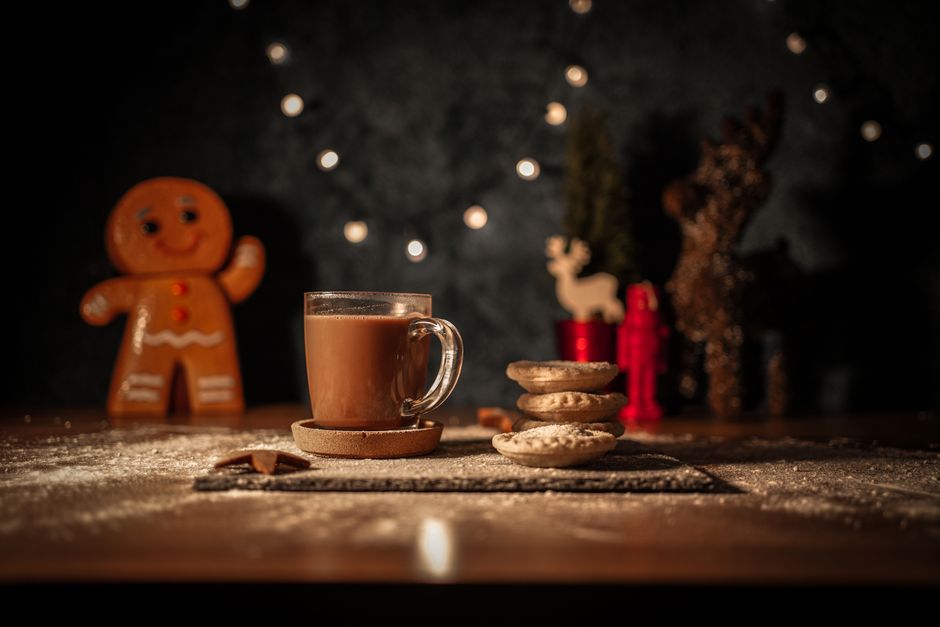
Spring has barely settled in and already the mince pies are back on supermarket shelves, sitting there in their festive packaging like they own the place. What looks like a harmless retail quirk may actually point to something far more uncomfortable about the way Australians, and consumers broadly, cope with a world that is increasingly difficult to face.
The Mince Pie Creep Is Real, and It Is Getting Worse
The phenomenon has earned its own informal label: the Mince Pie Creep. It may not yet have the notoriety of its cousin, the Hot Cross Bun Creep, a trend so advanced that hot cross buns have effectively shed their Easter identity and become a year-round, entirely non-denominational carbohydrate. But the early appearance of Christmas mince pies carries a different kind of unease.
Animal behaviourists use the term "sign stimulus" to describe a specific environmental cue that triggers instinctive behaviour in a species. Monarch butterflies respond to shorter days and colder temperatures as a sign stimulus, reorienting themselves for their long migration. The red belly of a male three-spined stickleback fish is enough of a sign stimulus to provoke an attack from rival males. And the sight of a Christmas mince pie, it seems, functions as a sign stimulus for humans within reach of a shopping centre or an online store, triggering what can only be described as a consumer frenzy.
Shopping as an Escape From Climate Anxiety
The timing is not incidental. October, roughly when the pies now appear, coincides with a moment when the weight of environmental reality is hard to ignore. The Arctic is melting, bushfire seasons are intensifying, average global temperatures keep climbing, and extreme weather events are becoming so frequent and severe that some properties are growing difficult or impossible to insure. Disasters on the scale of the Nepal flood serve as grim reminders of a trajectory that many find too distressing to sit with.
Microplastics have been found in waterways from the world's oceans to human tear ducts. People lie awake at night gripped by fear for future generations, and by guilt that the worst consequences of the climate crisis will fall not on wealthy nations with strong infrastructure, but on poorer countries least equipped to absorb the damage.
And yet, come October, many of those same people find themselves loading trolleys with single-use fairy lights, limited-edition novelty figurines and robot vacuum cleaners with Christmas soundtracks. The cognitive gymnastics involved, reasoning that one person cannot possibly shift a global catastrophe so they might as well enjoy the moment, are familiar to most of us.
The Psychology Behind the Spending
Psychoanalyst Adam Phillips has argued that modern life now places an almost compulsory demand on people to be happy. In his view, contemporary culture has become deeply phobic of frustration: the moment discomfort arises, the instinct is to fill it with something. In a world where the terror generated by the consequences of capitalism and consumerism is overwhelming, the reflex is to purchase more, often from the very same global supply chains accelerating the damage.
Phillips has also written that when catastrophic change is forced upon people, it can, paradoxically, create the conditions for genuine transformation, making people more willing and able to pursue the kind of change they actually need. The implication is pointed: suppressing discomfort through consumption may actually delay the collective action that the moment demands.
No civil rights movement, the argument goes, was ever born out of relentless comfort. Frustration, grief and fear are not just unpleasant states to be managed. They are, historically, the emotional fuel of change.
What the Pies Are Really Telling Us
The mince pie, then, is not simply a pastry. It is a prompt, arriving earlier each year, nudging shoppers into a familiar seasonal headspace before they have had time to think critically about what they are doing or why. Whether that headspace can coexist with the kind of clear-eyed reckoning the climate crisis requires is, to put it gently, an open question.
For now, the pies are on the shelf. Spring has barely begun.

