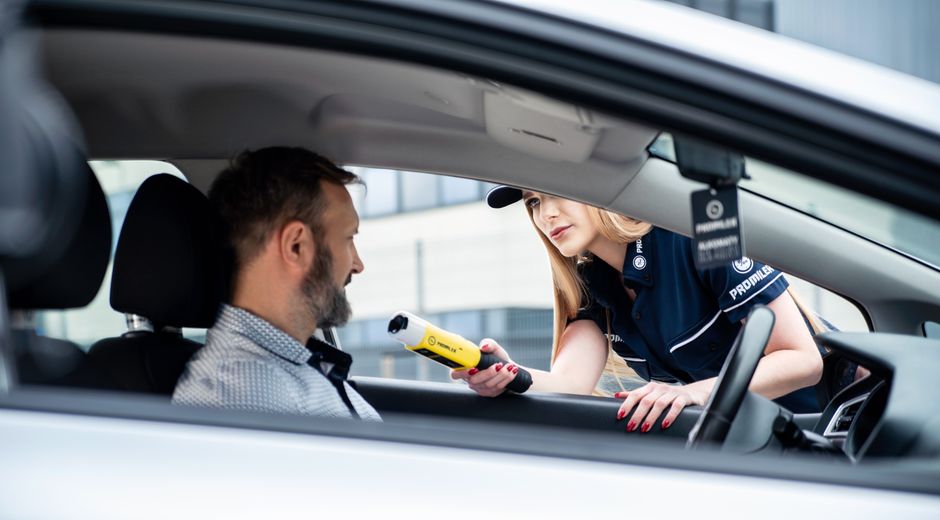
Police in the small Western Australian town of Manjimup are trying something different to keep roads safe this spring — handing out $20 cash vouchers to drivers who blow zero during random breath tests throughout September. The initiative, timed to coincide with football finals and the approaching school holiday period, forms part of a local road safety push in the town located about 290 kilometres south of Perth.
Officers are distributing 100 vouchers in total, representing a combined pool of $2,000 in rewards, funded by drug and alcohol support service Holyoake, which sits on the local road safety committee. Rather than focusing solely on penalising bad behaviour, the campaign flips the traditional enforcement model on its head — acknowledging drivers who are doing the right thing.
A Positive Spin on Road Safety Enforcement
Manjimup's officer-in-charge, Sergeant Tyler Winter, said the decision to run the program in September was deliberate, with the combination of footy finals crowds and school holidays putting more vehicles on regional roads.
"If they are doing the right thing, if they are not breaking any laws, and they blow zero, then we may give them one of the $20 vouchers," Sergeant Winter said.
He said the idea had come from the local road safety committee, which believed positive reinforcement could be just as powerful as the threat of a fine or licence loss.
"[They] thought that maybe if we have a positive interaction and reinforce when people do the right thing, then maybe the message will get through," he said.
It is not the first time a WA regional community has tried this approach. WA police have previously shown a willingness to deploy creative tactics in communities, and a similar voucher scheme was previously run by police in Moora, a Wheatbelt town roughly 170 kilometres north of Perth. A WA Police spokesperson confirmed the force supports a range of local "Blow Zero" initiatives across the state, though these are not formal statewide programs and are not subject to uniform performance reporting.
Criminologist Weighs In on the Novel Approach
An academic who studies crime and policing said the Manjimup initiative had merit, though its direct impact on drink-driving rates remains to be seen. Criminologist Matthew Morgan from the Australian Catholic University described the program as a genuine innovation but cautioned it was likely to function more as a community relations exercise than a hard deterrent.
"It's definitely a PR exercise on behalf of police. I definitely think it's a good way of building interest with the community," Dr Morgan said.
He noted, however, that research does support the idea that immediate feedback can influence driver behaviour. Electronic roadside speed signs — those that display a smiley or frowning face depending on a motorist's speed — are one proven example of this principle in practice.
"That instant feedback stimulates our reward systems in the brain, and it actually has been proven to limit speeding on our roads," Dr Morgan said.
He was less certain whether the prospect of a $20 voucher would be enough to change decision-making before a night out at the footy.
Baseline Data Will Determine the Program's Future
Holyoake team leader Jo Woodruff said the organisation had asked police to collect data throughout the program to help evaluate its effectiveness, with an eye to running it again in future years.
"This effectively is our first run, so it is going to be our baseline, with the hope that we would do this in subsequent years and see some improvements," she said.
The September rollout comes amid what local police have described as a difficult year on Western Australian roads, with authorities across the state stepping up efforts to reduce road trauma in both metropolitan and regional areas. Whether handing out $20 can make a measurable dent in that toll is a question Manjimup's road safety committee is hoping the data will eventually answer.