Australia's most expensive homes are falling in value at more than twice the rate of entry-level properties, with new data showing upper-quartile prices in Sydney and Melbourne have declined by more than 10 per cent from their peaks — and experts warn the top end of the market could be signalling where the broader sector is headed next.
The numbers behind the luxury housing market decline
Fresh figures from property analytics firm Cotality show a stark divide opening up across Australia's capital city housing markets. Homes in the top 25 per cent by value — the upper quartile — have shed more than 10 per cent since peaking, while properties at the lower end of the market have recorded comparatively modest falls of between 3.9 and 5.4 per cent.
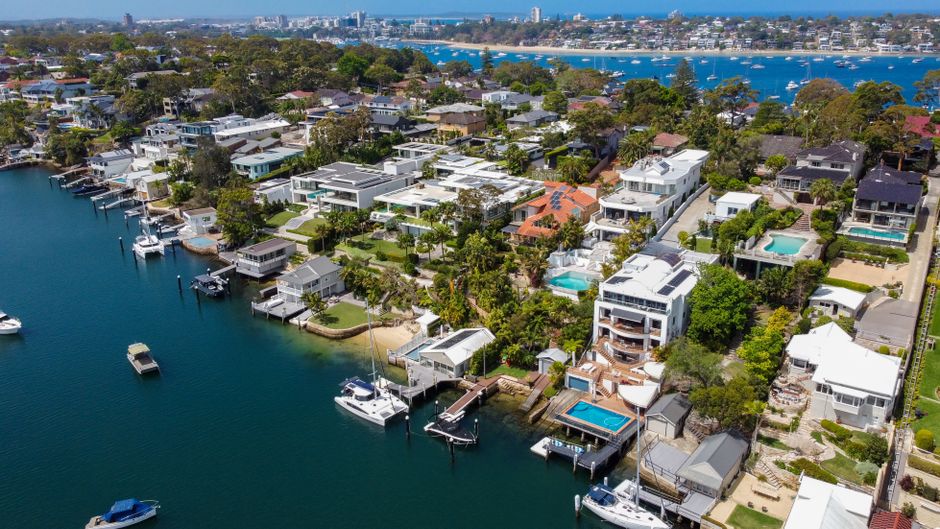
The divergence is most pronounced in Sydney and Melbourne, where high-end listings are sitting longer on the market and vendor discounting has widened noticeably. One particularly stark example emerged in Sydney this month, when a mansion in Balmain East sold for $12.8 million — representing a staggering $7 million loss for its owner, who had paid close to $20 million for the property back in 2022.
Cotality executive research director Tim Lawless notes that while the broader Australian property market peaked in March, the upper end had already reached its high point earlier — in October and November of the previous year. That earlier peak at the luxury end is consistent with historical patterns, he says, where top-tier homes tend to move first in any property cycle.
A credit crunch is pushing buyers toward cheaper housing
The underlying driver of the disparity is the Reserve Bank's aggressive rate-hiking cycle, which has pushed effective borrowing rates to around 9.5 per cent and dramatically curtailed what households can afford to borrow. The squeeze is severe: a household earning a median income is now spending more than 50 per cent of its pre-tax income servicing a median-priced mortgage.
That financial pressure is compressing demand into the lower end of the market. Buyers who would previously have been active in the middle-to-upper price brackets are being redirected toward cheaper stock — not by choice, but by necessity.
"Mainstream demand is getting deflected towards lower price points where buyers can actually demonstrate an ability to service the loan," Lawless explained.
The knock-on effect is a crowding at the affordable end, with first home buyers, investors and price-sensitive mid-tier purchasers all competing for the same limited supply. That concentrated competition has kept entry-level prices comparatively supported, while the luxury segment — stripped of its usual buyer pool — has been left exposed. For vendors and agents navigating these pressures, the dynamics can put significant strain on the selling process, as explored in our earlier coverage of selling a house in a falling market when trust breaks down between vendors and agents.
Auctioneers see a slowdown in discounting — but no rush to buy
On the ground in New South Wales, those working high-end auctions report that the steepest phase of repricing may have passed, but that affluent buyers remain in no hurry to re-enter the market.
The director and chief auctioneer at independent firm AuctionWorks described the upper end as the hardest-hit segment of the market, with significant price adjustments recorded in recent months. However, the pace of those reductions appears to be easing.
"It appears that whilst we may not yet have seen the bottom of the market, the price reductions have certainly slowed," he said.
He added that prospective buyers at the high end are beginning to identify value in the current environment — but that a decisive shift in sentiment has not yet occurred. "There is no urgency to jump in just yet," he said, predicting that attitude would change as price falls continue to moderate in the months ahead.
A political flashpoint as the market correction deepens
The sliding property figures have ignited fresh political debate. Opposition Leader Angus Taylor and senior Coalition figures have attributed the downturn in part to the government's recent tax adjustments, including changes to negative gearing arrangements, arguing that market confidence has been severely damaged.
Opposition treasury spokesperson Tim Wilson framed the correction as damaging across the board, saying it hurts first home buyers — who face higher servicing costs — while simultaneously eroding the wealth of existing homeowners.
The government has pushed back firmly. Treasurer Jim Chalmers pointed to Treasury modelling indicating that tax changes account for only a minor fraction of the overall price movement, rejecting the Opposition's characterisation of the correction's causes.
With borrowing costs still elevated and the Reserve Bank yet to signal significant relief, the demand vacuum at the top of the housing market shows little sign of filling quickly — and if history is any guide, where luxury prices lead, the rest of the market may eventually follow.