Inside a small gallery within Kakadu National Park, Blaldja artist Ivan Namarnyilk works steadily with his manyilk, a traditional brush made from sedge grass, applying thin, precise strokes to paper. The demand for his work is so strong that tourists visiting the Marrawuddi Arts and Culture Centre in Jabiru have begun asking to purchase pieces before he has even finished them.
"I'm not a machine," he jokes. "You gotta be patient, no rushing. We gotta be steady."
A Tradition Passed Down Through Generations
Namarnyilk learned his craft from his father, a prominent artist at Mudginberri Station, and has been painting rock art-style works on paper since his teenage years. More than three decades later, he is now focused on passing those same skills and stories to the next generation.
"My art is really, really special," he says. "It's really special for me and for my future kids."
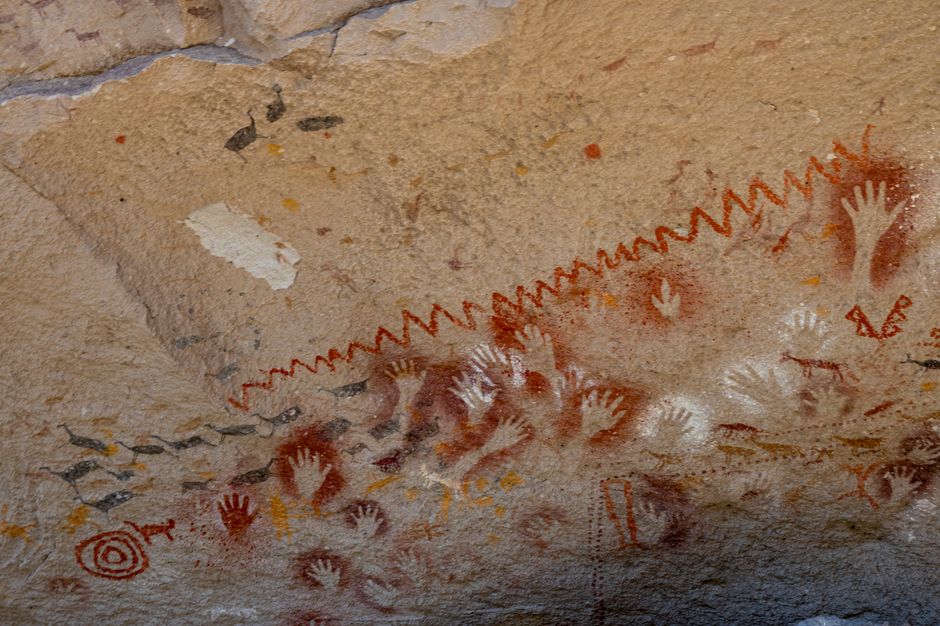
His works are characterised by a detailed, x-ray style, depicting local animals and cultural totems using natural pigments including red ochre, white clay and yellow ochre. A signature touch, a mouth-blown clay handprint, finishes each piece.
"I like painting spirit man, kangaroo, echidna, turtle, fish like barramundi or black bream," he says, adding that the totems hold deep meaning for his family. "We respect our totems, my father's totem is irritja, the wedge-tailed eagle, and my mother's is duwa, the mud crab."
For Namarnyilk, the connection between the art and the land is inseparable. He describes his work as being "like the country, the animals, the people, everything has connection."
Solo Exhibition Marks a Milestone
In August, Namarnyilk reached a significant milestone when he held his first solo exhibition at the Mahbilil Festival in Jabiru, selling thousands of dollars worth of work. He described the experience of sharing his pieces publicly in that way as "really special," and said the financial returns are vital for supporting his family and contributing to his community.
"I like helping my community," he said.
The success of the exhibition reflects a broader surge in interest in his work, with demand now at its highest point.
Keeping the Marrawuddi Arts Centre Alive
The Marrawuddi Arts and Culture Centre has been a cornerstone for Indigenous artists across the West Arnhem region for 25 years. In that time, more than 500 artists have sold work through the gallery, which currently supports around 30 regular makers by purchasing their artwork upfront. Forty per cent of all sales proceeds go back into keeping the centre operational.
Business manager Caron Farrell says the gallery represents the full breadth of West Arnhem artistic traditions, which sets it apart from art centres in other parts of Australia.
"This space does all of West Arnhem so it's really important for the artists to be able to bring their art here in all different forms," she says.
Farrell says visitors are frequently surprised by the variety and scale of the work on display. "I think they get a bit shocked at how much there is and how vast the art is," she says, noting that West Arnhem art is rooted in the rock art traditions visible across the region's stone formations, quite distinct from the dot painting styles associated with central desert communities.
"You find visitors are quite taken aback to the different styles that are here."
She adds that the presence of artists like Namarnyilk working onsite, allowing visitors to watch them paint, scratch, draw and weave in real time, is a major drawcard. Those visitors then carry the pieces home to destinations around the world, spreading awareness of West Arnhem culture far beyond the park's boundaries.
"It's really important for Jabiru to get the tourists in and keep this place going for that art to be in homes," Farrell says.

