Italy's high-speed rail network can whisk passengers between cities at remarkable pace, but for solo travellers hauling luggage in summer heat, the journey from Verona to Rome Termini is a reminder that fast trains and frictionless travel are not always the same thing.
Platform chaos and the art of not missing your train
For anyone who has travelled by rail in Italy, the anxiety of last-minute platform changes will be familiar. Rapid-fire announcements in Italian, sudden switches to a different binario, and the scramble across a busy station with luggage in tow — it is a scenario that has caught out even seasoned travellers.
Experienced Italian rail passengers recommend always tracking your train by its number rather than its destination alone, since multiple services to the same city can depart around the same time. A useful resource is the Rete Ferroviaria Italiana website at rfi.it/en, which provides live arrivals and departures for most Italian stations — though the site itself carries a disclaimer that information can change at any moment, because, as travellers quickly learn, this is Italy.
On a recent summer journey, checking the site while still in the car confirmed the train would arrive at platform 4 — and it did, just a couple of minutes late. The dreaded platform shuffle was avoided. But other challenges were waiting.
Two steps or three: why luggage becomes your enemy on Italian trains
Italy's two main high-speed rail operators are Trenitalia, which runs the Frecciarossa service, and the private operator Italo. Booking only a few days before travel typically means higher fares, though Italo was found to offer better last-minute discounts on the Verona–Rome route.
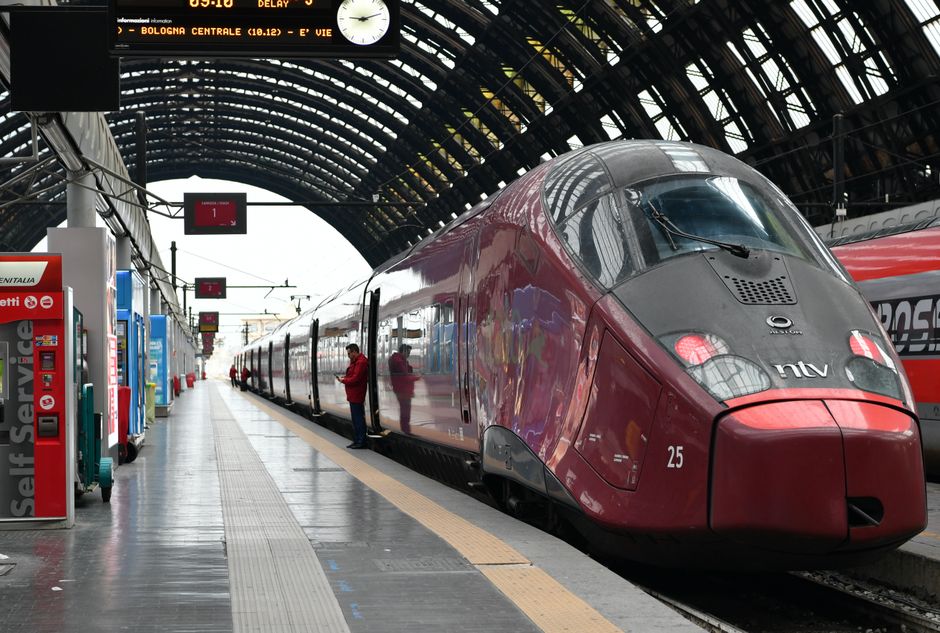
The physical difference between the two services turned out to matter more than expected. The Frecciarossa train has a couple of small steps up into the carriage. The Italo service has three — a seemingly minor distinction that becomes significant when manoeuvring a suitcase that had ballooned to well over 14 kilograms after three weeks of accumulating books and art supplies, plus an 8-kilogram carry-on bag.
Getting the bags aboard without injury was possible, but only just. Fellow passengers travelling in pairs had larger cases and managed more easily — a pointed reminder that solo travel demands a discipline around packing that is easy to abandon after a few weeks on the road.
Inside the carriage: heat, noise and the beauty of people-watching
A business class ticket does not guarantee comfort on every Italian rail service. On this particular journey, the air conditioning appeared to be either absent or ineffective, with outside temperatures sitting in the mid-30s. Hand luggage was piled in the aisles as well as in the overhead bins and luggage compartments, leaving the cabin feeling cramped. The onboard attendants remained good-natured, navigating their trolleys around the clutter to deliver complimentary coffee and snacks.
Sharing the carriage was a family with two young children — aged around six and seven — whose energy levels were not well-suited to a long train journey. The father remained absorbed in his phone while the mother managed the children largely alone. A nonna seated nearby appeared to find the whole scene entirely charming.
It is, in its own way, part of the appeal of public transport — especially abroad, where different social norms play out in real time and make for compelling observation, even when the journey itself is less than relaxing.
Arriving at Rome Termini — and what comes next
When the train finally pulled into Rome Termini, relief was the overriding emotion. The speed of Italy's high-speed network is genuinely impressive, and the scenery along the route rewards a window seat. But the station itself presents its own challenge: Rome Termini is well known as a hub for pickpockets, meaning the effort of arrival is not quite over the moment the train stops.
For travellers planning a similar itinerary, the lesson is straightforward — travel light, check the RFI site before leaving for the station, and keep your wits about you long after you step off the train.