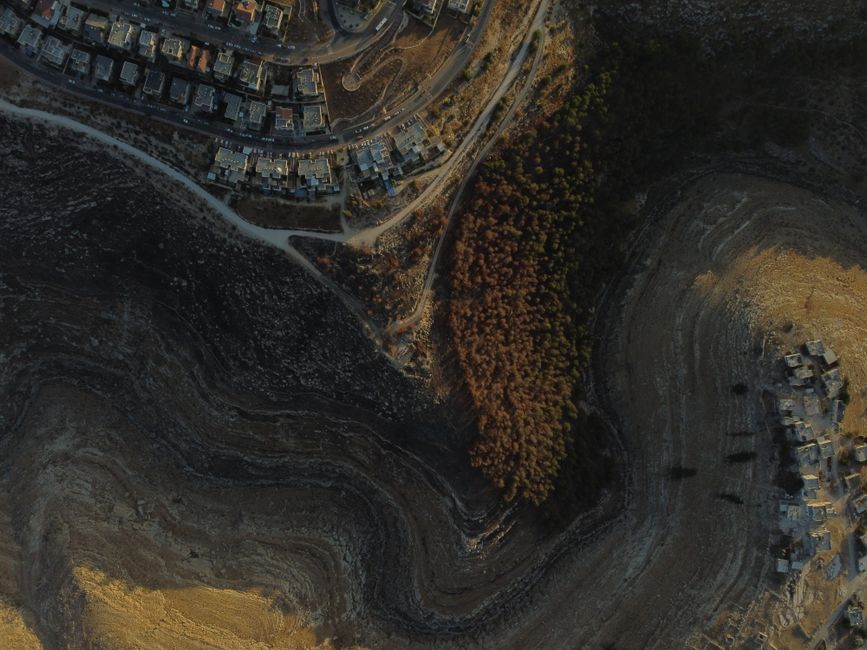
Israeli settlers have continued to blockade Palestinian homes in the occupied West Bank, defying military efforts to end the siege after days of confrontation in the village of Qusra, south of Nablus. The Israeli military announced it would deploy an additional infantry battalion to the area after failing to disperse the settlers, marking one of the most direct clashes between Israeli forces and settlers in recent memory.
How the Siege of Qusra Unfolded
The blockade began on Sunday when settlers erected a makeshift tent directly in front of Palestinian homes in Qusra, cutting off residents' access to food and medical supplies. Israeli troops clashed with the settlers as they attempted to dismantle the outpost, in what witnesses described as a rare confrontation between the military and settler groups.
By Wednesday morning local time, the military had declared the area a closed military zone and removed the settlers' tent. However, the situation was far from resolved. By mid-afternoon, soldiers had withdrawn from the scene, and while the tent was gone, the settlers remained — equipped with chairs and blankets — continuing to prevent residents from moving freely.
"We have received no food and no medicine," said Qusai Abu Rida, a Palestinian man trapped inside one of the besieged homes, speaking by telephone. He said he had only been able to maintain electricity through solar panels. "The army has withdrawn, and so far we are still besieged, with the settlers at our doorstep," he added.
Later on Wednesday, the military announced it would send an additional infantry battalion to the area and place more soldiers on standby. The chief of the general staff "directed that efforts to strengthen order and operational control in the area continue, as well as efforts to prevent further serious incidents," according to a military statement.
Military Condemnation and Internal Accountability
The Israeli military was unusually direct in its condemnation of the settlers' conduct. In a statement issued the day before the tent was removed, it said it had received reports of settlers entering and taking control of Palestinian homes and land in the area, calling it "illegal, reprehensible and unacceptable activity that harms the residents of the areas and disrupts their daily lives."
The military also said disciplinary action would be taken against security personnel who had been filmed at the site in the days prior, suggesting some soldiers may have been present without intervening to stop the settlers.
All Israeli settlements and outposts in the occupied West Bank are illegal under international law. Israel has occupied the West Bank since 1967, and more than 500,000 Israelis currently live in settlements across the territory alongside approximately three million Palestinians.
Surge in Settler Violence Since the Gaza War
The Qusra siege is the latest incident in a sustained escalation of settler violence that has intensified since the outbreak of the Gaza war in October 2023. According to data from the Palestinian health ministry, at least 1,097 Palestinians have been killed in the West Bank by Israeli soldiers or settlers since the conflict began. Israeli figures show at least 48 Israelis, including both civilians and security personnel, have been killed in Palestinian attacks or during Israeli military operations over the same period.
Just days before the Qusra blockade, the Israeli military closed the West Bank village of Taybeh — one of the last remaining Christian villages in the territory — to non-residents, in response to growing settler attacks on its Palestinian population.
Settler violence against Palestinians has persisted for years, frequently with little or no legal consequence. The situation has been further complicated by Israeli Prime Minister Benjamin Netanyahu's announcement in late July that he would allow the establishment of additional settlements in the West Bank — a move that drew widespread international criticism.
For context on the broader regional conflict and its implications for the West Bank, see our earlier coverage of the security situation affecting Israeli interests across the region.