A decision by seven Ipswich City councillors to approve a taxpayer-funded home security allowance of up to $6500 each per term has drawn sharp criticism from their own mayor, who has escalated the matter to the Queensland state government amid complaints from ratepayers about how the benefit was granted.
The vote, taken at an Ipswich City Council meeting on 29 October, came in the wake of growing concern about threats and intimidation directed at elected representatives across Australia, including a high-profile attack on federal independent MP Helen Haines. But rather than uniting council behind the security measure, the decision has opened a rift between the councillors who passed it and Mayor Teresa Harding, who argues politicians should not be determining their own financial entitlements.
Mayor Refers Decision to Local Government Minister
Harding confirmed she had referred the matter to Local Government Minister Ann Leahy after receiving complaints from residents about the process by which the allowance was approved. Her central objection is not to the concept of protecting elected officials, but to the way the decision was made: without public consultation, independent expert advice or any external oversight.
"There is no doubt in my mind that this motion was put forward to address legitimate concerns. However, having councillors allocate and approve their own financial benefits is something that does not sit well with Ipswich ratepayers," Harding said.
She drew a pointed comparison with the equivalent scheme for Queensland MPs, whose $6500 home security allowance is determined by the Queensland Independent Remuneration Tribunal rather than voted on by the politicians themselves. Harding argued any allocation of ratepayer funds for the benefit of elected representatives, however well intentioned, deserved the same standard of independent scrutiny.
"I believe that any decision involving the allocation of ratepayer funds for the benefit of elected representatives, regardless of how well intentioned it may be, should be subjected to an appropriate level of independent scrutiny," she said.
Harding added that she had originally been willing to support the original version of the motion, which called for a report examining existing security arrangements, legal and financial implications, eligibility criteria and accountability measures. It was only after the motion was amended at the meeting to skip that review process and directly approve the allowance that she withdrew her support.
How the Motion Changed and What Triggered It
The original motion was put forward by Councillor Pye Augustine, who proposed a formal investigation into what security support options might be available. During the meeting, however, Augustine amended her own motion, arguing that councillors needed protection as a matter of urgency rather than waiting for a report to be completed.
The amended motion cited "a range of serious safety and security issues directed towards elected members across Australia" as justification for acting immediately. Augustine also disclosed that she had personally been threatened approximately a year earlier, an incident serious enough that an exclusion zone was imposed against an individual at council premises.
"For me, there's still a clear and present danger associated with this risk," Augustine said.
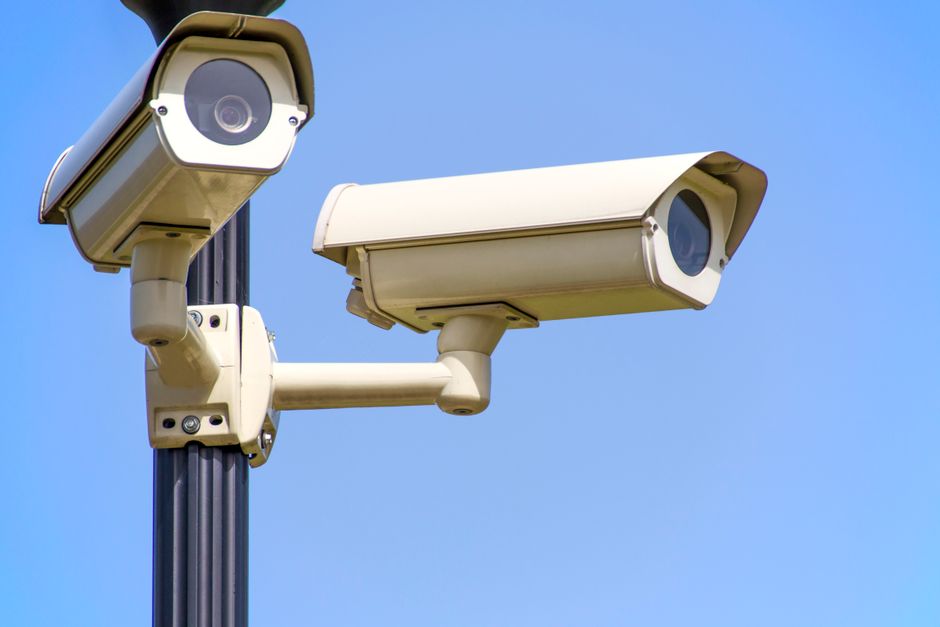
The measures that would be covered by the $6500 allowance include home security cameras and other protective installations designed to deter threats or provide evidence if incidents occur.
Mayor Discloses Her Own Security Experiences
While critical of the process, Harding was careful to acknowledge that the underlying concern is real. She revealed that Queensland Police conducted a formal threat assessment involving her and her family shortly after she was elected mayor in 2020, initiated by police themselves.
"I personally recall a meeting initiated by QPS when I was first elected in 2020 where they outlined the threat assessment for me and my family," she said.
She also disclosed that she had since sought police assistance over her own security concerns and had personally funded protective measures out of her own pocket rather than seeking public money to cover the costs.
"Being a public figure, particularly when you are a woman, can unfortunately attract negative and sometimes aggressive or threatening attention," she said.
The admission underscores a tension at the heart of the debate: many elected representatives, particularly women, face genuine and sometimes serious threats in their roles, yet the question of how to fund protective measures, and who should decide that, remains unresolved at the local government level.
Broader Context: Safety of Elected Officials Under Scrutiny
The Ipswich dispute is unfolding against a broader national conversation about the safety of politicians and public figures. The attack on Helen Haines brought renewed attention to the vulnerability of elected representatives, particularly those who operate in regional areas without the security infrastructure available to senior federal ministers.
Concerns about security arrangements for Australian public officials have been mounting across multiple levels of government. For local councillors, who often live and work in the same communities they represent and lack the institutional support available to state or federal parliamentarians, the question of appropriate protection is particularly acute.
The referral to Minister Leahy means the allowance is now subject to review before it takes effect. Whether the state government will endorse the arrangement, require modifications or direct council to put the matter through an independent process remains to be seen. In the meantime, the seven councillors who voted for the measure, and those who raised the original concern about their safety, are waiting on an outcome that could shape how local governments across Queensland handle similar requests in the future.

