
CANBERRA, AUSTRALIA — An interest rate rise was widely expected as the Reserve Bank of Australia prepared to hand down its latest decision, adding fresh pressure to households already battling higher mortgage repayments and broader cost-of-living strain. At the same time, the federal government faced mounting scrutiny over whether the upcoming budget would include new relief, including a reported tax offset for workers and changes to electric vehicle tax concessions.
The result is a familiar policy tension: how to help Australians manage rising living costs without making inflation harder to control. With the Reserve Bank leaning towards another rate increase and the budget only days away, both monetary policy and fiscal policy were moving to the centre of the national conversation.
Another rate rise could deepen the squeeze on mortgage holders
Economists and money markets were broadly forecasting a 25 basis point increase from the Reserve Bank, which would mark the third rise of the year. For borrowers, even a modest increase carries immediate consequences.
On a $600,000 mortgage, a 25 basis point rise would add about $91 a month to repayments. Combined with the previous two increases this year, that would take the total extra monthly burden to around $272.

That figure helps explain why so many households are watching the Reserve Bank so closely. Higher rates are designed to cool spending and bring inflation under control, but they also hit family budgets directly through larger loan repayments.
For many Australians, the pressure is not limited to mortgages alone. Rent, groceries, insurance, energy bills and transport costs have all contributed to a prolonged period of financial strain, leaving little room to absorb further increases.
Why the budget is under pressure to deliver cost-of-living help
Against that backdrop, speculation intensified that the federal government could unveil a new measure aimed at easing household pain in the next budget. Reports suggested the Treasurer was considering a tax offset of about $300 for Australian workers in the next financial year.
The proposal was framed as a way to soften cost-of-living pressures for struggling households. In political terms, it would give the government a direct and easy-to-understand form of relief to point to at a time when interest rates are still rising.

But the idea also runs into a major economic objection. If relief measures put more money into people’s pockets too broadly, they can stimulate spending and potentially add to inflation — the very problem the Reserve Bank is trying to bring down.
This is the central dilemma facing the government. Households want support now, but poorly targeted assistance can work against the Reserve Bank’s efforts and contribute to the need for higher rates for longer.
For broader context on how the RBA uses interest rates to manage inflation, the Reserve Bank of Australia provides a useful overview of its monetary policy framework.
Albanese stays tight-lipped ahead of the budget
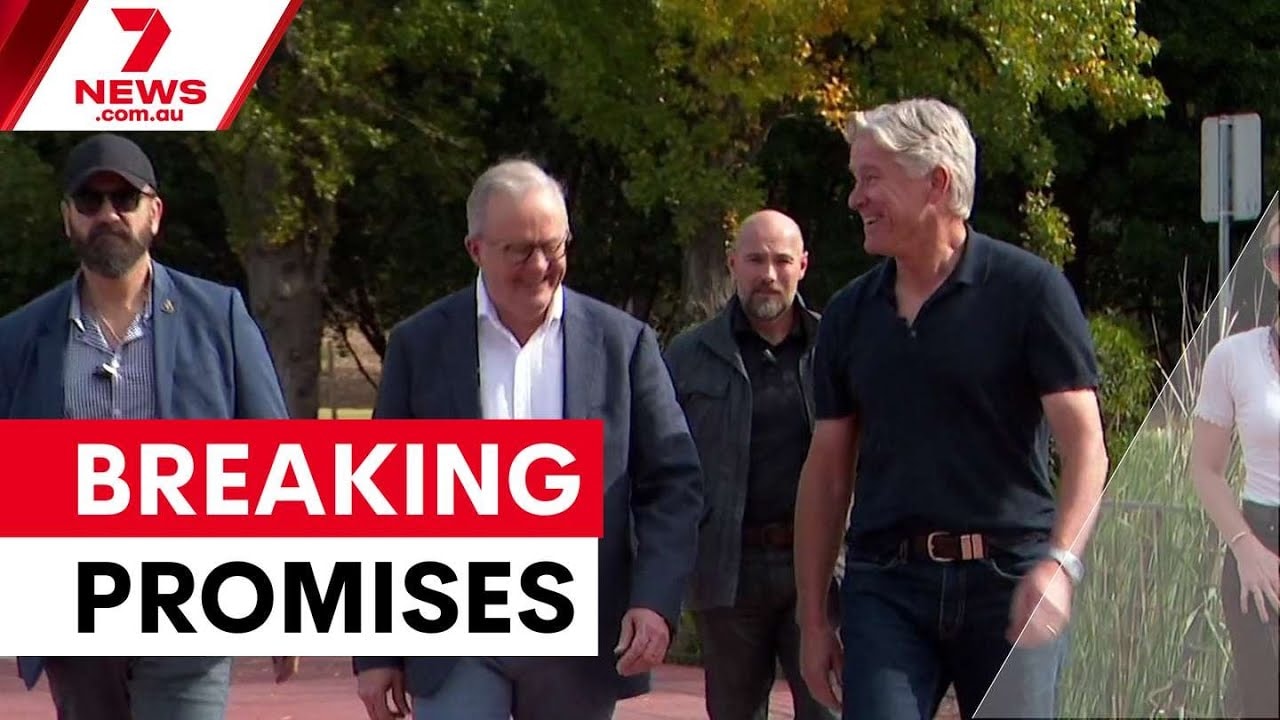
Prime Minister Anthony Albanese declined to confirm whether a tax offset would appear in the budget when questioned during a visit to a Medicare urgent care clinic in Brisbane. His comments reflected the usual pre-budget caution, with the government refusing to lock in specific measures ahead of the formal announcement.
“It’s a whole lot of speculation out there in budgets and that’s what happens. Some of it right, some of it’s wrong.”
Albanese also sought to frame the upcoming package in broader political terms, describing it as a budget grounded in Labor values. That suggests the government wants to balance targeted support with a message of fiscal responsibility.
The Opposition, meanwhile, signalled that any budget measure should be judged against the bigger challenge of controlling inflation and stopping interest rates from continuing to rise. That line of attack is likely to remain central if new relief is announced.

The bigger policy problem: helping households without fuelling inflation
The debate over a possible tax offset goes beyond a single budget measure. It highlights the broader challenge facing governments when inflation remains elevated.
If support is too limited, households under pressure may feel abandoned. If support is too generous or too widely distributed, it may increase demand across the economy and make inflation more persistent.
That balancing act has become one of the defining economic questions in Canberra. Treasury and the government must weigh the political appeal of immediate relief against the economic risk that assistance could undermine the inflation fight.
The issue is especially sensitive while the Reserve Bank remains prepared to tighten policy further. The Australian Bureau of Statistics inflation data remains a key reference point in that debate, as policymakers try to judge how much price pressure is still embedded in the economy.
Government winds back electric vehicle tax break
Alongside budget speculation, the government also moved to scale back a tax concession that had encouraged Australians to buy electric vehicles through novated leases. The fringe benefits tax exemption had proven highly popular, but that popularity has come at a growing cost to the budget.
Under the current arrangement, people who purchase eligible EVs through a novated lease and whose vehicle is valued at $91,000 or less can receive an exemption from fringe benefits tax. Labor is now narrowing that concession in a move expected to save $1.7 billion over five years.

From 1 April next year until 2029, the full discount will apply only to cars valued at under $75,000. Vehicles above that threshold will receive a 25 per cent tax discount instead.
From 2029, all EVs covered by the scheme will receive that 25 per cent discount from fringe benefits tax rather than the broader full exemption currently available to lower-priced eligible vehicles.
The government argued the changes were sensible reforms that would still support Australians wanting to purchase electric vehicles, while better targeting taxpayer support.
For reference on how fringe benefits tax works more generally, the Australian Taxation Office provides detailed guidance.
Why the EV concession became politically contentious
The government’s decision to curb the EV tax break reflects a wider concern about who benefits most from tax concessions. Critics argue that generous exemptions tied to novated leases can disproportionately help higher-income earners who are better placed to access salary packaging arrangements and purchase new vehicles.
That criticism became sharper during a period of elevated inflation and budget pressure. In that environment, support for relatively expensive cars is more likely to be scrutinised, especially if it is seen as benefiting wealthier Australians.
“Handing out money to some of the wealthiest Australians is only going to exacerbate inflation.”
The Coalition went further, arguing the scheme should be scrapped entirely. That response shows how EV policy is increasingly being debated not only through the lens of climate and transport policy, but also through fairness, inflation and budget repair.

What these changes mean for households and policy makers
Taken together, the possible interest rate rise, the mooted worker tax offset and the scaling back of EV tax concessions tell a larger story about the Australian economy. Policy makers are trying to respond to immediate cost-of-living pain while also containing inflation and protecting the budget bottom line.
For mortgage holders, the most immediate concern remains interest rates. A further rise would place additional stress on monthly finances, particularly for families who have already absorbed multiple increases this year.
For workers hoping for budget relief, the key question is whether any assistance will be targeted enough to help without adding fuel to inflation. And for EV buyers, the message is that government support remains available, but it will be less generous at the higher end of the market.
Key takeaways
- A 25 basis point interest rate rise was widely expected, with economists and money markets forecasting another increase from the RBA.
- For a family with a $600,000 mortgage, that would mean about $91 extra per month, or roughly $272 more per month this year after the previous two rises.
- The federal government was reportedly considering a $300 tax offset for Australian workers in the upcoming budget.
- Economists warned broad cost-of-living relief could have an inflationary effect, complicating the Reserve Bank’s efforts to slow price growth.
- The government is scaling back EV fringe benefits tax concessions, with the full discount to be limited to vehicles under $75,000 during the revised period.
- The EV policy change is expected to save $1.7 billion over five years.
FAQs
How much would a 25 basis point interest rate rise add to mortgage repayments?
For a household with a $600,000 mortgage, a 25 basis point rise would add about $91 a month in repayments. After the previous two rises this year, the combined increase would be around $272 a month.
What budget relief is being discussed for workers?
Reports suggested the Treasurer may announce a tax offset of about $300 for Australian workers in the next financial year. The government had not confirmed the measure ahead of the budget.
Why are economists concerned about new cost-of-living support?
The concern is that broad-based relief can increase household spending and add to inflation. If that happens, it may undermine the Reserve Bank’s efforts to bring price growth under control.
What is changing with the electric vehicle tax concession?
The fringe benefits tax exemption for EVs is being reduced. The full discount will apply only to eligible vehicles valued under $75,000 during the revised period, while vehicles above that threshold will receive a 25 per cent discount instead.
Why is the government scaling back the EV tax break?
The concession had become more expensive than expected because it was so popular. The government said the changes would save $1.7 billion over five years while still supporting EV uptake.
What is the Coalition’s position on the EV scheme?
The Coalition says the electric vehicle tax concession should be scrapped entirely, arguing it unfairly benefits wealthier Australians and can worsen inflation pressures.
The information in this article has been adapted from mainstream news sources and video reports published on official channels. Watch the full video here Interest rate rise looms as budget tax relief mooted | 7NEWS