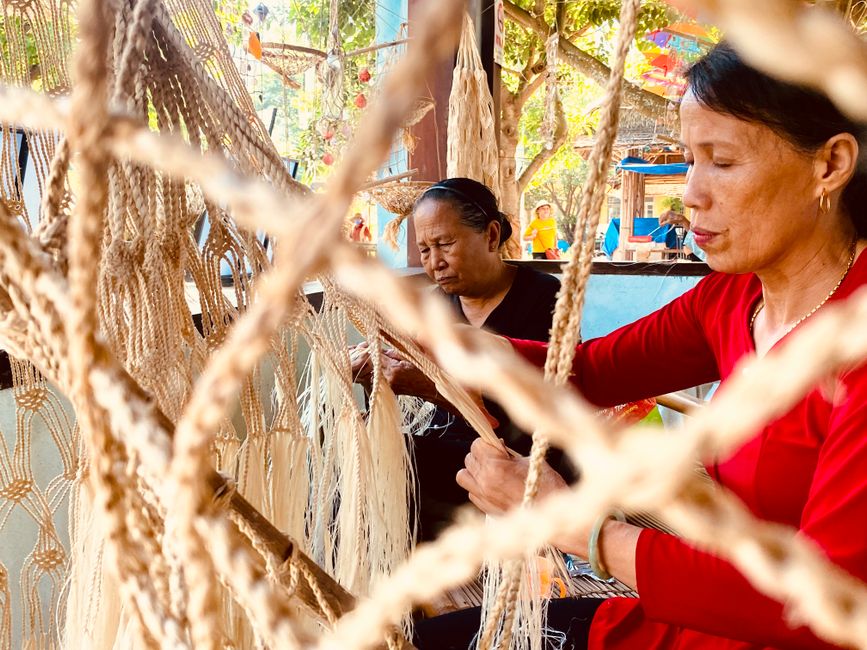
A Wadja Wadja woman from the central Queensland community of Woorabinda has turned a chance encounter with weaving into a full-time mission, running free workshops that are helping Indigenous women reconnect with Australian Aboriginal culture and each other.
Vivianne-Lee Watson first picked up weaving roughly six and a half years ago while working at her local women's shelter. She had only planned to accompany some of the residents to a workshop that day, but a facilitator's invitation to try weaving herself changed the course of her life. Despite initially believing she had no artistic talent whatsoever, she completed a bracelet and then, within just 24 hours, produced her first basket.
From Side Hustle to Full-Time Purpose
What began as a personal hobby gradually grew into something far greater. Earlier this year, Ms Watson made the significant decision to leave her stable full-time job and pursue her craft and teaching work as a business.
"I found that it wasn't filling my cup as much as I thought it would, which is why I chose to resign and step into my business full time," she said. "I'm just shocked by the many doors that have opened for me."
Over the past several months she has held free, open-invitation workshops in Woorabinda, a community located approximately 170 kilometres south-west of Rockhampton. Participants have the chance to try their hand at weaving, beading, jewellery making, painting and a range of other crafts. The sessions are deliberately welcoming, with no pressure to create anything at all.
A Safe Space for Yarning and Connection
For many women in the community, the workshops have become as much about human connection as they are about craft. Mayi-Yapi woman Annie Asse, a Woorabinda local, described the sessions as a genuine yarning circle where women can simply be together without judgement.
"If someone doesn't want to do something, they can simply just sit here and have a yarn," she said. "We don't judge nobody, we're all here for each other, and it's good for our mindset."
Bwgcolman woman Veronica Johnson, who relocated to Woorabinda from Palm Island this year, said the workshops helped her settle into an unfamiliar community. "It's brought me out of my shell," she said. "It's given me that inspiration, consideration with the women, how to connect within ourselves."
Ms Watson has also found personal meaning in the role reversal of teaching her elders, describing the experience as deeply rewarding. "Having my elders here and teaching them something, when they've been the one that has been teaching me," she reflected.
Keeping Ancient Traditions Alive
Indigenous weaving practices stretch back tens of thousands of years, with ancestors using natural materials such as reeds, bark and plants to craft baskets, dilly bags, nets and fish traps. Keeping these traditions active in contemporary life is something participants say matters enormously to their sense of identity and wellbeing.
Wadja Wadja woman Patricia Rankin, another Woorabinda resident, put it plainly: "It keeps people grounded for who they are, where they come from, why they matter in life, basically."
For Ms Watson, the workshops carry a deeply personal dimension as well. She has used weaving as a way to explore her own family heritage and to work through long-held questions about identity and belonging.
"Something I'm very passionate about is to help people reconnect to their roots, because that was something that I struggled with for so long, wanting to know who I was and where I came from," she said.
The free workshops remain open to anyone in the community, with Ms Watson making clear that every woman is welcome, whether she wants to create something or simply be among friends. Her story echoes broader efforts by women across Australia who are preserving and celebrating cultural traditions through collective practice.

