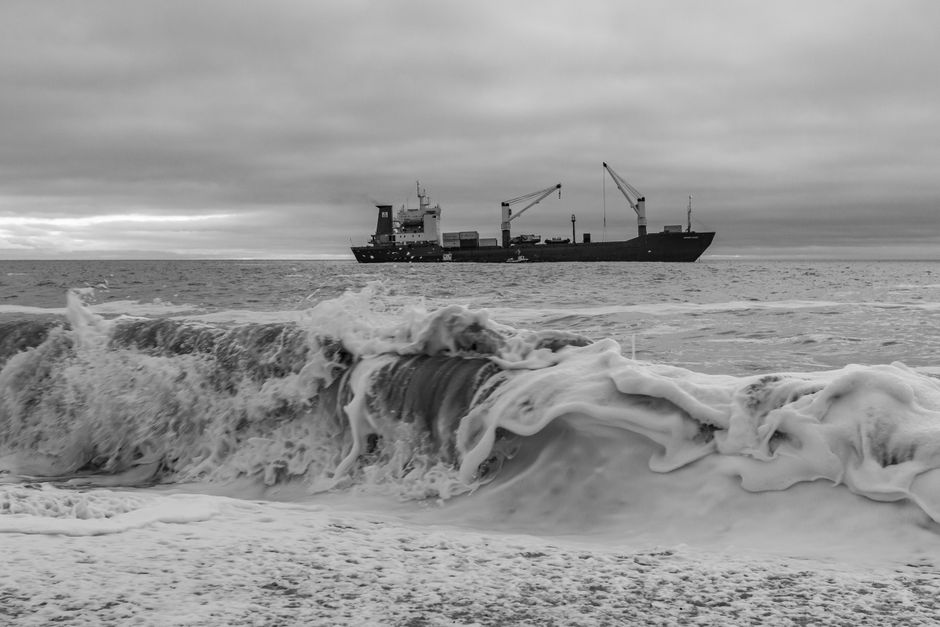
Tensions in the Black Sea have reached their highest point since Russia's full-scale invasion of Ukraine in 2022, after a series of drone strikes on commercial vessels in the past week pushed the conflict dangerously close to the borders of two NATO member states — Romania and Bulgaria.
The incidents have prompted alarm among defence analysts, who warn that the attacks represent a significant and deliberate broadening of the war beyond its established frontlines.
What Happened: A String of Attacks on Commercial Shipping
The most deadly incident involved a Turkish cargo ship carrying Ukrainian corn, which caught fire and sank just outside Romanian territorial waters, killing two people. Romanian authorities confirmed the vessel was struck by aerial and sea drones, though no suspect has been officially named.
Shortly after, two more commercial ships were reportedly hit by drones approximately 130 kilometres off Bulgaria's coastline. One vessel was damaged; the other sank. Bulgarian maritime officials confirmed that at least 12 crew members from the sunken ship were unaccounted for, with no traces of them found.
In the most recent development, Russia's transport ministry announced that a Russian oil tanker in the eastern Black Sea, near the resort city of Sochi, was attacked by Ukrainian unmanned naval vessels. Ukraine has not directly confirmed the allegation, though President Volodymyr Zelenskyy has indicated his country launched "a response in the Black Sea", without elaborating.
Who Is Responsible? Accusations and Denials
Bulgarian Prime Minister Rumen Radev said the cargo and direction of the struck ships pointed logically toward Russia, but stopped short of a formal accusation, saying evidence was still needed. The Russian Embassy in Bulgaria flatly rejected any involvement, stating the vessels "were not among the targets hit by Russian armed forces".
President Zelenskyy has taken a firmer stance, blaming Russia for all three attacks and characterising them as "part of Russia's effort to make the western Black Sea completely unfit for navigation".
Retired Australian Army major general and Lowy Institute senior fellow Mick Ryan said Russia was "undoubtedly" responsible for the incidents near Bulgaria and Romania. He described the attacks as economic warfare designed to strangle Ukraine.
"The Russians want to strangle Ukraine and destroy it as a sovereign entity, and this is part of their economic warfare ... It's part of their maximum escalation campaign," Ryan said.
He also offered a blunt assessment of Russia's strategic position: "Putin is desperate. This war has gone longer than he thought. It's killed far more of his people than he ever expected, and he has almost nothing to show for it."
The Broader Context: Black Sea as a War Zone
The Black Sea has been contested territory since the invasion began, with Russia repeatedly targeting vessels — particularly those carrying Ukrainian agricultural exports such as grain and corn. Ukraine, for its part, has conducted its own strikes against Russia's so-called shadow fleet, a network of vessels used to circumvent international sanctions on Russian oil and gas exports.
Ryan drew a clear distinction between the two campaigns. "The vessels that the Ukrainians are attacking are sanctioned under international law and are transporting goods illegally. What Ukraine is doing is the legal export of grain to nations where people are hungry. There's no intellectual or moral equivalence between these two campaigns," he said.
The escalation carries particular weight given its proximity to NATO territory. The shifting dynamics of Russia–NATO relations have made any incidents near alliance member states a matter of acute concern for the broader Western security community.
What Comes Next
With attacks now reaching waters adjacent to NATO members Romania and Bulgaria, analysts warn the conflict's geographic creep cannot be dismissed. Investigators in both countries are yet to formally attribute the strikes, and the fate of the missing crew members remains unknown. The situation, experts say, is being watched closely — and with growing unease.