Cheating in NSW Higher School Certificate assessments has surged to 1,270 recorded incidents in 2025, with artificial intelligence emerging as the dominant driver of misconduct — and students going to increasingly elaborate lengths to gain an unfair advantage, including hiding phones inside carved-out calculator cases and smuggling wireless earbuds into examination rooms.
Data released by the NSW Education Standards Authority reveals this is the second consecutive year the state has recorded more than 1,000 incidents of HSC cheating across timed exams, take-home tasks and practical assessments.
AI Dominates Take-Home Cheating
Take-home assignments proved to be the most fertile ground for misconduct. Of the 725 incidents recorded in that category, artificial intelligence was responsible for 61 per cent of cases — a finding that education experts say reflects how accessible and persuasive the technology has become for students looking to avoid doing their own thinking.
Macquarie University professor Matt Bower, who specialises in technology-enhanced learning, said the rise of generative AI has fundamentally changed the cheating landscape.
"Plagiarism and 'ghost-writing' are age-old problems, but generative AI has made it far easier and more tempting for students to outsource their thinking," he said.
Professor Bower warned of the risks of what he called "cognitive offloading" — using technology to reduce mental effort rather than to enhance genuine learning. He argued school systems need to strike a careful balance between building subject-specific knowledge and developing students' ability to engage with AI critically and ethically.
"We could also consider assessment tasks that require students to develop and demonstrate their AI literacies, including ethical and critical use of AI-generated content, as well as how to use AI to level up their creative outputs," he said.
Devices Smuggled Into Timed Exams
While take-home tasks account for the bulk of incidents, cheating in supervised exams is also climbing. Misconduct in official end-of-year exams — which make up half of a student's final HSC mark — has more than doubled over five years, rising from 32 incidents to 83 last year, though it remains a comparatively small share of total cases.
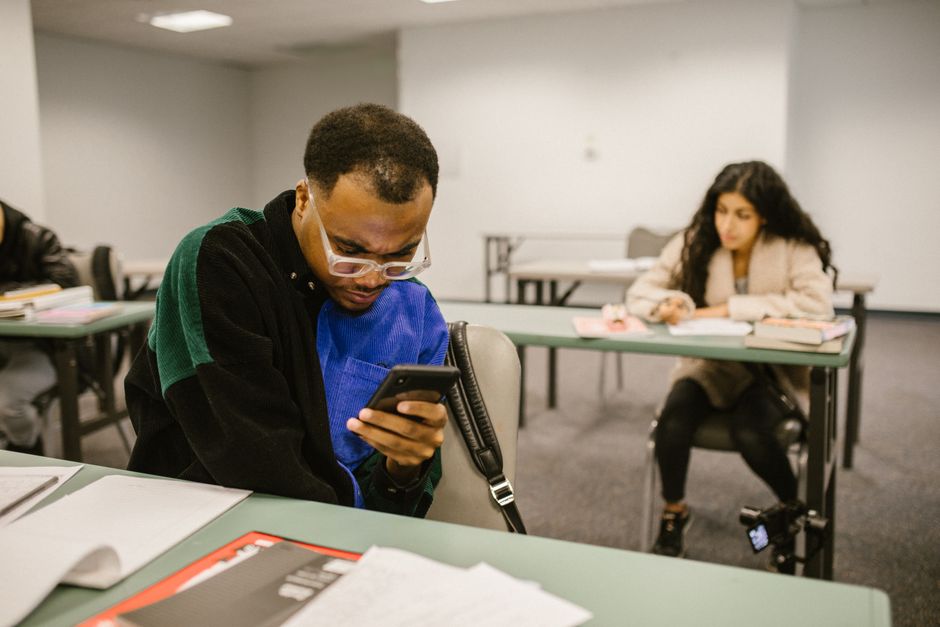
There were 116 incidents in 2025 involving students attempting to use an electronic device of some kind during a timed exam, including smartphones, smartwatches and wireless earbuds. School principals have reported students going to extraordinary lengths to access AI during exams — including one case in which a student carved out a section of a calculator case to conceal their phone, even shaping a hole to accommodate the camera so they could photograph exam questions.
Schools Adapting — But Universities Struggle to Keep Pace
NSW Secondary Principals' Council president Ann Caro said teachers have become more skilled at identifying AI-generated work, and many schools have already restructured their Year 12 assessment tasks in response. Changes include introducing viva voce components and requiring teachers to monitor student progress throughout the assignment period before submission.
"It is important that the assessment reflects students' capacity, not an artificial intelligence's capacities," she said.
Diocese of Parramatta schools head of secondary learning Rebecca Birch said schools hold a key advantage over universities in being able to replace take-home tasks with supervised in-class assessments at scale — something universities cannot easily replicate. She noted a broader shift is under way in some schools toward lower-technology classrooms, with students returning to writing in books rather than defaulting to laptops.
Universities, meanwhile, have largely concluded that detecting AI use in take-home work is impractical, with many adopting a dual-track model that permits AI use in some assignments while strictly banning it in in-person exams. A major report earlier this year also flagged concerns that some students have become so reliant on AI they are using it to complete even the most basic classroom tasks.
With AI tools continuing to evolve, education authorities and school leaders face mounting pressure to redesign assessment in ways that can meaningfully measure what students themselves know and can do.