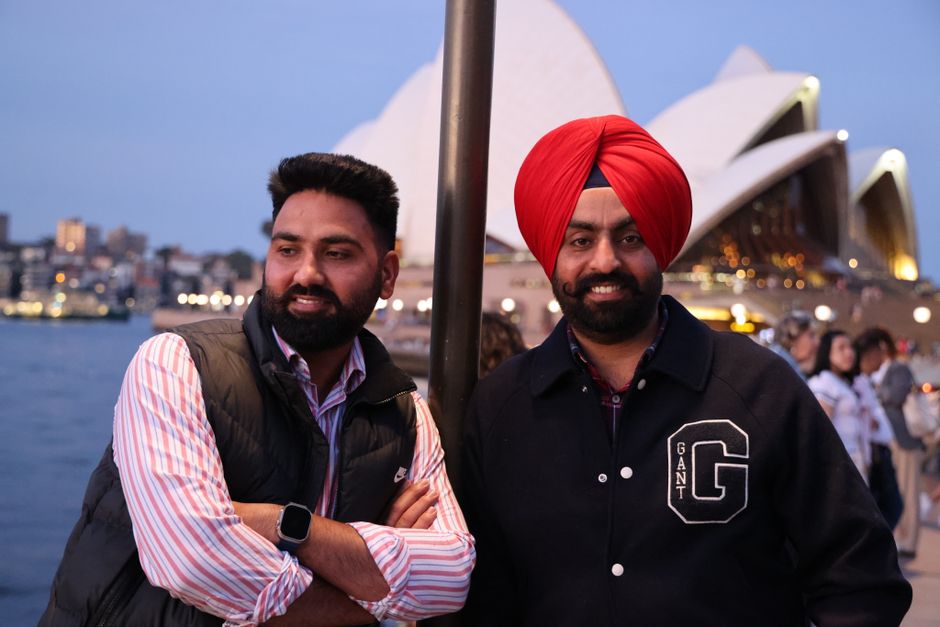
For 54 years, Brisbane man Cam Sojan had almost no idea where he came from. His father had shared little about the family's origins before passing away, and what fragments did exist were clouded by secrecy and shame. Then, in 2025, a small historical society in the Western Australian town of Dongara handed Mr Sojan something he had never expected — the full story of his family's roots, stretching back to a Sikh immigrant who arrived in Australia in the late 19th century.
A family history hidden in plain sight
Mr Sojan, who grew up in Victoria and now lives in Brisbane, knew only the bare outline of his father's life: born in Geraldton, schooled in Perth, later enlisted in the military in Canberra. Beyond that, the details had been deliberately buried.
"Sadly I think my father carried a bit of shame about his origin through his whole life," Mr Sojan said. "I'm 55 and up until 54 I had no idea where I came from."
During a period of personal reflection this year, Mr Sojan came across the Irwin District Historical Society, based in Dongara — a town roughly 350 kilometres north of Perth with a rich multicultural past. The society, staffed by dedicated local volunteers, works to preserve the Midwest region's history through journals, objects and records left behind by the many immigrant communities that settled there.
What Mr Sojan found through its collection of Sikh journals stopped him in his tracks. He discovered an entire bloodline of Sikh men sharing his surname who had come to Dongara in the early 1900s.
"I am directly related to Sojan Singh, who was the Sikh Indian gentleman who arrived in the late 19th century when there was a wave of Sikh and Afghan migrants who arrived at that time," he said. The journals contained detailed information about his great-grandfather and some records of his grandfather — a man he had never met and barely knew existed.
Travelling west to meet the family he never knew
Armed with this new knowledge, Mr Sojan and his wife Allison made the journey across the country to Western Australia. There, he met long-lost relatives — including cousins and an uncle living in Geraldton, some 420 kilometres north of Perth.
He admitted to nerves before that first meeting, but said any anxiety quickly evaporated. The family welcomed the couple warmly into their home, and the group gathered together several times throughout the visit.
"We met with their son and his family and just sat around and shared stories — the good, bad, the ugly, which is what families are," Mr Sojan said. "My connection to the land and connection to the people couldn't be stronger."
Returning home to Brisbane, Mr Sojan described finally feeling a sense of completeness. "I'm so proud … it makes me want to really fight the fight of multiculturalism and embrace the heritage of multiculturalism in Australia," he said.
The White Australia Policy's long shadow
Mr Sojan believes the secrecy that surrounded his family history for decades reflects a painful chapter in Australia's migration story. His father, he explained, was among the interracial children of that era — part-Irish, part-Indian — who grew up navigating the pressures of a society shaped by the White Australia Policy.
"The wave of the White Australia Policy really took hold of these interracial children who were half-Irish, half-Indian and were subject to the difficulties of growing up in Australia," he said.
His father experienced bullying in childhood and, as a result, adopted a fiercely forward-looking attitude. "He really chose to look forward and suppress the dark shadows of his early childhood," Mr Sojan said.
For Trish Parker, secretary of the Irwin District Historical Society, stories like Mr Sojan's are a reminder of why the organisation's preservation work matters. She said outcomes like his make their efforts "worth it."