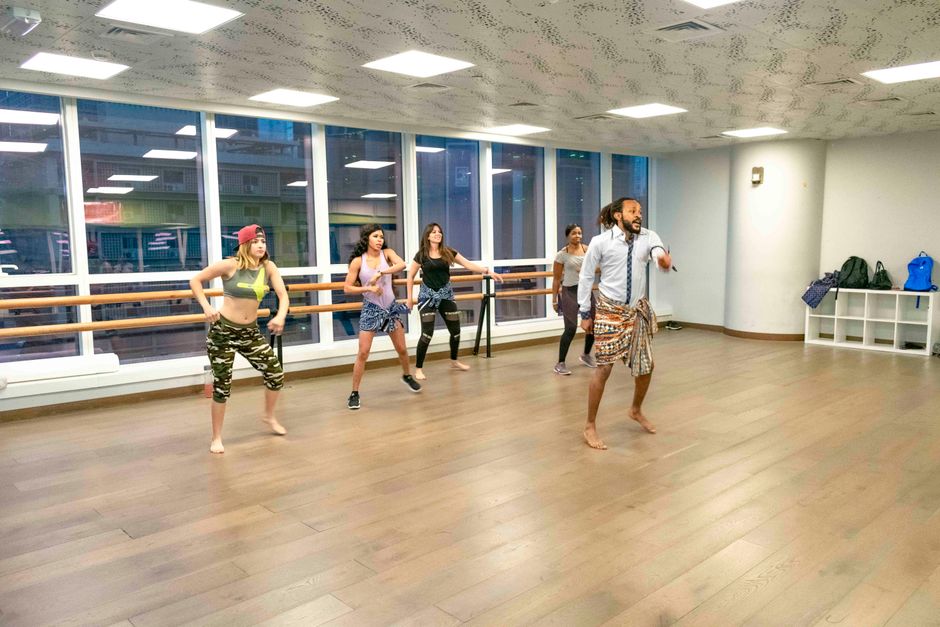
Sydney's small studios are no longer playing catch-up — the smartest ones are rewriting the rules entirely. In a city where a single suburb can host a dozen competing dance, yoga, and creative spaces, community-first digital marketing has emerged as the sharpest differentiator available to independent operators in 2025. This five-part series examines how one dance studio turned community into its most powerful marketing tool — and what other small operators can learn from the playbook.
Why Dance Studio Sydney Owners Are Rethinking Their Digital Strategy
Running a dance studio in Sydney has never been a simple proposition, but the past few years have pushed owners into genuinely unfamiliar territory. Rising rents across inner suburbs, a flood of on-demand fitness apps, and the lingering behavioural shifts from pandemic lockdowns have combined to make the traditional "letterbox drop and word of mouth" approach feel dangerously inadequate. Studio owners who once relied on loyal regulars and casual foot traffic are now competing for attention on Instagram Reels, Google Maps rankings, and TikTok algorithms they barely had time to learn.
The Crowding Problem Is Real
Sydney's creative services sector is dense. A quick search for a dance studio Sydney residents might actually attend returns dozens of results within a five-kilometre radius of most postcodes — from large franchised academies to single-teacher operations running out of community halls. Standing out in that environment requires more than a polished logo and a Facebook page. It demands a coherent digital identity, consistent content, and — critically — a reason for local people to genuinely care.
Interestingly, this challenge isn't unique to dance. Even large entertainment and production companies have had to interrogate how they present themselves to Australian audiences; the evolution of operations like Disney Studios Australia illustrates how even well-resourced players must adapt their local positioning over time.
For smaller independent studios, the stakes are arguably higher, and the margin for error far thinner. That's exactly why a growing number of Sydney studio owners are scrapping conventional paid-advertising models entirely in favour of something more sustainable: community-first marketing.
The Common Marketing Pitfalls Small Dance Studios in Sydney Face Online
For any small dance studio in Sydney trying to cut through the noise online, the digital landscape can feel genuinely hostile. Platforms built for global brands, algorithms that reward advertising budgets, and a local market crowded with competitors all conspire to make visibility a constant battle. Yet the biggest obstacles many studios face aren't external — they're self-inflicted, and they follow a remarkably predictable pattern.
Chasing Reach Instead of Relevance
The first and most common mistake is treating social media like a broadcast channel. Studio owners post class timetables, promotional graphics and generic motivational quotes — content designed to fill a feed rather than start a conversation. The result is low engagement and, critically, low trust. Prospective students scrolling past aren't looking for a flyer; they're looking for evidence that real people attend, enjoy themselves and belong.
Neglecting the Local SEO Basics
Many studios invest time in Instagram while completely ignoring the fundamentals that actually drive local discovery — an incomplete Google Business Profile, no suburb-specific content on their website, and zero strategy around the search terms genuine students actually type. A parent in Newtown searching for beginner classes isn't browsing hashtags; they're using Google, and if a studio hasn't done the groundwork, they simply won't appear.
Inconsistency That Erodes Credibility
Small studios often launch with genuine enthusiasm — a flurry of posts, a few reels, perhaps a paid promotion — before momentum collapses under the weight of actually running the business. That inconsistency signals to both algorithms and potential customers that the studio may be unreliable. In a crowded market, credibility is built slowly and lost quickly.
Understanding these pitfalls matters because avoiding them doesn't require a large budget — it requires a deliberate shift in strategy, one that several Sydney studios have already begun to make.
Community-First Marketing: A Sydney Dance Studio Case Study
When it comes to standing out as a dance studio Sydney owners are competing in one of the most saturated fitness and arts markets in the country. Yet one inner-west studio has quietly built a loyal following not through paid advertising or influencer deals, but by putting its local community at the centre of every marketing decision it makes.
The studio — a mid-sized independent operation offering contemporary, hip-hop and children's ballet classes — made a deliberate shift two years ago. Rather than chasing algorithmic reach on Instagram, the team began investing time in what they call "neighbourhood trust-building." This meant:
- Partnering with local schools to offer free introductory workshops, generating genuine word-of-mouth among parents
- Hosting open rehearsal nights where the wider community could watch students perform in a low-pressure environment
- Featuring student stories — not polished promotional content — across their social channels and email newsletter
- Collaborating with nearby small businesses, from cafés to physio clinics, on cross-promotional offers that felt organic rather than transactional
The results were measurable. Enrolments grew by roughly 35 per cent over eighteen months, with the studio's owner attributing most of that growth to referrals rather than any single digital campaign. "People trust other people in their suburb," she told us. "No ad budget can replicate that."
Why the Community-First Model Works for a Dance Studio in Sydney
Sydney's neighbourhoods are surprisingly village-like beneath the city's scale. A parent in Newtown talks to another at school pickup; a recommendation travels faster than a boosted post. Small studios that embed themselves in local life — rather than broadcasting at it — tend to build stickier, longer-term customer bases. It's a lesson with implications well beyond dance, which is why our Business & Lifestyle coverage has increasingly examined how local operators are rethinking grassroots growth. If you want more stories like this delivered directly, consider subscribing to Breslin Media Network for independent reporting on Australian business and community affairs.
How Email and SMS Are Quietly Outperforming Social Media for Sydney Studios
While most small studio owners fixate on Instagram follower counts and TikTok views, a quieter channel is consistently delivering stronger results: direct communication via email and SMS. Unlike social platforms, where algorithm changes can halve a post's reach overnight, an email list or SMS subscriber base is an asset the studio owns outright. Several Sydney dance studios that adopted a simple weekly email — class reminders, a student spotlight, one local event mention — report open rates well above the industry average, simply because the audience opted in and already trusts the sender. SMS works particularly well for last-minute class availability or weather-related schedule changes, driving same-day bookings that social posts rarely achieve. The barrier to starting is low: a basic email platform, a consistent sending schedule, and content that treats subscribers like neighbours rather than prospects. For resource-stretched small operators, this owned-channel approach offers a resilience that rented social audiences simply cannot match.
The Tactics That Actually Drove Local Awareness and Bookings at a Dance Studio in Sydney
For Care to Dance, a community-focused dance studio sydney locals have quietly championed for years, the breakthrough didn't come from paid advertising or viral social media moments. It came from a deliberate, ground-up strategy built around genuine neighbourhood relationships and hyper-local digital touchpoints.
Here are the core tactics that moved the needle:
- Google Business Profile optimisation: Rather than treating their listing as an afterthought, the studio actively managed reviews, posted weekly updates with real photos of classes, and ensured their hours, service areas and categories were meticulously accurate. Local search visibility improved significantly within three months.
- Suburb-specific content: Blog posts and social captions deliberately named local streets, parks and community events — signalling relevance to both algorithms and residents searching for nearby options.
- Community partnerships over paid reach: Collaborations with local schools, childcare centres and neighbourhood Facebook groups generated warm referrals that no ad budget could easily replicate. Trust transferred organically.
- Trial class funnels with low friction: A simple, mobile-friendly booking form offering a free first class removed the hesitation that typically kills conversions. The follow-up sequence — a short, personal email rather than an automated blast — kept the human tone intact.
- User-generated content: Encouraging families to share recital clips and progress videos created authentic social proof that outperformed polished promotional material.
What's notable about this approach is how little of it relied on significant budget. The common thread was consistency and community trust — showing up repeatedly in the right local spaces, both online and off. For small Sydney studios competing against larger chains, that kind of earned visibility often proves more durable than anything purchased.
Lessons Other Small Dance Studios in Sydney Can Borrow Right Now
The playbook this Sydney dance studio built isn't proprietary — it's replicable. Whether you're running a dance studio in Sydney's inner west or a yoga space on the Northern Beaches, the underlying principles translate cleanly to almost any small studio competing in a saturated local market.
- Lead with community, not conversion. Every piece of content should answer the question: does this make our existing members feel seen? Belonging drives referrals far more reliably than discount codes.
- Own your Google Business Profile. Update it weekly. Post photos from actual classes, respond to every review — positive or negative — and treat it like a second front door to your studio.
- Make your students the story. User-generated content and student spotlights outperform polished promotional videos on local social feeds. Authenticity is the algorithm's best friend right now.
- Invest in one channel deeply before spreading thin. Trying to maintain TikTok, Instagram, Facebook, and a newsletter simultaneously with a team of two or three people produces mediocre results everywhere. Pick the platform where your ideal members already spend time and go all in.
- Build neighbourhood partnerships. A cross-promotion with a local café, physiotherapy practice, or school signals genuine community investment — and earns the kind of local trust that no paid ad budget can manufacture.
None of these tactics require a marketing agency or a five-figure budget. They require consistency, a genuine interest in the people walking through the door, and the discipline to show up online the same way you show up in the studio.
Small studios across Sydney are proving that a community-first approach isn't just a feel-good philosophy — it's a durable competitive advantage in a digital landscape where attention is expensive and trust is everything. The studios willing to invest in relationships, not just reach, are the ones quietly thriving while larger commercial chains chase clicks.