A major Telstra network outage rippled far beyond mobile phones on Wednesday, suspending regional train services across Victoria and New South Wales, disrupting EFTPOS terminals, taxi payment systems and electric vehicle charging platforms, and raising serious questions about the vulnerability of critical infrastructure to a single telco's failure. The incident has since prompted federal government warnings that Telstra has "a lot of questions to answer."
The scale of the disruption caught many Australians off guard. While a mobile network going down is disruptive enough on its own, the knock-on effect that halted entire rail lines — including Victoria's entire regional train network, V/Line — highlighted just how deeply modern transport systems are wired into commercial telecommunications infrastructure.
Why Trains Depend on Mobile Networks
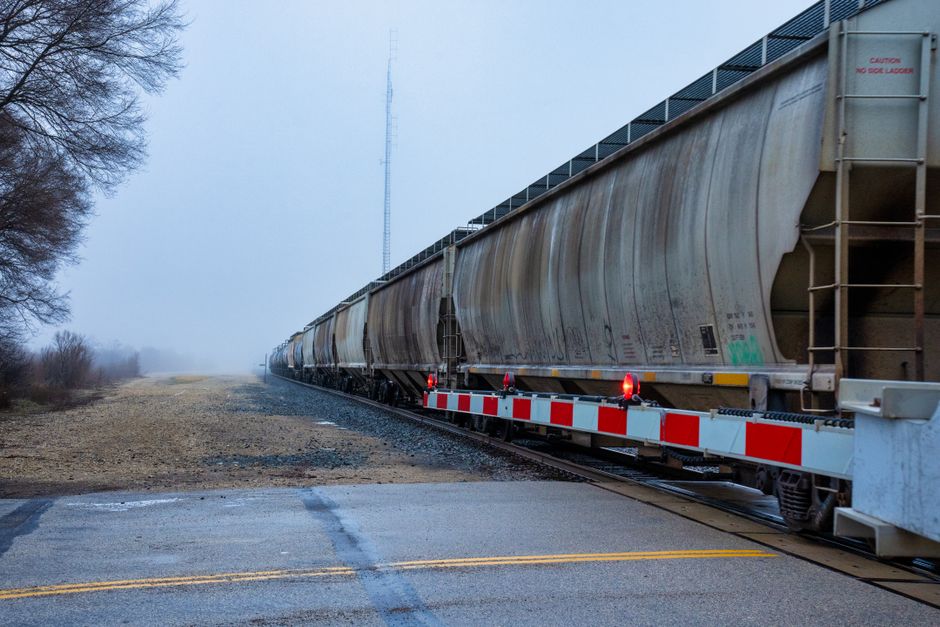
The connection between a telco outage and a suspended train service is not immediately obvious, but the underlying technology makes it clear. Modern trains are fitted with roof-mounted antennae that maintain a continuous link to rail control centres. That link runs over frequency channels shared with mobile networks, allowing trains to transmit and receive real-time data including location, speed and arrival times, as well as voice communication with operators.
Beyond safety-critical operational data, trains also push diagnostic information — engine performance, braking status and the like — through the same mobile infrastructure. Passenger-facing services, including on-board internet and ticketing system management, run through these connections too.
When the network goes down, trains lose all of that. While a locomotive can physically continue moving — as trains did for decades before mobile networks existed — doing so without live connectivity removes the safety and monitoring systems that modern rail operations depend on. In practical terms, running trains without that link is considered unsafe.
The stakes are particularly high because the government-owned Australian Rail Track Corporation (ARTC), which manages more than 9,600 kilometres of track across New South Wales, Queensland, South Australia, Victoria and Western Australia, upgraded its train-to-network communications to 4G on the Telstra network in 2024. VicTrack, which operates V/Line, also relies on Telstra, and ARTC is among its transport partners. That means a single telco failure can simultaneously affect thousands of kilometres of rail.
For more on why some regional train services stopped while Sydney services kept running, the difference comes down to which networks those systems rely on locally.
The Risk of Relying on One Network
Rail networks typically have satellite systems as a fallback when terrestrial mobile coverage fails, but experts caution that satellite is not a like-for-like substitute. Satellite connections are slower than 4G, and given trains travel at high speeds, the lag can be significant. In some regional and rural corridors, only one mobile provider covers the area at all — meaning if that provider goes down, connectivity disappears entirely with no terrestrial alternative.
Financial considerations often drive decisions about mobile coverage in regional areas, which is why satellite backup has historically filled the gap where mobile infrastructure is too costly to duplicate. But the Wednesday outage illustrates the systemic risk that comes with concentrating critical transport infrastructure on a single commercial network — a practice sometimes described as putting "all eggs in one basket."
The broader telecommunications landscape, including the rollout of the National Broadband Network, has reshaped how Australians access connectivity, but mobile network redundancy for transport systems remains an area where investment has lagged behind dependency.
What Caused the Outage — and the Triple Zero Questions
Telstra's acting chief executive Michael Ackland said at a press conference that the outage stemmed from a timing issue with several nodes in the network — specifically, a problem with time synchronisation across those nodes. The company confirmed it was still investigating the full cause.
There were also conflicting early reports about whether Triple Zero emergency calls had been affected — an issue that drew immediate comparisons to a prior Optus outage that similarly disrupted emergency services. The outage triggered Triple Zero welfare checks and prompted federal intervention.
Federal Communications Minister Anika Wells confirmed that Telstra had filed a formal notice to the Triple Zero custodian confirming the outage had been resolved, and that all welfare checks conducted as a result had been completed with "no adverse outcome associated with those referrals."
A death in South Australia during the outage period was briefly linked to a failed Triple Zero call, after a senator raised the case publicly. However, South Australia Police subsequently confirmed the claim was incorrect. Investigators found that a Triple Zero call had in fact been successfully made from a Telstra mobile at the location, and the woman was transported to hospital by ambulance, where she later died. Police determined that a separate difficulty the woman's partner experienced contacting relatives from his phone at the hospital had been misinterpreted, leading to the incorrect claim. The senator who raised the issue publicly subsequently apologised.
Government Pressure Mounts on Telstra
Telstra chief executive Vicki Brady confirmed she was not notified of the outage until 7am on Wednesday — almost three hours after it began. She rejected suggestions that recent staff redundancies at the company had contributed to the failure.
Minister Wells made clear the government's expectations, saying it would "hold them to account" and that Telstra faced significant work to rebuild public trust. The incident has reignited debate about the resilience of Australia's telecommunications infrastructure and whether commercial networks should bear the weight of so much critical public infrastructure without stronger redundancy requirements in place.