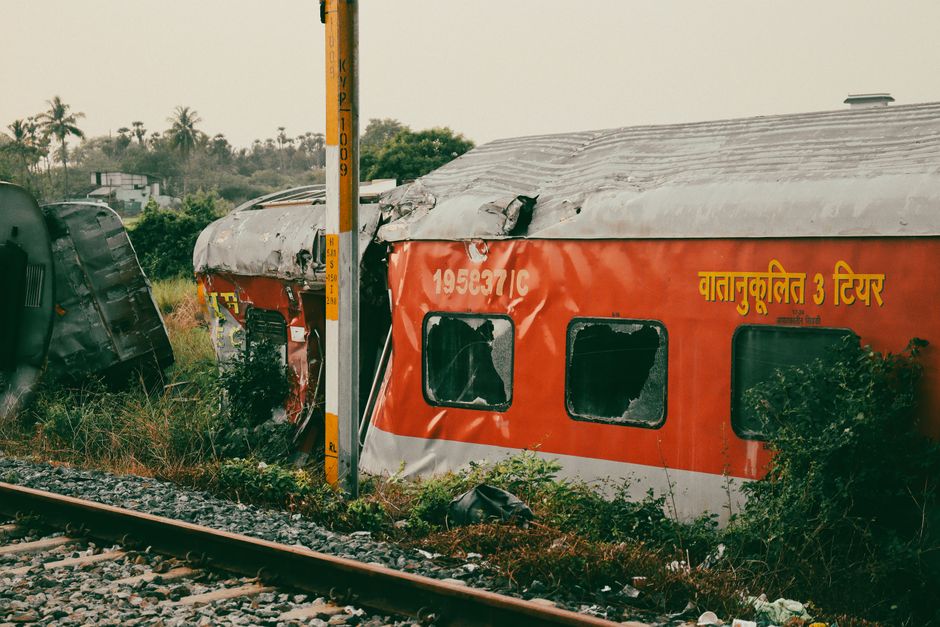
At least 68 people have been killed and more than 100 injured after two high-speed passenger trains collided in central Spain on Wednesday morning, in what authorities and rail experts are calling one of the worst rail disasters in Europe this century. The crash occurred in Toledo province, south of Madrid, when a moving train struck the rear of a stationary train on the same track, with both services carrying more than 540 passengers and crew between them.
Spain's Transport Minister Óscar Puente described the sequence of events as "inexplicable," pointing directly to a decision made by the central command centre at Madrid's Puerta de Atocha-Almudena Grandes station as the apparent trigger for the disaster.
What Went Wrong: A Computer Failure and a Fatal Order
At approximately 8:30am local time on Wednesday, a major computer malfunction caused the LZB continuous automatic train protection and signalling system to fail across a stretch of around 63 to 69 kilometres of track in Toledo province. The failure brought all six trains operating in that zone to an automatic halt, including the Iryo 6076 service travelling from Madrid to Seville and the Renfe AVE 2080, which had departed later on the same route.
Around five minutes after the stoppage, the control centre in Madrid issued an authorisation for the Renfe AVE train to resume its journey. Critically, that clearance came without the standard "line of sight" precautions that require trains to travel at reduced speed through a signalling blackout zone. A stop signal was still active on the line at the time.
At 8:54am, the AVE train, travelling at an estimated speed of between 180 and 200 kilometres per hour, rounded a bend between Los Yébenes and Urda and slammed into the rear carriages of the stationary Iryo train. The collision derailed two carriages from the tail of the Iryo train and the front of the Renfe train.
"The control centre took the decision to resume traffic in circumstances that, from our point of view, are inexplicable," Minister Puente said. "It is clear that, in the control centre, the decision was taken to restart, and then they had more than enough time to verify the error, and they did not fix it." Puente was careful to add that the train drivers themselves were not to blame.
Scenes of Chaos and the Scale of the Tragedy
The collision killed at least 68 people, a toll that authorities warned was likely to rise. Fifty-eight survivors were hospitalised, with 15 in a critical condition. Among the dead was Fátima Báñez, Spain's former employment minister, who was on board one of the trains. One infant was also among those travelling.
Eyewitness accounts painted a harrowing picture at the crash site. A British tourist on board the Renfe train described the moment of impact: "Suddenly, everything started falling apart. Bang! We fell down. We realised carriage two, carriage one, all gone, all smashed. There was blood all over."
A construction worker who had been labouring near the site heard the crash and rushed to help. He described cutting through fences to reach survivors and treating the injured with first-aid kits before emergency services arrived. Rescue teams searched the wreckage throughout the day for survivors and bodies, and rail services between Madrid, Ciudad Real and Andalusia were suspended.
A Nation in Mourning, and Experts Demanding Answers
Prime Minister Pedro Sánchez visited the crash site and announced three days of national mourning. "Today all of Spain is grieving," he said, calling the disaster unacceptable for a country that had long taken pride in the quality of its high-speed rail network. Sánchez also called for increased safety measures to restore public confidence in the system.
Rail experts have been blunt in their assessment of the failures involved. Francisco Badea, a professor of engineering and railway expert at Nebrija University in Madrid, said it was "crazy" that safety systems had not kept passengers protected. "This is something that should not happen in 2026, especially not in a European country in the modernity that we have," he said. "This is the type of stuff that would probably happen 100 years ago when the controllers were tired."
The disaster is the second major high-speed rail crash in Spain this year. In January, a train derailed near Adamuz, close to Córdoba, on the same high-speed line, killing dozens of people in a collision that also involved Iryo and Renfe services. While major rail disasters of this scale were more common in earlier eras, as reflected in historical records such as the list of unusual deaths in the 20th century, safety systems developed in recent decades were specifically designed to prevent exactly this kind of rear-end collision.
Investigation and Political Fallout
A judicial investigation is expected to be launched by local authorities. The official cause of the disaster remains undetermined, though the sequence of events around the control centre's decision to clear the AVE train to move is certain to be central to that inquiry. Spain's rail operator ADIF has confirmed the basic facts of the collision.
Sánchez, who faces a national election on 29 November, called the back-to-back disasters within a single year an embarrassment for Spain. His government has promised a full account of what happened and a renewed commitment to rail safety reform. For now, the priority remains accounting for all those caught up in the wreckage, as rescue teams continue their grim work along the Toledo line.

