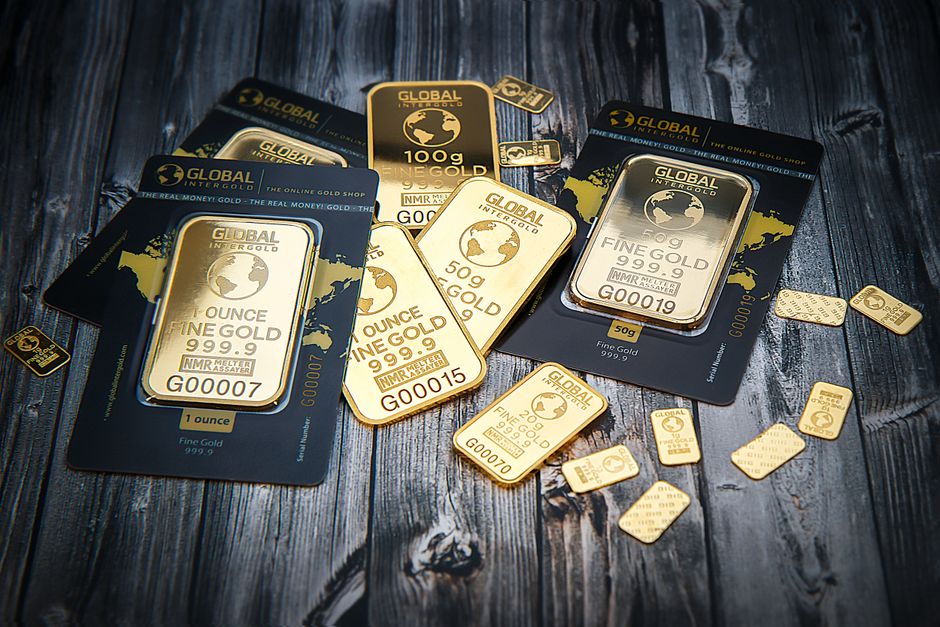
After nearly six months of retreat from record highs, the gold price has surged back with force — climbing more than 8 per cent in just over a week to trade above $US4,400 an ounce. But far from being a cause for celebration, analysts warn the renewed rally reflects mounting anxiety about inflation, ballooning government debt, and the credibility of the world's most powerful central bank.
From record highs to reversal — and back again
Gold's recent trajectory has been a story of dramatic swings. The metal peaked at record levels above $US5,300 an ounce — equivalent to around $7,500 in Australian dollars — just ahead of the outbreak of conflict in the Middle East at the end of February. What followed was a prolonged slide, with the price falling below $US4,000 an ounce last month, before this week's sharp recovery.
The initial pullback had identifiable causes. Military action involving the United States and Israel against Iran sent oil prices soaring and stoked fresh inflation expectations, which in turn punctured gold's record-breaking run. The relationship is counterintuitive to some, but gold's primary appeal is as a hedge against inflation — yet when inflation expectations rise sharply alongside geopolitical shocks, broader market dynamics can temporarily override that logic.
The current rebound also has clear catalysts. The US Federal Reserve's decision to hold its policy interest rate unchanged at its most recent meeting has been a significant driver. Compounding that, the Fed's new chair, Kevin Warsh, has so far failed to reassure markets that he will operate independently of political pressure from the White House — a concern that has weighed heavily on investor sentiment.
The Fed factor and the debasement trade
Gold's dramatic run over the past year was first ignited by a speech from Warsh's predecessor, Jerome Powell, at the annual Jackson Hole economic conference in Wyoming. Powell's signal that the Fed was beginning an interest rate easing cycle — followed by three actual rate cuts — set the gold market alight. The logic was straightforward: lower interest rates reduce the opportunity cost of holding gold, which generates no income but carries storage and holding expenses. Cheaper money, therefore, tends to be good for gold.
That rate-cutting cycle also sparked deeper conversations in financial markets about what analysts call the "debasement trade" and the concept of "fiscal dominance" — the fear that government debt has grown so large, and debt-servicing costs so burdensome, that central banks may ultimately be forced to inflate their way out of the fiscal trap. For investors who share that concern, gold becomes not just an inflation hedge but a shelter from systemic risk.
Adding to the current momentum, last week's weaker-than-expected US jobs data has dampened market expectations of a September interest rate rise. While incoming inflation figures this week could complicate the picture, even a scenario of sustained high inflation paired with sluggish growth — the classic definition of stagflation — tends to be supportive of gold rather than damaging to it. In such conditions, gold's safe-haven status and its inverse relationship with inflation both reinforce the price.
America's debt mountain looms large
Underlying much of the anxiety driving demand for gold is the state of the US government's finances. Gross federal debt is on course to hit $US40 trillion, representing roughly 124 per cent of GDP. In the current administration alone, nearly $US4 trillion has been added in just over 18 months, with the country's deficit-to-GDP ratio expanding from around 5.8 per cent to approximately 6.5 per cent this financial year, according to Congressional Budget Office projections.
The federal government's annual net interest bill is now approaching $US1 trillion — a figure that recently exceeded the entire Defence Department budget, even before the Pentagon put forward a request for $US1.5 trillion in funding for the coming financial year.
The United States is not alone in carrying a heavy debt load. Most western governments emerged from the COVID era with balance sheets stretched to historically elevated levels. But America occupies a unique position: it sits at the centre of the global financial system, and its Treasury securities have long served as the default safe-haven asset for investors worldwide — the main alternative to gold itself. If confidence in the integrity of US monetary policy continues to erode, the argument for gold as the ultimate safe harbour only strengthens.
Trump's ongoing trade conflicts have added another layer of uncertainty to global markets, further supporting the case for hard assets. For investors navigating a world of geopolitical friction, fiscal excess and central bank uncertainty, gold's renewed glitter carries an unmistakable edge of alarm.
For those tracking junior gold explorers amid this environment, developments in the exploration sector continue to attract attention as the broader gold market reasserts itself.