A year after she was pulled from the West Australian wilderness — malnourished, frostbitten and barely alive — German backpacker Carolina Wilga is speaking openly about the 11 nights she spent alone in the outback, a harrowing ordeal that included hallucinations, two suicide attempts, and a moment when she genuinely believed she had already died.
Now 27, Wilga is unrecognisable from the gaunt, frost-damaged young woman who was escorted onto a WA Police jet following her rescue. Smiling and animated as she recounts the experience, her physical recovery appears complete — though she acknowledges her full memory of the events has never entirely returned.
How Carolina Wilga ended up lost in the WA outback
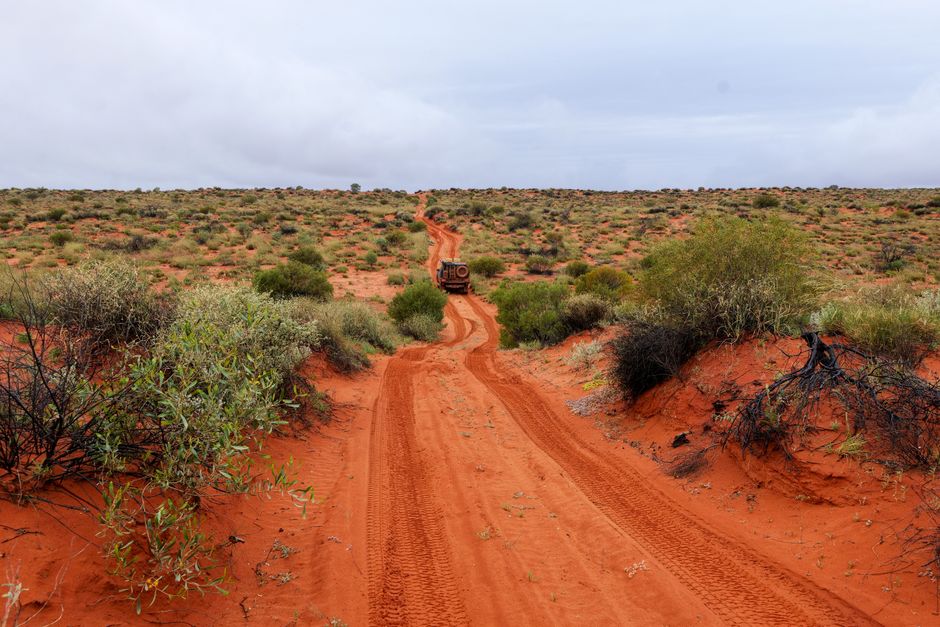
Wilga had been driving from Perth to Beacon when the ordeal began. She recalls seeing headlights approaching on an outback road and being seized by an overwhelming sense of danger — a feeling she describes as irrational but utterly real in the moment. She turned her steering wheel sharply, driving her Mitsubishi Delica van into a fence.
What followed defied easy explanation, even to Wilga herself. Despite the van offering shelter, she abandoned it barefoot and walked into the elements. She says she was roused by a noise that felt like an alarm, compelling her to get up and move — but she was deep in the grip of hallucinations.
"It was terribly cold, like freezing cold, but I was still hallucinating," she says. "The stars were falling down from the sky." She is insistent that what she experienced felt entirely real at the time.
By the end of the first night she had lost her bearings completely. After three nights, she was no closer to the road. She had no food and no water.
Confronting death — and the will to survive
With thirst consuming her thoughts, darker realisations began to break through. The prospect that her body might never be found — that her family would have no closure — brought her to her lowest point.
"They will probably never find my dead body," she says. "That was the moment I fully broke down because that's the worst thing for me."
In a memoir she has written about the experience, Wilga explores a despair that went even further. It was the freezing nights, more than the brutal daytime heat, that left the deepest psychological scars. So terrifying was the prospect of enduring another night in the cold that she made the first of two suicide attempts during her ordeal.
"I just wanted to make it faster because for me, it was clear I'm going to die but the way I'm dying is super painful and I just wanted to make a cut there to not experience it any longer," she says, with a candour that speaks to the significant work she has done processing the trauma.
Yet her body's survival instinct and thoughts of her family pulled her back each time. She made a private promise to her mother: to keep walking until she physically could not.
"I made my mum a promise that I will walk until I die, that I will not give up, I want to live," she says.
Rescue and recovery — a year on
By the eleventh night, Wilga's grip on reality had deteriorated to the point where one of her genuine working theories was that she had already died and was experiencing hell. Her rescue — by Tarnia Henley from Bimbijy Station — felt so unlikely she could barely process it when it happened.
A year on, Wilga's exuberance during her interview is itself a testament to her recovery. While the surreal quality of the experience has not entirely faded — "sometimes it feels super surreal," she says — the young German has clearly done the hard work of confronting what happened to her, including the darkest chapters she now shares publicly for the first time.
Her story stands as a stark reminder of how quickly conditions in Australia's remote interior can overwhelm even a young, healthy person — and how fine the line can be between survival and tragedy.