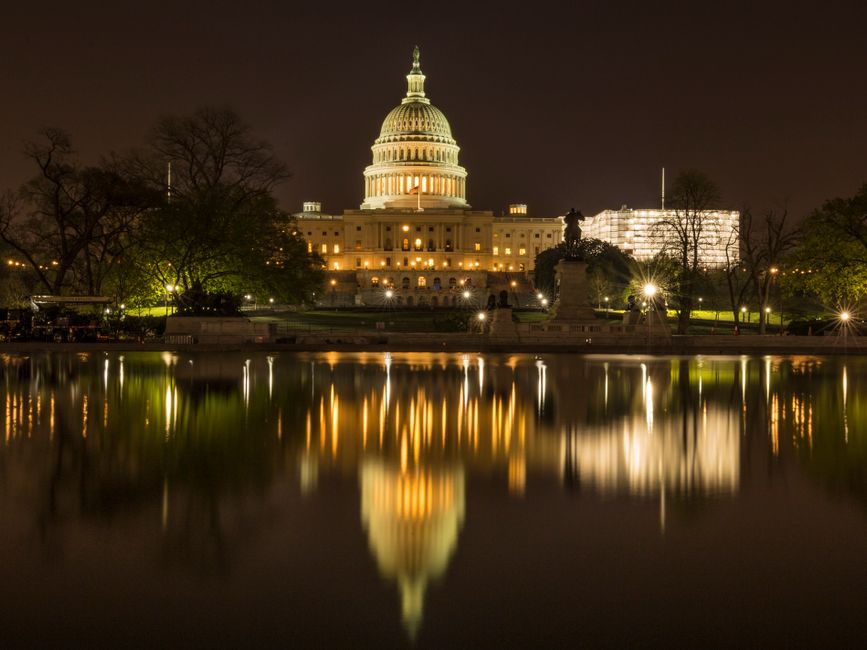
US President Donald Trump is showing early signs of a significant political shift after Republicans suffered a devastating defeat in Tuesday's midterm elections, with Democrats seizing control of both the House of Representatives and the Senate in what analysts are calling one of the party's best results in a generation.
The scale of the Democratic victory was historic. The party is projected to flip seven Senate seats, giving Democrats 53 seats against the Republicans' 42. In the House, 224 seats have been called for Democrats compared with 133 for Republicans, a swing of more than a dozen seats. Deep-red Republican strongholds fell across the country, with Texas electing a Democratic senator and governor, and South Carolina sending a Democrat to the Senate for the first time in nearly three decades. Kansas, too, returned to the Democratic column in the Senate after a lengthy absence.
Trump Sounds "Like a Different Person", Ex-Spokesperson Says
In the hours following the results, former White House spokesperson Pete Seat told a morning television programme that Trump appeared to be processing a new political reality. Seat noted that Trump had made several calls to media organisations during the count, sounding subdued but indicating he would certify the results and was open to working with his political opponents.
"In these first few hours, it sounds like a different Donald Trump who sees the reality and he doesn't want to leave the presidency on bad terms," Seat said. "He's going to want to leave on a high and that will necessitate working with Democrats who will have massive majorities in the House and a very comfortable majority in the Senate."
Seat pointed out that Trump had lived through a similar midterm reversal during his second presidency, with the 2018 midterms of his first term offering a comparable blueprint. He noted that Trump understood he still held considerable presidential power, including the ability to issue executive orders, conduct foreign policy and wield a veto pen over any legislation Democrats might try to pass.
"He still can take executive action, he is still the diplomat in chief, he still commands attention and power on the world stage," Seat said. "But yes, he sounds like he's getting ready for negotiations, for meetings with Democrats, for finding that common ground to move forward on the issues that Americans care about."
Gridlock Looms as Both Sides Hold Competing Powers
While the Democratic victories were sweeping, they fall short of the two-thirds majority in both chambers needed to impeach and remove the president from office. That means the final two years of Trump's term are shaping up as a period of divided government, with neither side able to fully impose its agenda.
Seat described the most likely outcome as political gridlock, saying the "smart money" was on Washington grinding to a standstill. Democrats can now block Republican legislation, but Trump retains the veto pen to stifle Democrat-led bills in return.
Political analysts have attributed the Republican loss in large part to voter frustration over the war with Iran and persistent inflation. The combination proved toxic at the ballot box, delivering Democrats their largest congressional majorities in years.
Seat expressed cautious hope that both sides could reach compromises on shared priorities, particularly around foreign affairs and military needs. "Hopefully President Trump and Democrats are able to reach some compromises, particularly when it comes to foreign affairs and replenishing munitions that are desperately needed," he said.
Before the midterms, the question of what Trump stood to lose with a hostile Congress had already been the subject of considerable political debate, and Tuesday's results have now made that question urgent.
World Leaders Weigh In on the Results
The Democratic sweep drew immediate reactions from governments around the world, reflecting just how closely allied and rival nations alike had been watching the contest.
UK Prime Minister Andy Burnham welcomed the outcome, saying it presented an opportunity for nations to unite around cost of living pressures. "I think people want to see the world coming together and focusing on the things that matter to people," he said, calling for a "laser-like" focus on economic concerns.
French Foreign Minister Jean-Noel Barrot described the results as "very good news" for American democracy, highlighting the record voter turnout and the mobilisation of young voters and previously safe Republican states. His comments carried added weight given that Trump had repeatedly cited France's domestic unrest during the midterm campaign as a warning to American voters.
Spanish Prime Minister Pedro Sanchez said American voters had rejected "policies that only serve to impoverish people", while South African President Cyril Ramaphosa declared the result would "introduce a new era in world relations".
The implications for the Ukraine conflict also loomed large in international reactions. German Foreign Minister Johann Wadephul said he was "optimistic that there will now be more discussions in Congress" about supporting Ukraine, and European Union foreign policy chief Kaja Kallas expressed hope that the new Congress would continue backing Kyiv.
Seat warned, however, that congressional paralysis could ripple well beyond US borders. "It's going to be felt around the world depending on what those vetoes are," he said. "If it comes to how we work with our allies and our relationships around the globe, that could have a damaging impact."

