The flight instructor of Nathalia Gadelha Filgueiras, the 20-year-old co-pilot killed when a Learjet 60 plunged from more than 35,000 feet into a Palm Beach street on Sunday 1 November, has broken his silence to describe her as the most naturally gifted student he has encountered in four decades of teaching.
Chris Kirk paid an emotional tribute on social media, saying Filgueiras was "born to fly" and that every examiner who assessed her had been left astonished by her ability. His comments have drawn widespread attention as investigators continue to piece together what caused the catastrophic mid-air breakup that killed all nine people on board.
An extraordinary talent who earned her licence before learning to drive
Kirk, who has been instructing pilots for 40 years, said he had never taught anyone with Filgueiras' natural aptitude. "That young lady was born to fly! There was not a check ride that the examiner was not blown away!" he wrote in a Facebook post that has since circulated widely.
Filgueiras had obtained her pilot's licence while still a high school student, before she had even learned to drive a car. She went on to complete pilot-in-command training, a qualification that allows a pilot to act as captain or sole operator of a specific aircraft type.
Kirk noted that when Filgueiras completed her Learjet type rating, she had logged fewer than 1,100 flight hours, yet performed so impressively that the examiner estimated she had closer to 5,000 hours of experience. "She absolutely aced the PIC type rating," he wrote.
Beyond her technical skill, Kirk described Filgueiras as driven by a genuine love of aviation rather than the career ambitions he said he saw in most trainees. "So many of the pilots in training today never wanted to become pilots and only want to become airline pilots," he wrote. "They had no passion for flying. They only wanted to get to the airlines to make the big money. Nathalia was PASSIONATE about flying."
Filgueiras was heard making a mayday call in the aircraft's final seconds before it struck the ground, according to reports. The doomed jet, valued at around two million dollars, had departed Texas bound for the Bahamas before the emergency unfolded over Palm Beach.
All nine victims formally identified
The Palm Beach County Sheriff's Office confirmed the identities of all nine victims on Wednesday, with the collection of human remains at the site described as ongoing at the time of that announcement.
The eight other people on board were identified as Adam Robinson and Helen Sharp, along with their children Emma and Charlie; friends Rachael Reed and Charmi Fehr; nanny Anita Maria Cetina; and pilot Jeffrey Gregory.
The identification process involved a coordinated effort between the FBI, the Palm Beach County Sheriff's Office violent crime division and crime scene unit, the county's Medical Examiner's Office, and forensic scientists.
Tail found two kilometres from crash site, investigators say
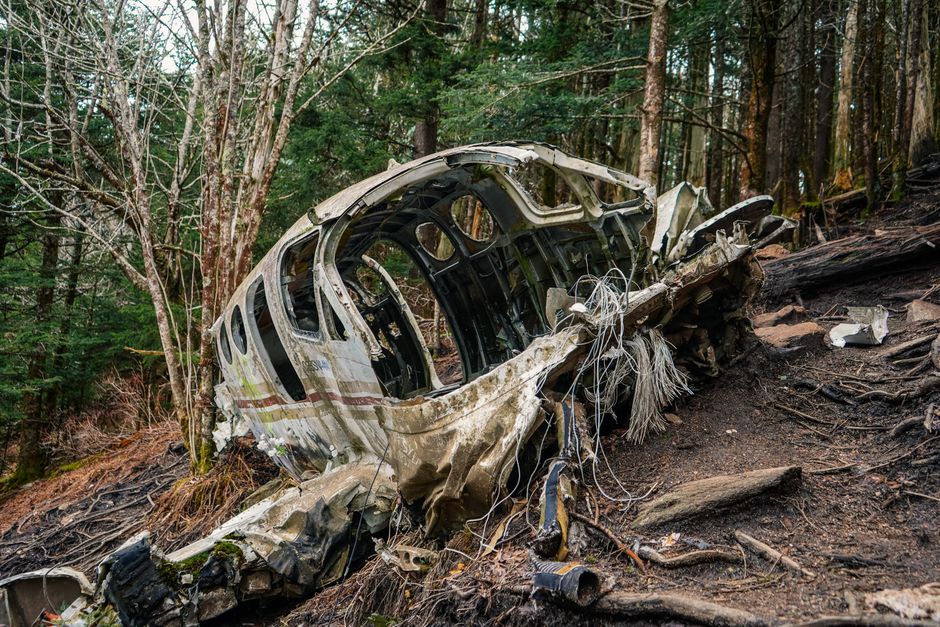
Investigators made a significant discovery during their examination of the crash site: part of the jet's tail was found more than two kilometres from the point of impact. That finding confirmed the aircraft had begun breaking apart while still airborne.
National Transportation Safety Board member Tom Chapman told a news conference on Tuesday that the tail's elevator had been broken into three separate pieces. The elevator is the control surface responsible for pitching the aircraft up or down, and without it functioning, the pilots would have had no ability to pull the jet out of its nosedive.
"The function of the elevator is to control the pitch up and down," Chapman said. "At those speeds I don't know that it would've been effective even if it had still been attached to the aircraft, but knowing that it was lost is a very important piece of evidence in terms of pointing us towards other things to investigate."
The discovery is expected to shape the direction of the broader investigation into what caused the structural failure at altitude. Authorities have not yet indicated a definitive cause, and the investigation remains in its early stages.
For aviation observers, the tragedy raises difficult questions about the pressures placed on young pilots moving rapidly through ratings and type certifications. Kirk's tribute to Filgueiras, however, is unambiguous: in his view, she was an exceptional case, a young woman whose talent and passion set her apart from the moment she first took the controls. Her loss, he wrote, was one that left him deeply saddened.
Those interested in other recent aviation incidents in Australia can read a witness account of a light plane plunging into the ocean near Adelaide, or learn about how surf lifesavers responded to a plane crash as first responders.

