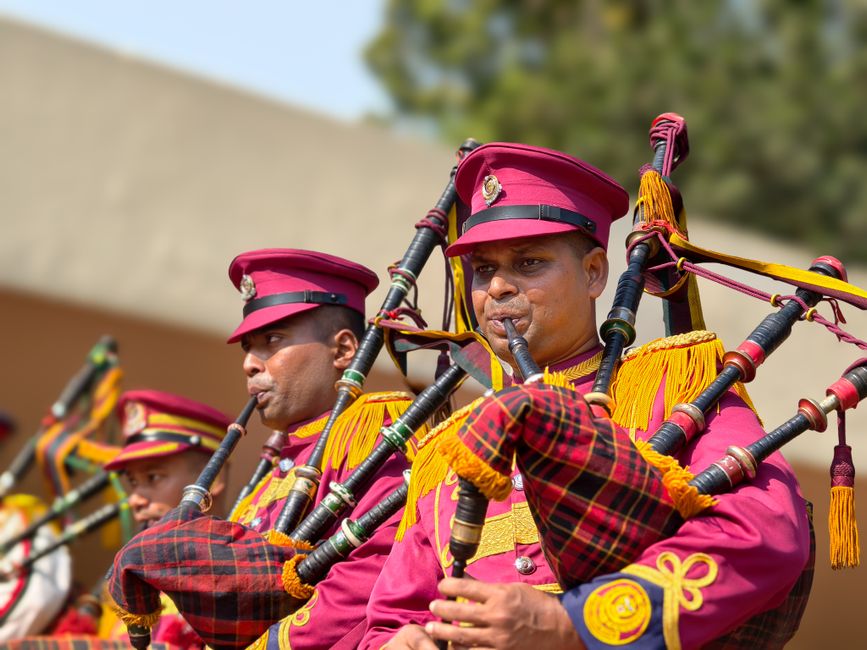
One hundred and forty-five female bagpipers and drummers assembled in Melbourne's City Square on Sunday to set a world record for the largest all-female bagpipe performance, in a moment that celebrated both a milestone for women in music and the centenary of a remarkable chapter in Australian history.
The group, ranging in age from teenagers to veterans who have played for decades, performed Scotland the Brave and Waltzing Matilda to claim the record with the Australian Book of Records for the biggest ladies' pipe band performance ever staged.
A Record Decades in the Making
Among those who took part was Helen Dilks, whose own story mirrors the broader journey of women in the bagpiping world. Back in 1963, a 12-year-old Dilks and her sister Ruth sought to join Bendigo's Golden City Pipe Band — an ambition that made their father Fred nervous about how the all-male membership might react.
"In those days, there were generally no mixed bands," Dilks recalled. Nevertheless, the sisters pressed ahead and became the first girls to join the band. More than six decades on, Dilks remains a Golden City member and was present on Sunday as part of the record-breaking ensemble.
At the other end of the experience spectrum was 13-year-old Scarlett Cai, who plays with the Haileybury Pipes and Drums band and, like Dilks, first picked up the pipes at age nine. "It's something special to be part of," Cai said of the record attempt.
The record event followed the annual Tartan Day Parade through Melbourne's CBD and was inspired in part by a November performance in which 374 pipers played AC/DC's It's a Long Way to the Top (If You Wanna Rock and Roll) at Federation Square. Organiser Chris Bouwmeester said that performance had planted the seed for Sunday's all-female effort.
Honouring the Australian Ladies Pipe Band's Epic World Tour
Sunday's gathering also marked the centenary of one of the most remarkable — and little-known — episodes in Australian musical history: a self-funded, two-year world tour undertaken by the Australian Ladies Pipe Band between 1925 and 1927.
Led by Gallipoli veteran Drum Major William Darwin, the band was made up entirely of women who had each lost a loved one during World War I. Their journey took them through New Zealand, Canada, the United States and the United Kingdom — a genuinely groundbreaking undertaking for the era.
The tour was not without hardship. Research from the National Archives of Australia reveals that even before the band departed, a father of two prospective members wrote to the officer in charge of passports warning that the trip was "a risky undertaking, both financially and morally." Tragically, 19-year-old piper Marjory Cook died in a fall just before the band left Australian shores. On arrival in New Zealand, seven underage members were deported home due to missing parental consent documents.
Despite those setbacks, the band went on to triumph overseas. In Glasgow, they were welcomed by a crowd of more than 40,000 people, and in Braemar in the Scottish Highlands they performed for King George V and Queen Mary.
When the women finally returned to Melbourne in February 1927, they performed on radio station 3LO and at the Tivoli Theatre before embarking on a nationwide tour. Six years later, the band's pipe major, Dolly McPherson, married Drum Major Darwin.
Bouwmeester described the original tour as groundbreaking "at a time when people seemed to think that females shouldn't play the bagpipes" — a sentiment Dilks echoed. On Sunday, pipers also performed Australian Ladies, a piece composed roughly 100 years ago by Scotsman William Fergusson specifically to honour the band.
A Living Tradition
Sunday's record attempt underscored just how far women in the bagpiping world have come — from nervous fathers seeking to shield their daughters from judgment in 1960s Bendigo, to 145 performers standing together in the heart of Melbourne, rewriting the record books and honouring the trailblazers who came before them.