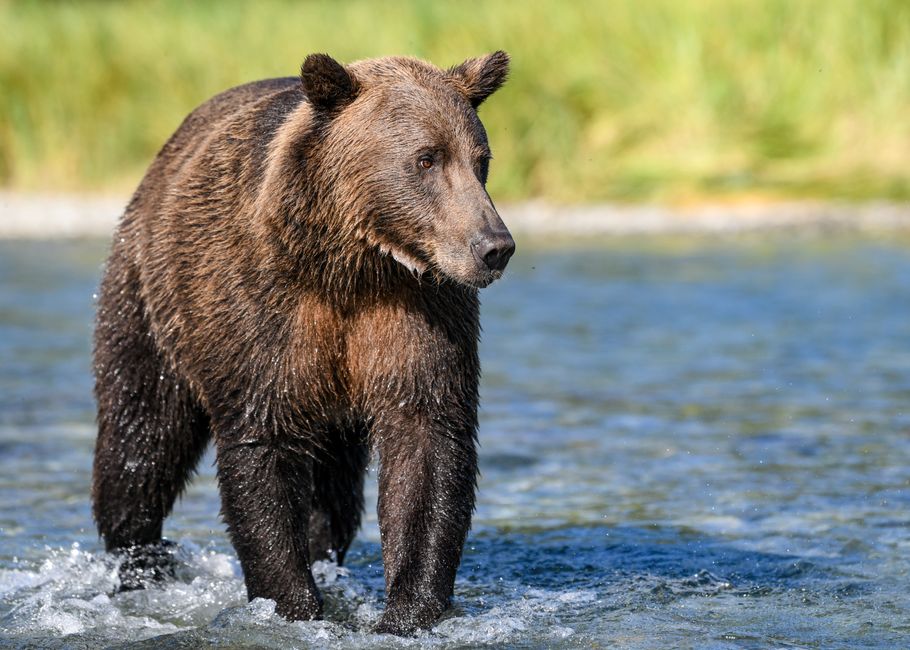
A gentle giant with royal lineage has claimed the crown of this year's Fat Bear Week contest. Backpack — officially known as Bear 89 — has been declared the 2026 champion at Alaska's Katmai National Park and Preserve, securing the title with more than 100,000 public votes after narrowly edging out Bear 910 with just over 50 per cent of the final poll.
Who is Backpack, Fat Bear Week's 2026 winner?
Backpack is no stranger to the Brooks River spotlight. The son of former Fat Bear Week champion Holly, he was first introduced to the river as a first-year cub back in 2006. His distinctive name came from an endearing early habit — when the family crossed the river, the young bear would clamber onto his mother's back for the swim.
What sets Backpack apart from many other large adult male bears is his temperament. "Unlike many large adult male bears, Backpack hasn't shown much aggression toward his competitors," his official contestant profile notes. Fans took to Instagram to celebrate the win, with many highlighting both his famous lineage and his reputation as a gentle giant among the park's bear population.
His path to the championship was not without challenge. Last year's winner, Chunk — officially Bear 32 — who claimed his title at an estimated 545 kilograms, was knocked out in the first round this year by a competitor named Bucky. Bucky then fell to Backpack in a subsequent head-to-head matchup, clearing the way for Bear 89's eventual victory.
What is Fat Bear Week and why does it matter?
Now in its 12th year, Fat Bear Week was established in 2014 as an interactive, public-facing way to raise awareness about brown bears — the coastal cousins of grizzlies — and the remarkable annual cycle they undergo to survive. The contest is run by a nonprofit and celebrates the approximately 2,200 brown bears that inhabit Katmai National Park and Preserve, situated on the Alaska Peninsula in the state's south-west, stretching toward the Aleutian Islands.
Voting takes place entirely online, with the public encouraged to watch the bears via livestream cameras on explore.org before casting their ballot. The cameras are trained on the Brooks River, where bears gather from late June onward to feast on the abundant salmon runs that pass through each season.
"Fat bears are successful bears," the nonprofit states on its website — a simple but powerful message that underscores the ecological reality behind the spectacle. The weight these animals accumulate during summer is not vanity; it is survival.
The science behind the bulk
The extraordinary size on display during Fat Bear Week is the product of a biological imperative. Every autumn, Katmai's brown bears enter hibernation for the winter months, during which they do not eat or drink at all. By the time they emerge in spring, they can lose as much as one-third of their body weight.
To withstand that metabolic cost, the bears must gorge themselves throughout summer and early autumn. The salmon-rich Brooks River provides the ideal opportunity, allowing the bears to pack on the fat reserves that will sustain them through months of dormancy. The bigger a bear enters winter, the better its odds of surviving to spring — making Backpack's considerable bulk not just a crowd-pleasing achievement, but a genuine marker of ecological success.
A beloved annual tradition
Fat Bear Week has grown into one of the more unusual yet earnest corners of the internet's annual calendar — a celebration of wildlife, wilderness and the raw drama of nature's rhythms. With Backpack's 2026 victory now confirmed, attention will inevitably begin to turn to which of Katmai's bears will be lumbering into the competition next year, already fuelling on the Brooks River's salmon runs, preparing their own bid for the championship.