Dubai airport bombed: war spreads across the Middle East
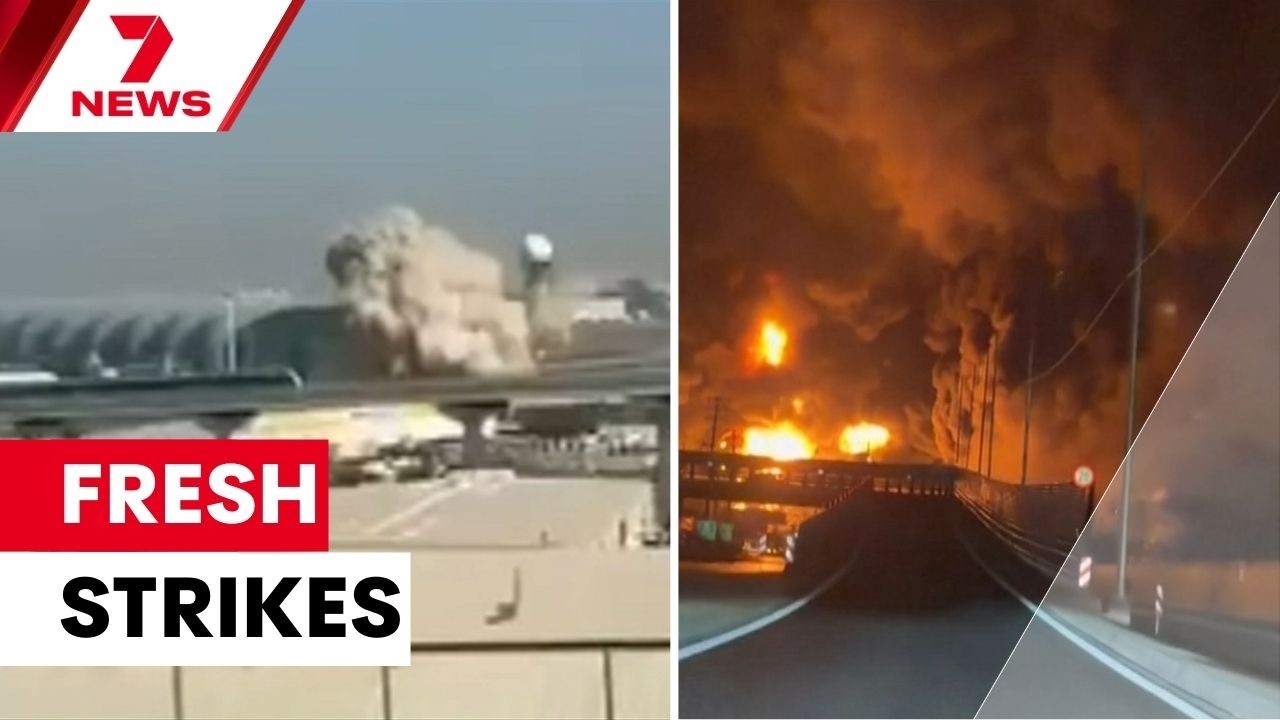
Table of Contents
- Dubai airport bombed and the regional escalation — what Australians need to know
- What happened at Dubai International?
- How the fighting has spread across multiple fronts
- Who is involved and what are they saying?
- Australia's response and options under consideration
- International fallout: allies, diplomacy and public reaction
- Human cost and humanitarian concerns
- What happens next?
- Key takeaways
- Further reading and context
- What exactly happened at Dubai International airport?
- Has Australia sent military forces to the Gulf?
- Who claimed responsibility for the strikes across the region?
- Are commercial flights safe in the region?
- What should Australians in the region do now?
Dubai airport bombed and the regional escalation — what Australians need to know
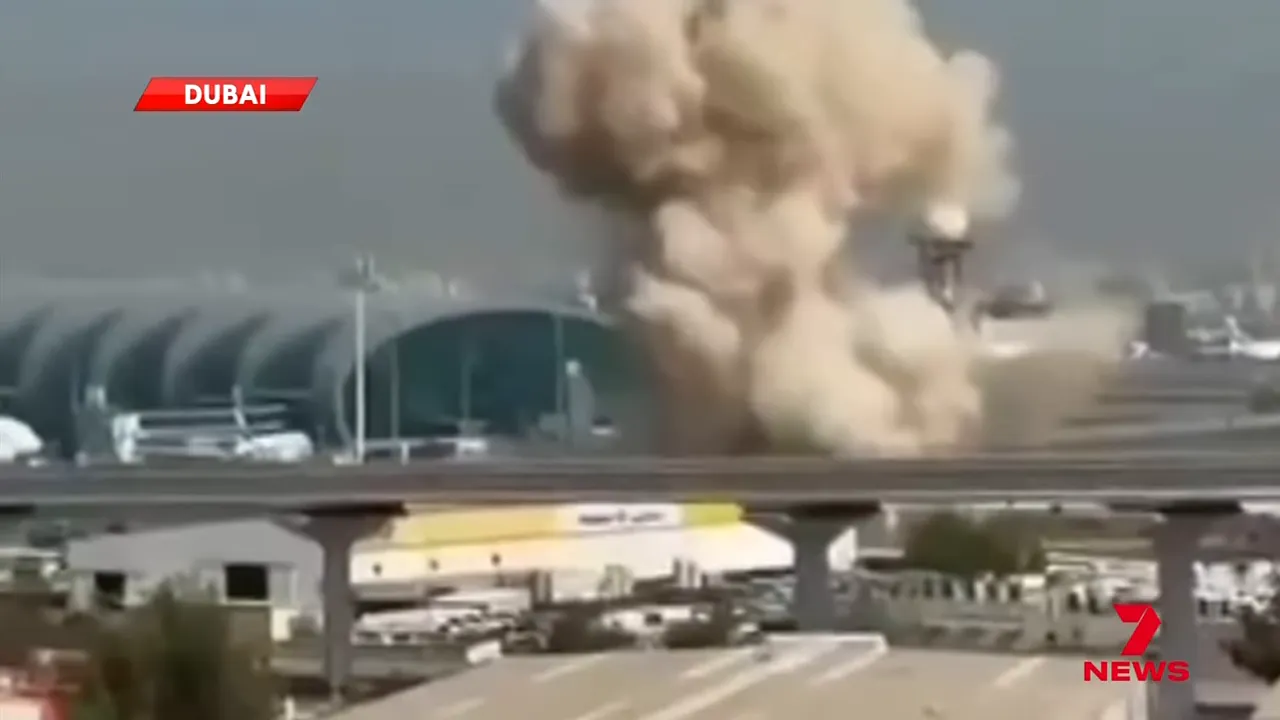
SYDNEY, AUSTRALIA — Dubai airport bombed by a drone attack has left thousands of travellers shaken and raised fears the Middle Eastern conflict has entered a new, more dangerous phase. The strike near Dubai International’s main terminal forced evacuations, stranded passengers on planes and produced dramatic scenes captured by witnesses.
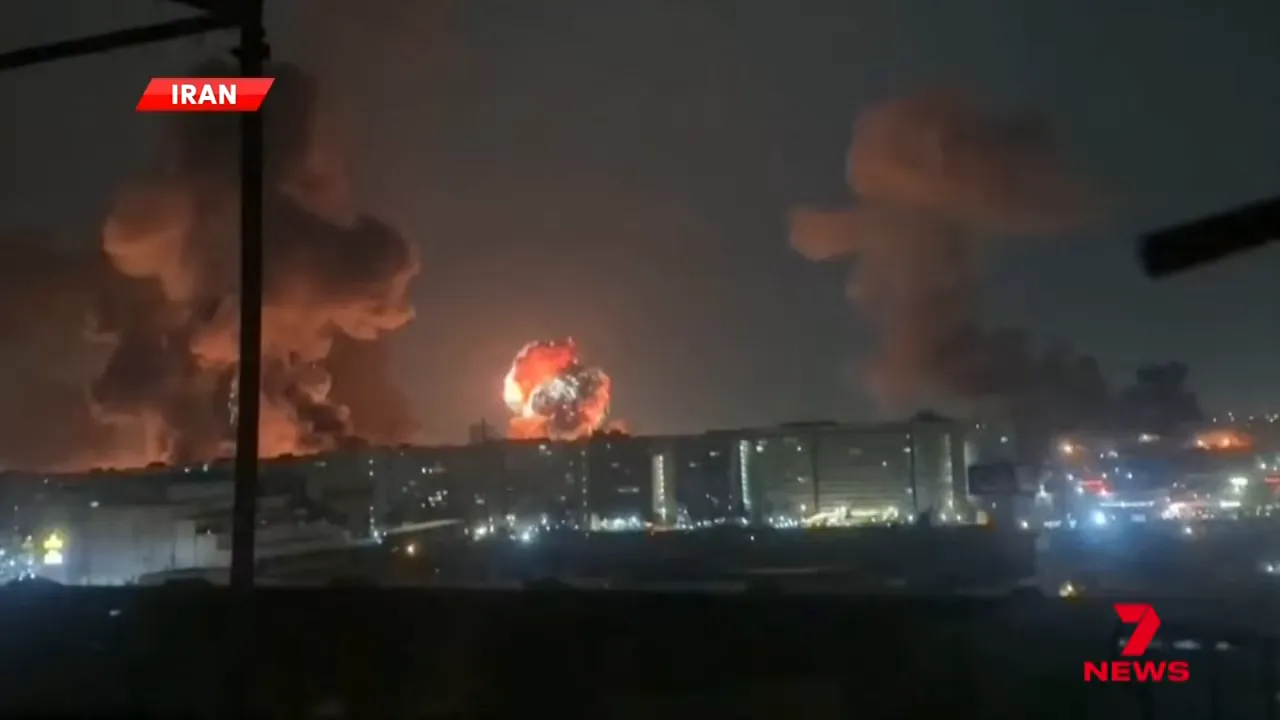
At the same time, multiple fronts across the region saw major strikes — a large oil depot reportedly destroyed in Iran, attacks on Tehran’s airport, and missile and drone strikes that hit targets in Iraq, Lebanon and across the Gulf. The rapidly widening violence has drawn global attention and prompted urgent discussions about defensive assistance to Gulf partners.
What happened at Dubai International?
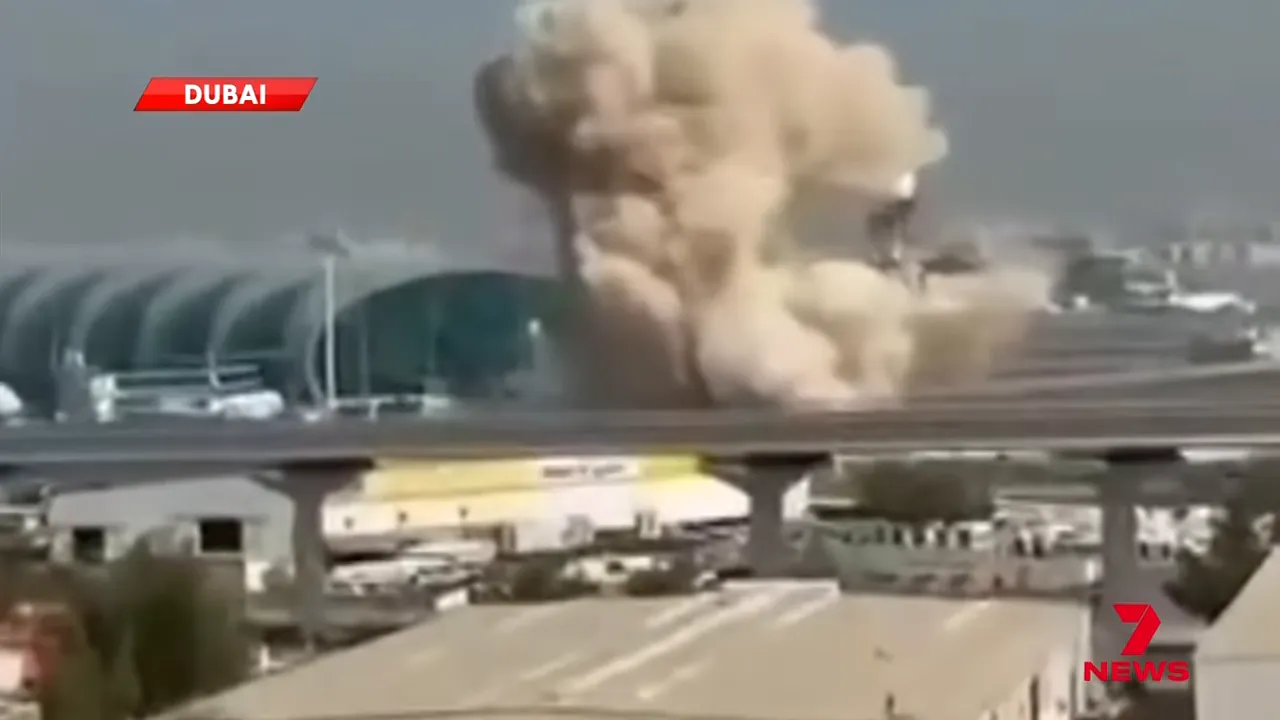
Travellers at Dubai International described a sudden explosion near the main terminal and chaotic scenes as authorities evacuated terminals and passengers waiting on aircraft. Eyewitnesses said the impact looked like a drone strike, with one witness telling reporters it was “definitely a drone” and that the explosion occurred a few hundred metres from where they were waiting.
Authorities reported fragments landing in surrounding areas, with at least one fatality in a nearby street when a missile fragment struck a car. The incident has prompted calls for increased airport security and temporary disruptions to flights as investigations continue.
How the fighting has spread across multiple fronts
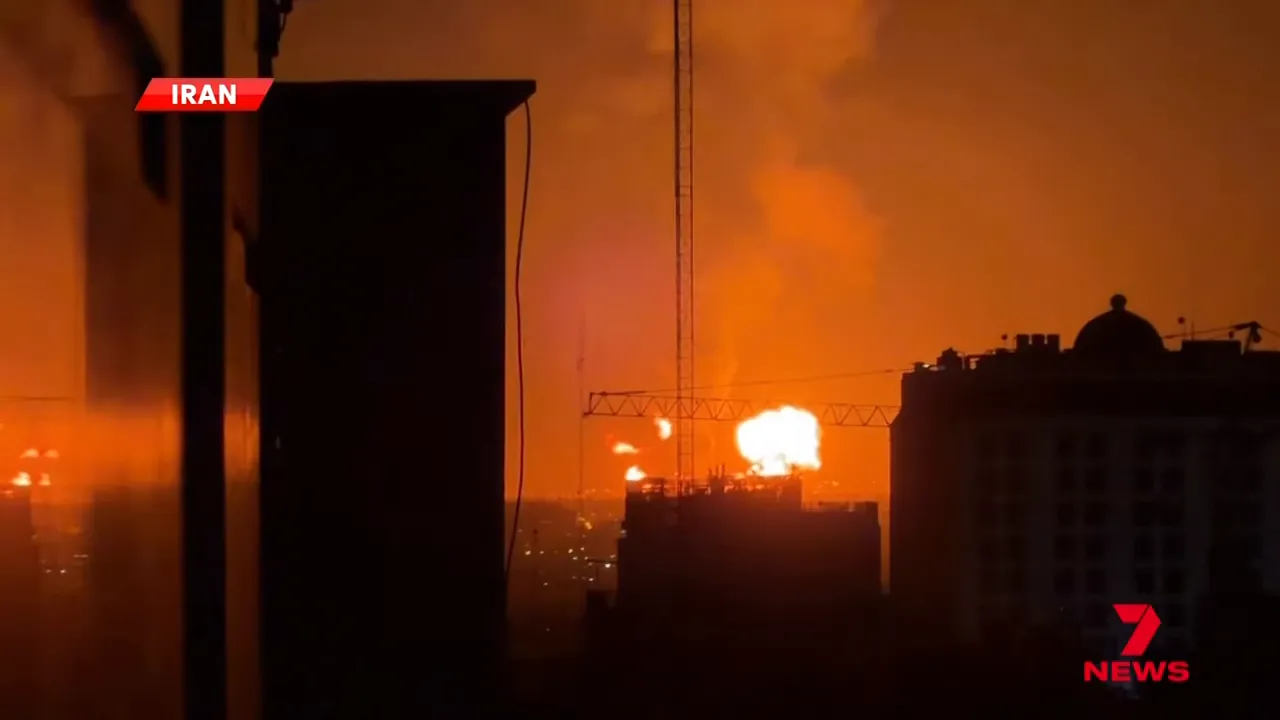
The violence is no longer confined to direct clashes between state actors. Iran’s reported strikes included an attack on what locals identified as the Sohank oil depot and a separate strike across Tehran that produced a skyline of fireballs. Satellite and on-the-ground footage showed burning oil leaking into drainage systems and widespread fires, raising environmental concerns.
In neighbouring countries, Israel’s air defences continued to operate — notably the Iron Dome — while Lebanon experienced deadly exchanges tied to strikes on Hezbollah targets. Ground forces and heavy armour have moved into northern Israeli border zones, signalling preparations for further operations.
Who is involved and what are they saying?
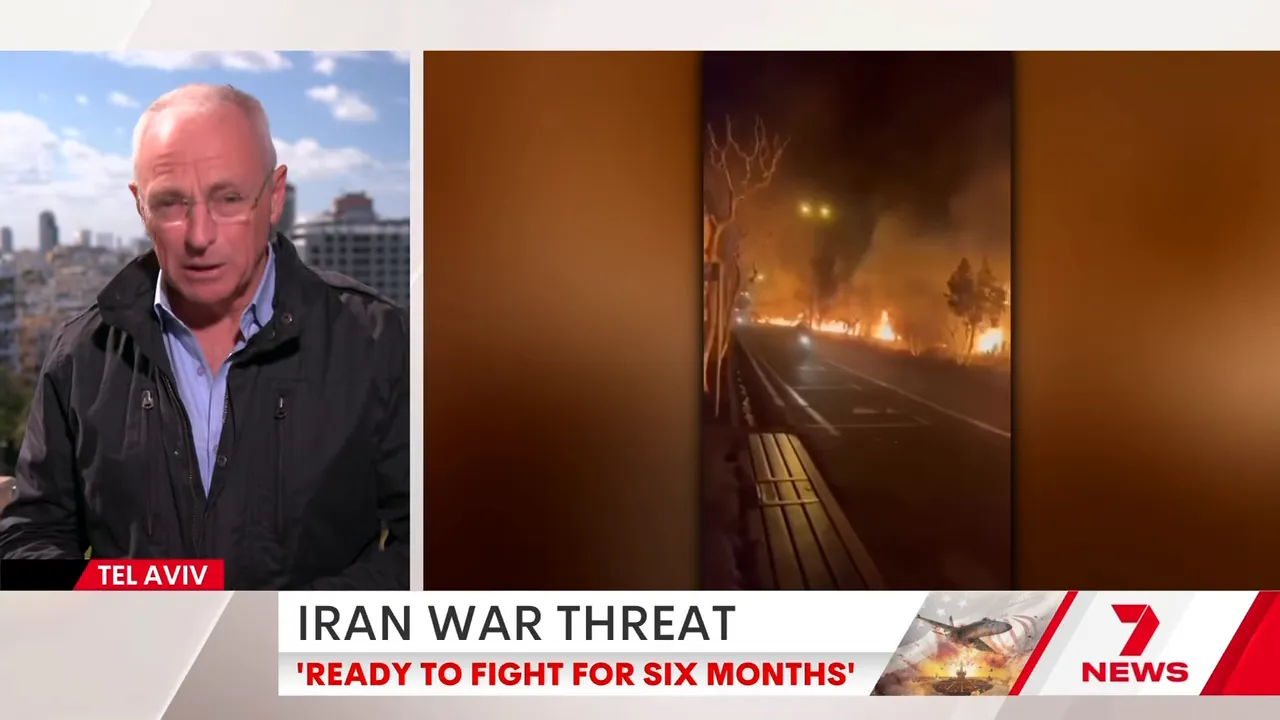
Iran’s Revolutionary Guard has signalled readiness to sustain a ballistic missile campaign for months, claiming it has yet to deploy longer-range systems fully. At the same time, Iran’s president has publicly apologised to neighbours over some spill-over attacks, even as hardline elements and local commanders report heavy losses.
In Washington, the U.S. response has been unapologetically confrontational. President Donald Trump remains defiant, calling for continuing offensives and overseeing the repatriation of six U.S. servicemen killed in a drone strike in the region — the first American combat fatalities of this conflict. Meanwhile political debate over the legality of U.S. strikes is intensifying at home.
Australia's response and options under consideration
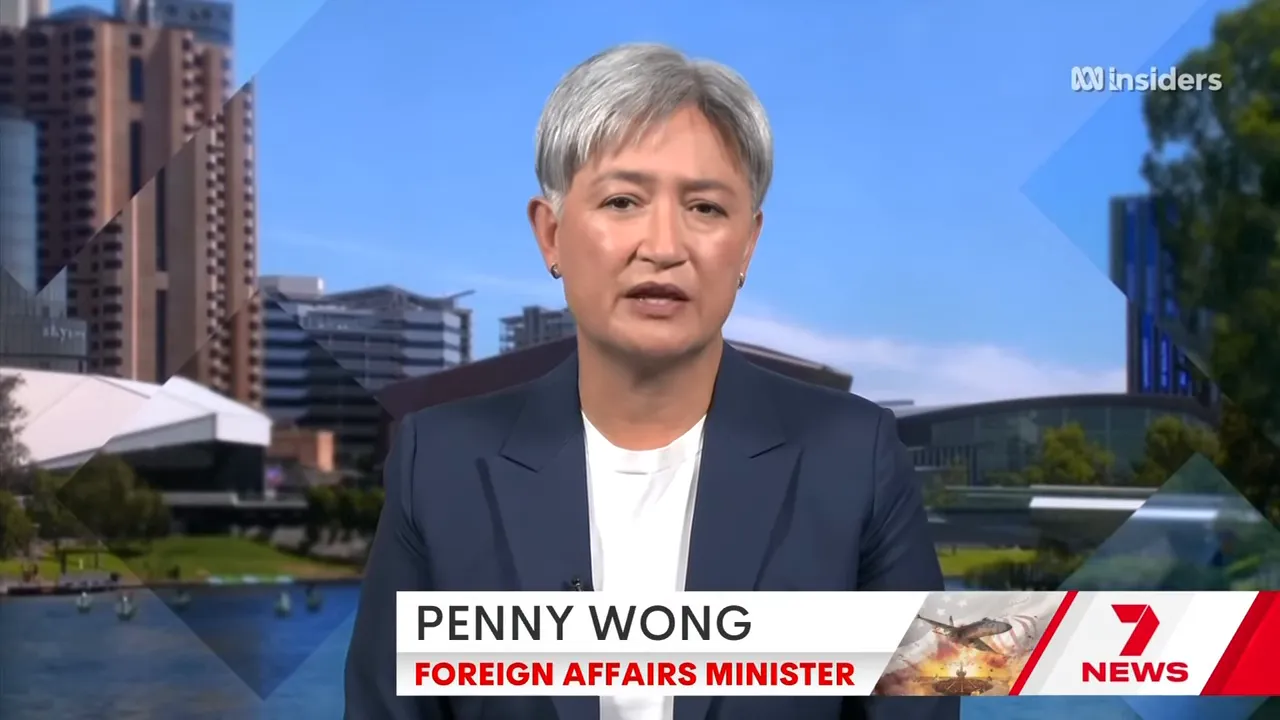
Foreign Affairs Minister Penny Wong confirmed Australia has been asked to consider assistance to Gulf states facing missile and drone attacks. Canberra is reportedly examining options that would not involve offensive action against Iran — including the possible deployment of short-range surface-to-air missile systems or early-warning assets to help plug gaps in regional missile defences.
Any decision would weigh alliance obligations, the safety of Australian personnel, and the diplomatic implications of sending military support into an active theatre of conflict.
International fallout: allies, diplomacy and public reaction
Tensions among allies have surfaced. The U.S. criticised the UK for perceived delays in offering military support, even as Britain prepared to prepare an aircraft carrier to move into the eastern Mediterranean. At home, demonstrations reflected divided public sentiment: large pro-war rallies in Washington demanding regime change in Tehran contrasted with protests condemning the strikes as illegal and harmful to civilians.
Political leaders from across the region and beyond have called for restraint even as military activity continues. The volatility has underscored how quickly regional conflicts can draw in outside powers and strain long-standing alliances.
Human cost and humanitarian concerns
Beyond strategic calculations, the civilian toll is mounting. Reports of apartment buildings hit by missile fragments, a car driver killed by debris, and schools damaged have fuelled anger and grief. Observers warned of widening humanitarian consequences, including displacement, infrastructure damage and environmental hazards from burning oil and contaminated waterways.
Medical facilities in affected cities are under pressure, and aid agencies are monitoring for potential refugee flows if fighting intensifies further.
What happens next?
Analysts warn that the coming weeks could determine whether the conflict becomes a protracted regional war. Iran’s stated capability to sustain missile barrages for months, Israel’s continued ground posture in border areas, and coalition responses will shape the trajectory.
For Australia, the immediate questions are whether to provide defensive support, how to protect citizens in the region, and how to balance diplomatic pressure with military obligations. For civilians across the Middle East, the priority remains safety, access to essential services, and international support to reduce harm.
Key takeaways
- Drone strike near Dubai International led to evacuations and stranded passengers.
- Multiple strikes across Iran, Iraq, Lebanon and the Gulf indicate a widening conflict.
- Australia is considering defensive assistance but is not seeking offensive involvement.
- International responses show divisions among allies and rise in public protests.
- Humanitarian and environmental damage from burning oil and infrastructure hits is a growing concern.
Further reading and context
Follow official travel advice from the Australian Department of Foreign Affairs and Trade if you have loved ones in the region. Monitor updates from reputable international news agencies and local authorities for confirmed details, as the situation remains fluid and some claims are unverified.
What exactly happened at Dubai International airport?
Witnesses reported a drone exploding near the main terminal, prompting evacuations and flight disruptions. Authorities are investigating the incident as part of a broader regional escalation of missile and drone attacks.
Has Australia sent military forces to the Gulf?
As of the latest reports, Australia is considering requests to provide defensive assistance such as short-range air-defence systems or early-warning aircraft, but has ruled out participation in offensive strikes against Iran.
Who claimed responsibility for the strikes across the region?
Multiple actors have been involved. Iran’s Revolutionary Guard has acknowledged missile campaigns, while other strikes and fragments have impacted civilian areas. Some claims remain unverified and are under investigation.
Are commercial flights safe in the region?
Airspace safety is being reassessed continuously. Airlines and aviation authorities may alter routes or suspend services depending on threat assessments. Travellers should check with airlines and government travel advisories before flying.
What should Australians in the region do now?
Australians should register with DFAT’s Smartraveller service, follow local authorities’ instructions, avoid affected areas, and contact the nearest Australian consulate or embassy for assistance.
The information in this article has been adapted from mainstream news sources and video reports published on official channels. Watch the full video here Dubai airport bombed as the war moves to an explosive new phase | 7NEWS


