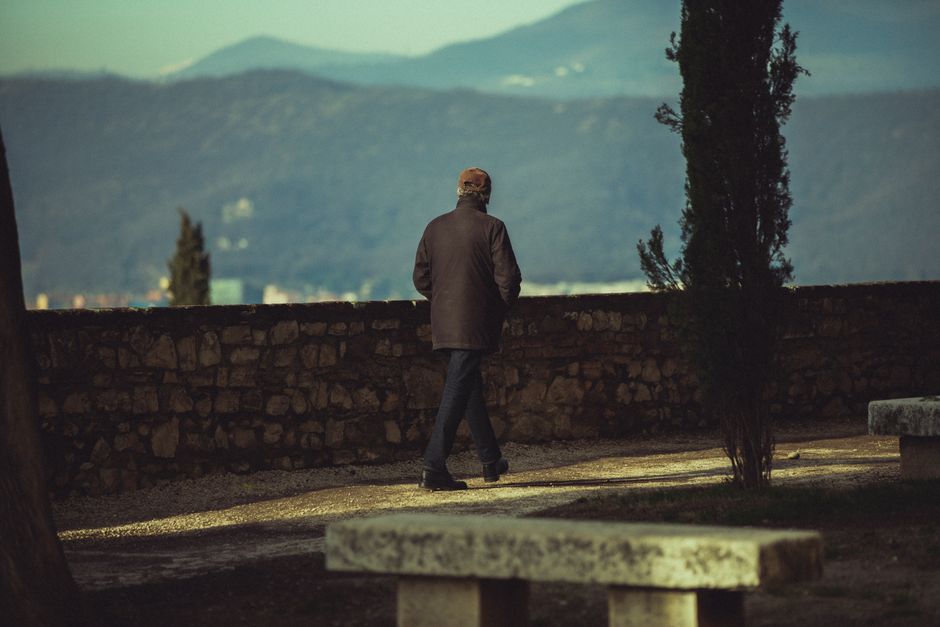
On the day a stroke claimed his life, Dr John Egan had already walked 8000 steps. He was 96 years old. The health app on his phone logged every one of them — a fitting final entry for a man whose family had long since stopped being surprised by his vigour. The day before, he had been filmed working out on a cross-trainer at Balmoral Beach. He was farewelled at Sacred Heart Church in Mosman on Thursday, surrounded by nine children and 19 grandchildren.
A Depression-Era Child Who Never Stopped Moving
Born in 1929, John Egan entered the world as a Great Depression baby — the third child his parents could scarcely afford, by his own later recollection. His two older sisters, Patsy and Margaret, doted on him. His father Charles, a doctor who moved into psychiatry, uprooted the family repeatedly as he took up superintendent roles at institutions then known as asylums: Callan Park, Gladesville, Rydalmere, Morisset, Newcastle and Bloomfield in Orange. John attended no fewer than 10 schools as a result.
During the Second World War, Charles moved the family to Hay in 1943, where he ran an internment camp and formed friendships with many of its inmates — mostly Italian, German and Japanese immigrants who had been arbitrarily classified as enemy aliens. It was an early lesson, close to home, in the human cost of prejudice.
In his late teens, John travelled north to Tenterfield to visit great-aunts, where his grandfather Dan Egan had once operated a saddlery before selling the business to the grandfather of singer Peter Allen. John recalled sitting on the veranda of that saddlery and chatting with George Woolnough.
Cricket, Medicine and a Hart Transplant
At 17, John was on The Hill at the SCG for the 1946–47 Ashes, watching Don Bradman score 234 runs. What impressed him most, however, was the conduct of Bradman's batting partner Sid Barnes, who — upon equalling Bradman's 234 — deliberately got himself out rather than risk outscoring The Don. It was a gesture of towering humility that, according to those who eulogised him, foreshadowed John's own character.
He followed his father into medicine, and while working as a resident at Sydney's St Vincent's Hospital he met a cardiac nurse named Rhona Hart. Ever fond of wordplay, John would later boast that he had performed St Vincent's first "Hart transplant." They married, and with their first children — twin boys — relocated to Moree in 1957, where John, then just 27, established a general practice.
Fighting Segregation in Moree
What John found in Moree disturbed him deeply. Aboriginal patients were refused entry to the local hospital and forced to receive treatment on its veranda. He and his practice partner John Campion campaigned to end the policy — and succeeded. John also lobbied for Aboriginal children to be admitted to the local Catholic school, and worked alongside nuns and a bishop to establish a free clinic on the local Aboriginal mission.
Every fortnight, he drove 130 kilometres with a priest and two nuns to deliver free medical and social services to another remote Aboriginal mission at Toomelah. The reach of that work lingered long after he left town. In the late 1970s, an Aboriginal tracker returned to Moree specifically to thank the doctor who had once saved his life — only to learn John had moved to Sydney. The tracker boarded a train to Central station to find him.
A Life Measured in Steps, Not Years
Those who knew John Egan well say the 8000 steps recorded on his final day were not remarkable in isolation — they were simply the last entry in a lifelong pattern. Well into his 90s he had regularly walked from his Mosman flat to Manly, or into the CBD to attend Mass at St Patrick's. In his final years he scaled back to the daily walk to Sacred Heart in Mosman. It was enough. He died as he had lived — moving forward, unhurried, purposeful.
He is survived by nine children, 19 grandchildren, and three great-grandchildren who will one day be old enough to hear the stories.