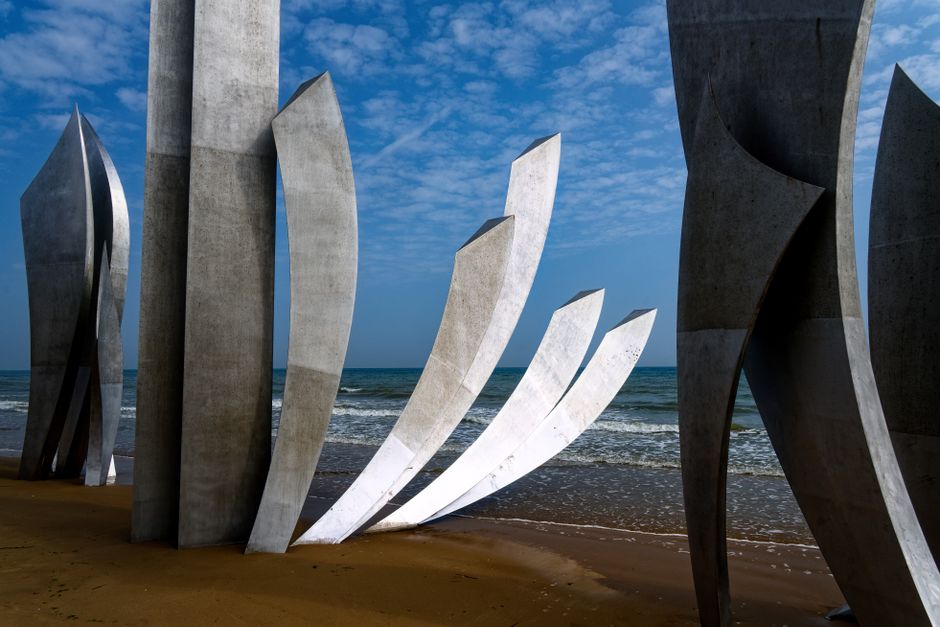
The historic D-Day landing beaches in Normandy, France, and the Zehlendorf Forest Estate in Berlin have both been added to the UNESCO World Heritage List following decisions made at the organisation's heritage committee meeting in Busan, South Korea. The committee was considering a total of 30 new nominations when it approved both inclusions on Sunday.
The Normandy D-Day Landing Beaches
The newly inscribed site in northern France encompasses the beaches where Allied forces launched their momentous assault on June 6, 1944 — a date etched into history as D-Day — marking the beginning of the liberation of Western Europe from Nazi Germany. The five landing beaches — Utah, Omaha, Gold, Juno, and Sword — are all included, along with associated memorials that commemorate one of the most significant military operations of the Second World War.
The Allied invasion was carried out primarily by US, British, Canadian, Polish and French troops. Around 3,100 landing craft transported more than 150,000 soldiers across the English Channel to the French coastline, with thousands losing their lives in the fierce fighting that followed.
The recognition brings France's total UNESCO World Heritage Sites to 55 — drawing level with Germany. Only China and Italy, each with 60 sites, hold more listings worldwide.
Berlin's Zehlendorf Forest Estate: A Colourful Bauhaus Legacy
The Zehlendorf Forest Estate's inclusion is not an entirely new UNESCO entry but rather an expansion of the existing Berlin Modernism Housing Estates site, which was first recognised in 2008. The estate joins six other complexes already on the list, including the well-known Horseshoe Estate in Britz and the White City in Reinickendorf.
Constructed between 1926 and 1932, the estate was designed primarily by architect Bruno Taut, working alongside Hugo Haring and Otto Rudolf Salvisberg. At the time of construction, the Bauhaus-influenced buildings drew fierce criticism from conservative quarters. Today, however, the project is widely celebrated as pioneering in its approach to residential design.
Guided by the principle of 'light, air and sun', the estate was ahead of its time in placing residents' health and wellbeing at the centre of its planning philosophy. Taut's design blends modern, open architecture with generous green spaces and tree coverage. It was also conceived with social equity in mind — intended to provide affordable housing for a wide cross-section of the community.
In terms of physical footprint, the Zehlendorf Forest Estate is the largest of all Berlin's modernist housing complexes. It is also among the most visually striking, featuring brightly coloured facades in yellow, blue, green and burgundy-red, three-toned window frames, and vividly painted front doors — details that have long earned it the nickname the 'Parrot Estate'.
For more on heritage conservation and restoration projects, see our earlier coverage of the North Sydney Olympic Pool's Art Deco wall restoration.
Residents' Mixed Reaction to UNESCO Recognition
Not everyone living in the Zehlendorf Forest Estate is celebrating the UNESCO decision. The complex is home to around 4,000 residents, and some have voiced concerns that the international recognition could drive up rents in what is already a competitive housing market. Others worry that the already-strict heritage protection rules governing the estate could be tightened further as a result of the new status.
The tension highlights a broader challenge facing heritage-listed residential areas: balancing the cultural and historical value of preserving significant architecture against the everyday needs and financial realities of the people who live there.
For the latest developments on world news, stay with us for continuing coverage.