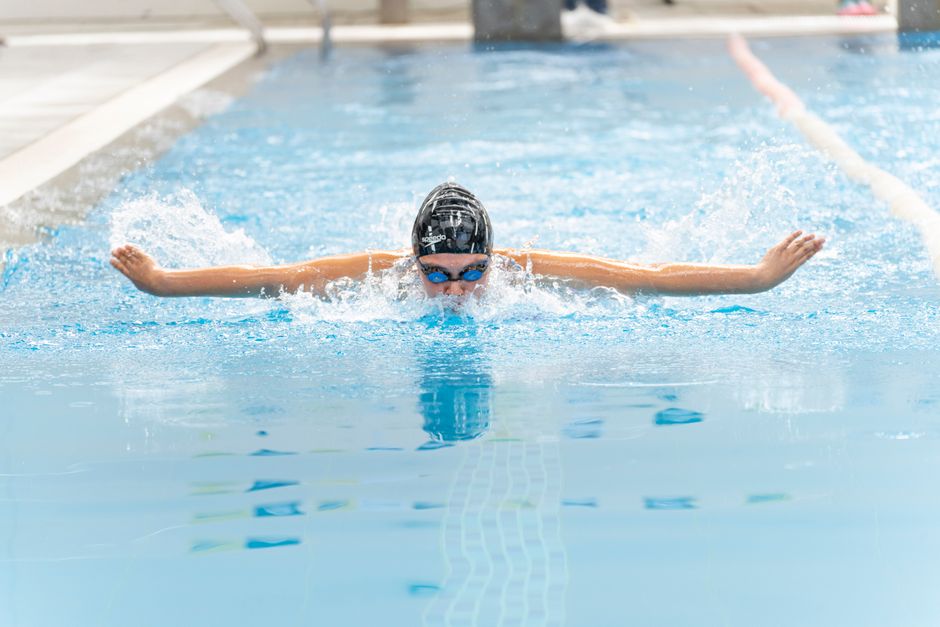
A 13-year-old Chinese swimmer has announced herself on the continental stage in stunning fashion, with Yu Zidi clocking the fastest time in the women's 200m butterfly heats at the 20th Asian Games, being held in Nagoya, Japan. The teenager — who won't turn 14 until next month — finished nearly 2.70 seconds clear of her closest rival and heads into the final as the overwhelming favourite to claim gold.
Yu Zidi sets the pool alight
Yu's commanding performance in the heats left the field in her wake, with compatriot Chang Mohan the next-fastest qualifier. The margin of victory in a heat is rarely so decisive, and it has positioned Yu as one of the standout stories of the early Games.
She was not the only Chinese swimmer to impress. Pan Zhanle, the men's 100m freestyle world record holder and reigning Olympic champion, also topped his heat, posting a time of 48.07 seconds — just 0.06 seconds ahead of South Korea's Hwang Sun-woo. Pan will also contest his final later in the program.
Japan claims first gold as triathlon throws up drama
The honour of winning the first gold medal of the 20th Asian Games went to the host nation, with Takumi Hojo claiming victory in the men's individual triathlon in Gamagori city, near Nagoya. The 30-year-old completed the 750-metre swim, 20-kilometre bike ride and 5,000-metre run in a combined time of 52 minutes and 56 seconds, finishing nine seconds ahead of China's Zhang Xirui. Kazakhstan's Arlan Zhanabay rounded out the podium in third, a further six seconds back.
"As it's our first gold medal, it's given the Japanese team a real boost," Hojo said after his win, which also qualifies him for the 2028 Olympics in Los Angeles. "I was really fired-up. Even the rain held off, and I was in top form right up until I stood on the starting line."
China responded strongly in the women's triathlon, with Lin Xinyu going one better than her silver medal from the previous Asian Games in Hangzhou to take gold in 57 minutes and 37 seconds. Huang Anqi completed a Chinese one-two finish, 21 seconds adrift, while Japan's Manami Hayashi took bronze.
Hojo's gold was the first of 469 gold medals to be awarded across the two-week event — a competition that, by athlete count, surpasses even the Olympic Games, with more than 11,000 competitors taking part.
Logistical headaches dog the Games' opening days
The Games were formally declared open on Saturday by Japan's Emperor Naruhito at a 30,000-capacity stadium in Nagoya, though a notable number of seats were left empty for the occasion. The event runs until October 4, with athletes competing across more than 40 sports — from Olympic staples such as athletics and swimming to regional traditions including sepak takraw and kabaddi. The Asian Games have been held since 1951.
Behind the scenes, organisers have faced a string of difficulties. In a cost-cutting move, a traditional athletes' village was scrapped in favour of a combination of temporary container-style accommodation, hotels, and berths aboard the cruise ship Costa Serena. Some athletes were left stranded at the airport after transport arrangements fell through, and multiple teams raised complaints about the standard of the temporary huts — including beds that were reportedly too short.
Organisers were also forced to issue a public apology after North Korea's national anthem was mistakenly played before a South Korean men's hockey match on Friday, in an embarrassing mix-up that drew widespread attention ahead of the opening ceremony.
Despite the off-field turbulence, the competition itself has delivered early highlights — none more eye-catching than the performances of a teenager from China who is yet to celebrate her 14th birthday. If Yu Zidi converts her heat dominance into final-night gold, she will have made history at one of Asia's most prestigious sporting events. For fans of major multi-sport competitions, the next fortnight promises plenty more compelling storylines.