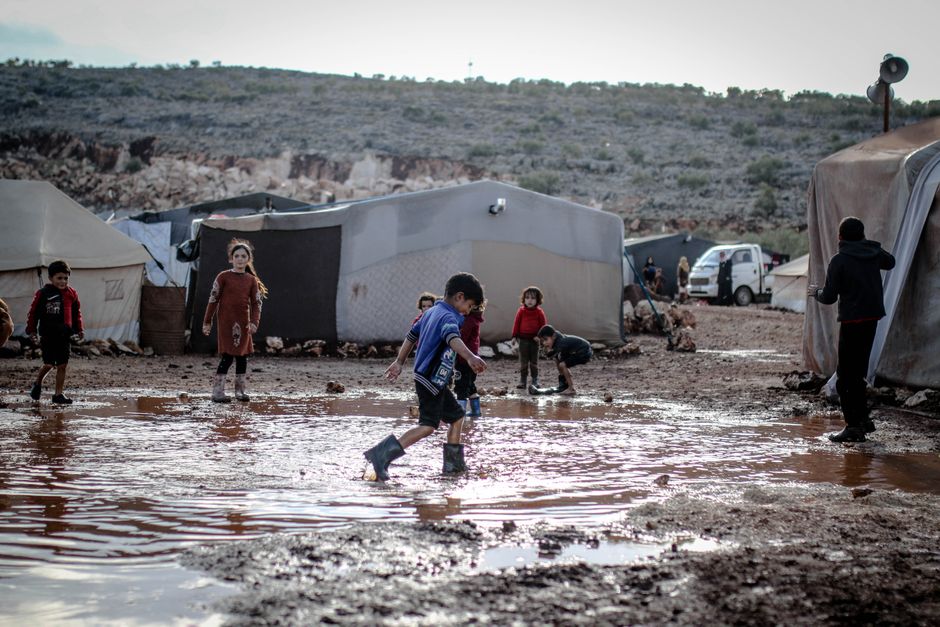
Children living in one of Australia's wealthiest regions are experiencing "profound disadvantage", with their voices set to be heard directly by federal ministers and MPs in Canberra as part of a national campaign to end child poverty. The End Child Poverty campaign, led by the Valuing Children Initiative (VCI), has recorded the testimonies of young people in South Hedland — a community situated less than 15 kilometres from Port Hedland, the world's largest bulk export port.
Poverty in the Shadow of Wealth
Every month, billions of dollars worth of iron ore and other commodities are exported through Port Hedland, roughly 1,630 kilometres north of Perth. The Pilbara has long been described as the engine room of the Australian economy, yet the prosperity generated there is far from evenly shared.
Tania Murray, chief executive of South Hedland's Youth Involvement Council (YIC), said the contrast between the region's vast resource wealth and the daily reality for many children was deeply confronting.
"For some of our young people, it's going home to housing that is below acceptable standards, very little food, overcrowding, there's no adequate air conditioning, even though we live in a desert," she said.
Australian Bureau of Statistics data underlines the disparity. South Hedland's Socio-Economic Indexes for Areas (SEIFA) score — a measure of relative socio-economic advantage and disadvantage based on census data — sits at 989, below the broader Port Hedland area average of 1,011.
Letting Children Speak for Themselves
The campaign's approach centred on giving children a direct voice rather than speaking on their behalf. Working alongside the locally based YIC, VCI researchers recorded children's accounts through a phone, with those recordings now being played to federal politicians in Canberra.
"When the researchers from VCI came up, our job wasn't to research what children in Hedland experience; our job was to create a safe opportunity for children to tell themselves," Ms Murray said.
VCI executive director and End Child Poverty campaign lead Sarah Quinton said the organisation had been invited to South Hedland specifically because the YIC was alarmed by the number of children it was seeing in difficulty.
"We were invited to South Hedland by the Youth Involvement Council because they were so concerned about the number of children that they were seeing," Ms Quinton said.
This community-driven, child-centred model of evidence-gathering reflects broader shifts in how researchers and advocates approach disadvantage — ensuring the people most affected shape the conversation. For families already under pressure, support services addressing the wellbeing of parents and children are increasingly seen as a vital part of any response.
A Two-Speed Economy, Seen Through Children's Eyes
WA Commissioner for Children and Young People Jacqueline McGowan-Jones said she was not surprised by what the campaign uncovered, describing the situation as a stark product of a "two-speed economy".
"There's all the money going out every day in the port; children see that and they understand it," she said.
Ms McGowan-Jones said conversations with elders, community groups, and Aboriginal community-controlled organisations had reinforced that significantly more action was needed to address the issue.
Calls for a National Strategy on Child Poverty
The campaign is calling on the federal government to introduce a nationally legislated strategy to end child poverty, including a clear definition of child poverty and dedicated metrics that reflect children's specific experiences.
Ms Quinton noted that existing poverty measures — such as the Consumer Price Index and mortgage rates — are adult-centred and fail to capture the realities faced by children.
"We might have measures like CPI, we might have mortgage rates, those kinds of things, those are very adult-centred poverty measures," she said, arguing that children deserve indicators designed around their own circumstances and needs.
With the Pilbara continuing to generate extraordinary national wealth, advocates say the situation in South Hedland is a powerful reminder that economic growth does not automatically translate into wellbeing for the most vulnerable — and that without deliberate policy action, some of Australia's youngest citizens will continue to be left behind.