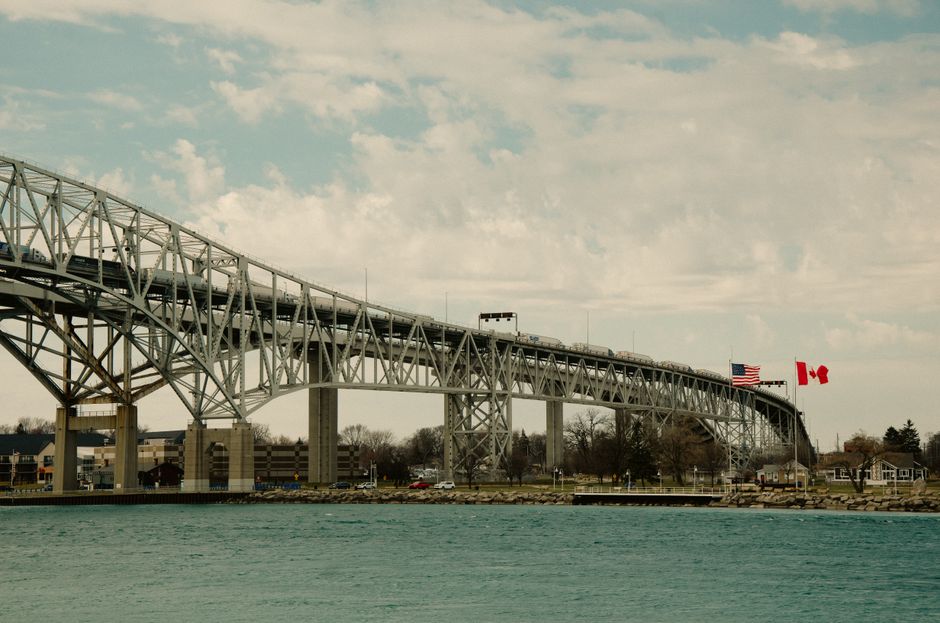
Canada's latest round of retaliatory tariffs on American goods came into effect overnight, matching US levies of up to 50 per cent on US$20 billion (approximately A$27.7 billion) worth of imports — a significant escalation in an 18-month trade war that experts warn could trigger mass layoffs and permanently reshape one of the world's most deeply integrated economic relationships.
The new Canadian measures mirror tariffs the United States imposed on a comparable volume of Canadian goods last month, after multiple rounds of negotiations collapsed with no new talks scheduled. Both governments have blamed the other for the breakdown, and the dispute shows little sign of resolution.
A Trade Relationship Unlike Any Other
What makes the Canada–United States trade war particularly damaging is the extraordinary degree to which the two economies are intertwined. As a former US ambassador to Canada described it, the trade relationship between the two nations is "arguably the most interconnected trade relationship anywhere in the world."
Many goods — most notably motor vehicles — cross the border multiple times during the manufacturing process, meaning tariffs ripple through supply chains in ways that harm industries on both sides simultaneously. The history of Canada–United States relations reflects decades of deep economic and strategic cooperation that is now under serious strain.
The case of Canadian private jet manufacturer Bombardier illustrates the problem sharply. On Monday, US President Donald Trump posted on social media that Bombardier would be barred from selling aircraft in the United States unless it moved manufacturing there — yet the company employs more than 1,000 workers in Kansas and has supply chain links across 47 US states. Punishing a Canadian company, in other words, would directly punish American workers.
"In a trade war, the only people being hurt are small businesses and individual employees in both Canada and the United States," the former ambassador said. "That can't go on. We have to find a resolution to it."
A 'Fractious, Deep-Seated Antagonism' Takes Hold
While the two countries have experienced tensions before, international relations experts say the current hostility is qualitatively different from past disputes. An academic specialising in international conflict at the University of New South Wales said the animosity traces back to Trump's first term in office and has now intensified significantly.
"What we're seeing now is a much more fractious, deep-seated antagonism that's starting to emerge," she said.
Central to Canadian grievance is Trump's repeated suggestion that Canada could become the 51st state of the United States — comments widely regarded there as an attack on national sovereignty and identity. Those remarks have been described as "particularly egregious" to Canadians, and have hardened public sentiment against the US position.
Canada's 'Pivot and Prosper' Strategy
Canadian Prime Minister Mark Carney has responded by deliberately steering his country away from economic dependence on its southern neighbour, even though the US remains Canada's largest trading partner by a significant margin. For Carney, the economic pain of diversification is preferable to the alternative.
"We have everything we need to pivot and prosper," Carney said in a video statement released after the new tariffs took effect.
Canadian government officials indicated the retaliatory measures were deliberately calibrated to maximise political pressure in the United States, with targeted sectors in key swing states such as Michigan and Ohio — both of which will be closely contested in November's US midterm elections.
What Comes Next
With no new negotiations scheduled and both sides digging in, the outlook for a rapid resolution appears bleak. The costs are expected to fall hardest not on political leaders, but on small and medium-sized businesses caught in the crossfire — companies with limited capacity to absorb the shock of sudden and steep new import costs.
Broader geopolitical consequences are also emerging, as two historically close allies — partners in defence, intelligence-sharing, and global diplomacy — find themselves in what observers are calling a state of serious and deepening disagreement. Whether economic pressure on American swing states ahead of the midterms will be enough to bring both sides back to the table remains to be seen.