As natural snowfall becomes less predictable across Australia's alpine regions, ski resorts are pouring millions of dollars into artificial snowmaking infrastructure — a technological lifeline that is quietly reshaping the future of the country's winter tourism industry.
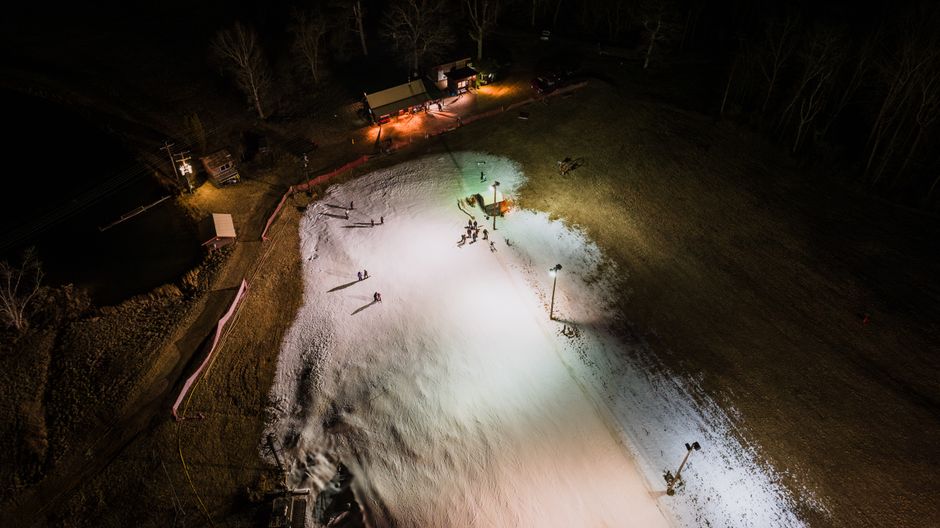
This season offered a stark illustration of why. Little natural snow fell until early July in what has been described as one of the slowest starts to winter in decades. Despite that, several resorts still managed to open lifts over the traditional June long weekend, running thin corridors of beginner terrain kept alive entirely by snow guns.
Mount Buller Leads a $17 Million Snowmaking Push
Victoria's Mount Buller has been among the most aggressive investors in the technology, committing $17 million to snowmaking over the past 25 years. The resort now runs more than 300 snow guns across nearly 80 kilometres of ski runs, which can operate when wet-bulb temperatures drop to -2°C or below.
The resort has also installed five so-called snow factories — large, shipping container-style buildings capable of producing snow continuously, regardless of outside temperature.
A spokesperson for Mount Buller said snowmaking had become central to keeping the mountain operational during lean natural snow years. "We haven't had many of those big snow events yet. There have only been a handful so far this season, so snowmaking helps us fill in those gaps," she said. "It allows us to maintain snow cover across the ski area and steadily build that base, which has enabled us to progressively open more terrain and keep our guests skiing and snowboarding."
She added that the technology itself had advanced considerably since its introduction, allowing resorts to generate higher-quality snow more efficiently despite the process remaining both water- and energy-intensive.
Beyond snow guns, resorts are also deploying a technique known as "snow farming" — building up stockpiles of snow in south-facing and shaded areas throughout the season, then grooming those reserves to top up runs when conditions deteriorate.
A Season Shaped by Climate Forces
Snowpack measurements this season underline just how challenging conditions have been. The Spencers Creek monitoring site in New South Wales — regarded as the most reliable indicator of natural snow depth in the state — recorded just 68 centimetres of snow depth on 21 July, after an early-month dump provided some relief. A strong season would typically see that figure exceed one metre.
Climate scientists point to a convergence of weather patterns to explain the difficult start. An intensified El Niño has pushed persistent high-pressure systems across south-eastern Australia, producing clearer skies and suppressing snowfall. The Southern Annular Mode and the broader trajectory of long-term climate change have compounded those effects.
One climate scientist and Protect Our Winters science alliance member said the same high-pressure dominance had also triggered temperature inversions — an unusual phenomenon where mountain peaks are warmer than lower sections of the slope.
Those conditions contributed to record-breaking July temperatures across Victoria's alpine resorts. Mount Hotham reached 12°C, while Falls Creek hit 11.5°C — surpassing the resorts' previous July records of 8.7°C and 9.8°C respectively by several degrees.
An Industry Adapting to Stay Viable
The stakes are considerable. Australia's ski industry supports more than 22,000 jobs and contributes billions of dollars to the national economy, particularly to regional communities that depend heavily on the winter season for their livelihoods.
Resort operators acknowledge that snowmaking technology, however sophisticated, cannot alter the underlying climate — it can only manage the consequences of a changing one. Each season of below-average natural snowfall reinforces the industry's dependence on its artificial backup, and raises longer-term questions about the sustainability of alpine tourism in Australia as conditions continue to shift.
For now, the snow guns keep firing through the night, and the lifts keep turning — even when the skies above offer little help.