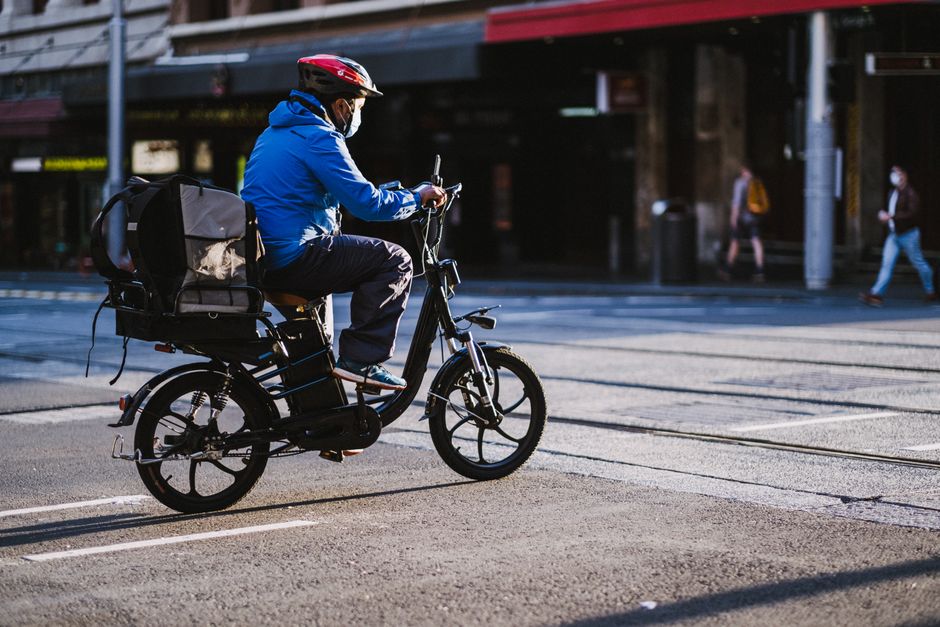
The federal government has announced a nationwide crackdown on high-powered e-bikes, directing the Australian Competition and Consumer Commission (ACCC) to develop a national safety standard that will regulate the speed, power and sale of electric-powered micromobility devices across the country. The move, announced on Thursday, marks the first time Australia will have a single, uniform set of rules applying to e-bikes, e-scooters and e-skateboards at a national level.
What the new e-bike safety standards will require
The ACCC has been tasked with drafting consumer product standards based on the internationally recognised EN 15194 benchmark — the same standard that Australia's state transport ministers agreed to adopt last year as the primary reference point for e-bikes sold domestically.
Under EN 15194, e-bikes must operate primarily through pedal assistance rather than autonomous throttle power. Crucially, the motor must disengage once the device reaches 25 kilometres per hour, and motor output is capped at 250 watts. The standard is also designed to prevent devices from being easily modified to exceed those limits — a loophole that has allowed higher-powered bikes to circulate in the market.
Assistant Competition Minister Andrew Leigh described the new standard as an important reform for both riders and the wider community.
"E-bikes are a great addition to our transport network, reducing congestion, allowing people to enjoy the great outdoors," Leigh said. "But we've got these high-powered e-bikes that are causing accidents and even deaths on our roads. We need to crack down on those."
He added that the standard would draw "a firm line against high-powered, high-speed devices linked to serious injuries and deaths, including children," and said it would give manufacturers, retailers and consumers clearer expectations about what can legally be sold in Australia.
The proposals were first raised at a meeting of federal, state and territory consumer affairs ministers held in Darwin in July, making Thursday's announcement the formal next step in what has been a gradual push toward national consistency.
Why the crackdown is happening now: a spike in injuries and deaths
The announcement comes amid sharply rising injury and fatality figures linked to e-bikes and related devices in multiple states.
In New South Wales, 226 e-bike-related injuries were recorded across all of 2024. That figure had already been surpassed within the first seven months of 2025, with 233 injuries recorded — including four deaths. In Queensland, more than 6,000 emergency department presentations were linked to e-mobility devices between 2022 and 2025 alone.
Both states have already begun moving independently. NSW Police and transport officers were granted powers in June to seize illegal e-bikes, with confiscated devices set to be destroyed by Transport for NSW. In Queensland, police launched Operation Yankee Surety on 1 July, seizing 249 illegal bikes in its first month and issuing 991 traffic infringement notices to riders.
Despite these state-level efforts, the absence of a consistent national framework has allowed retailers to exploit regulatory gaps — selling non-compliant devices in jurisdictions where enforcement has been less rigorous. Thursday's federal action is intended to close those loopholes at the point of sale, before devices enter the market.
Industry and advocates respond: welcome, but overdue
Harold Scruby, chief executive of the Pedestrian Council of Australia, welcomed the announcement but was blunt about its timing.
"It is too late," Scruby said. "Technology is always 10 years ahead of the law … but we saw it coming."
Scruby stressed that any new standards must be accompanied by real consequences for non-compliant retailers — particularly those selling high-powered devices to children.
"We've really got to clamp down on these cowboys who are selling these things to young children," he said.
When asked whether the horse had already bolted given the number of non-compliant devices already in circulation, Minister Leigh argued the federal action was designed to complement, not replace, the work already underway through state transport ministers.
"There's work underway through transport ministers," Leigh said. "This is about what can be sold."
What happens next — and what it means for buyers and retailers
With the ACCC now formally directed to develop the standards, the regulatory focus will fall squarely on the point of sale and importation. Any e-bike, e-scooter or e-skateboard sold or imported into Australia will need to comply with the new rules once they are finalised.
For consumers, the change is intended to provide confidence that devices on store shelves are safe and meet consistent national expectations. For retailers and manufacturers, it signals a tightening of obligations — and a closing of the patchwork loopholes that have allowed non-compliant products to reach Australian buyers.
E-bikes have been widely promoted as an environmentally friendly and cost-effective solution to urban congestion, and the government has been careful to frame the crackdown as targeting dangerous outliers rather than the category as a whole. However, with injury and death tolls continuing to climb, Thursday's announcement represents the most significant federal intervention in the sector to date.
For more on how regulatory shifts are reshaping Australian policy, see our coverage of what recent political developments could reveal about the direction of Australian governance — and how consumer protection fits into a broader policy picture.