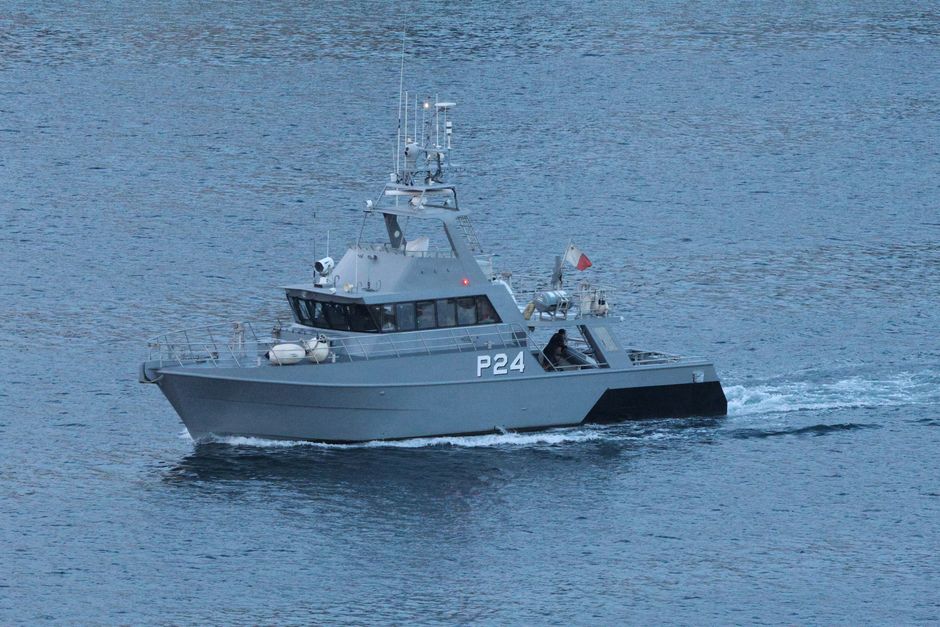
Prime Minister Anthony Albanese has announced a $600 million commitment to strengthen aerial and maritime surveillance across the Pacific, targeting the drug trafficking networks that are increasingly using the region as a staging ground for shipments destined for Australia. The announcement was made at the Pacific Islands Forum in Palau, where regional leaders have been pressing for coordinated action against a rapidly escalating narcotics problem.
The funding sits under the Waqa Moana Initiative — a name drawn from a large, sturdy traditional canoe — which is a Pacific-led maritime security program designed to counter illicit drug trafficking across the region's vast and largely unpoliced waters.
A Surge That Demanded a Response
The scale of the problem has sharpened considerably. Australian Federal Police Commissioner Krissy Barrett revealed in May that 17 tonnes of illicit drugs — predominantly cocaine — had been seized in the Pacific since January of this year alone. That compares with fewer than five tonnes seized across the entirety of the previous year. The AFP has confirmed that the vast majority of drugs being trafficked through the Pacific are ultimately bound for Australia.
Pacific Island Affairs Minister Pat Conroy said the initiative was a direct response to calls from regional leaders. "Drug trafficking is having a devastating impact on Pacific communities," he said. "This initiative responds to the calls of regional leaders to do more, and to step up regional coordination to address this scourge."
Beyond Australia's own drug problem, the program also aims to address the social and health damage cocaine and methamphetamine are inflicting on island communities themselves — eroding social cohesion and placing strain on already under-resourced health systems.
For more on Australia's broader security engagement in the Pacific, see our earlier coverage of Albanese's Pacific security push and the Fiji deal.
Why the Pacific Has Become a Cocaine Highway
Two structural shifts over the past decade have driven much of the problem. The first is the expansion of Australian and New Zealand outlaw motorcycle gangs — notably the Rebels and the Head Hunters — into Pacific island nations. Gang members with Pacific Island heritage, including from Fiji and the Cook Islands, have created new links between South American and Mexican drug cartels and the Pacific that barely existed ten years ago.
The second factor is deportation policy. Both Australia and New Zealand return individuals with criminal records to countries including Fiji, Samoa, Tonga, the Federated States of Micronesia, and the Marshall Islands. Many deportees arrive with little support and, in some cases, turn or return to criminal activity.
Four Reasons the Region Is So Hard to Police
The geographic and logistical challenges facing law enforcement are formidable:
- Vast, porous territory: The Pacific spans roughly 25,000 islands, around 2,000 of them inhabited, with maritime boundaries that are largely unmonitored. Agencies are thinly staffed and intelligence-sharing between customs and police is limited.
- Multiple smuggling methods: Narco-submarines can beach and unload tonnes of cocaine without detection. Small twin-engine aircraft conduct so-called "black flights," slipping below radar at night. Even pleasure craft — common in tourism-heavy island nations — are used as cover for drug shipments.
- The islands function as a warehouse: The region's remoteness allows syndicates to stockpile drugs between shipment legs, making the Pacific not just a transit route but a storage hub.
- Limited enforcement infrastructure: Most island nations lack the resources, personnel, or equipment to mount sustained surveillance operations across their territorial waters.
What the Initiative Involves
The Albanese government says the $600 million package will fund several measures under the Waqa Moana Initiative aimed at closing these surveillance gaps — including boosting aerial and maritime monitoring capacity across the region to detect the narco-submarines and small vessels that traffickers rely on.
Whether the investment will be enough to meaningfully disrupt entrenched trafficking networks across one of the world's most geographically complex regions remains to be seen. But with drug seizures already more than tripling year-on-year, the pressure on Canberra and its Pacific partners to act has never been greater.
Read more on Australia's $600m Pacific drug smuggling crackdown as the cocaine trade surges.